
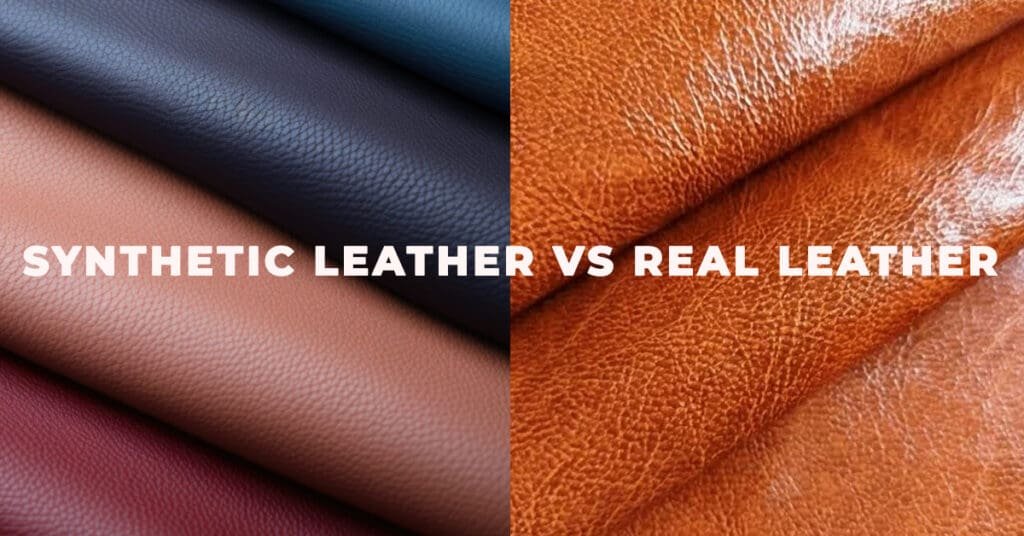
Introduction: The Great Leather Debate of Modern Fashion
Few materials spark as much debate as synthetic leather vs real leather. For decades, real leather has symbolized luxury, craftsmanship, and durability. But as sustainability and animal ethics reshape fashion, synthetic leather has become a powerful, eco-conscious alternative.
According to Fashion Audit, the modern consumer no longer asks “What looks better?” but rather “What’s better for the planet and my lifestyle?”
Let’s explore the differences, materials, benefits, and future of both.
1. Understanding the Basics
| Aspect | Synthetic Leather | Real Leather |
|---|---|---|
| Source | Man-made (PU, PVC, or bio-based) | Natural animal hide |
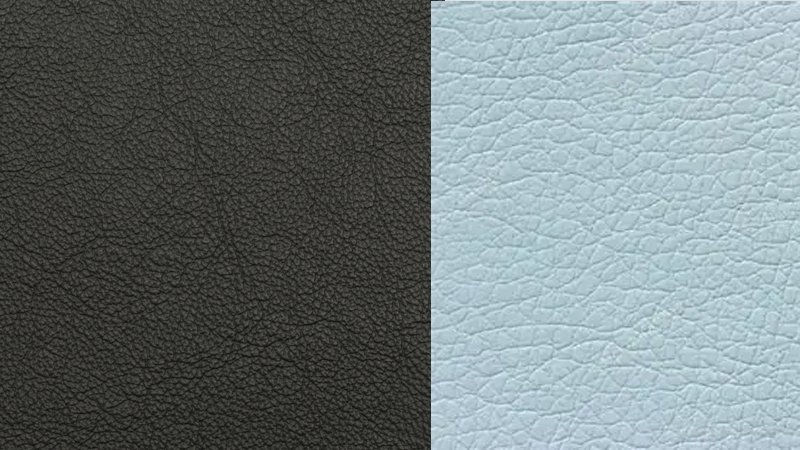
| Texture | Even, uniform surface | Unique, natural grain |
| Durability | 5–7 years (high-quality versions) | 10–20 years with care |
| Cost | Affordable | Expensive |
| Maintenance | Easy to clean | Needs regular conditioning |
| Ethics | Vegan & cruelty-free | Animal-derived |
| Sustainability | Depends on type (PU/Bio-based) | Biodegradable (if vegetable-tanned) |
Fashion Audit Insight: Both materials have evolved — and both now cater to distinct values: performance vs authenticity.
2. What Is Synthetic Leather Made Of?
Synthetic leather, also known as faux or vegan leather, is produced using a fabric base coated with polymers such as polyurethane (PU) or polyvinyl chloride (PVC).
Common Materials:
- PU Leather: Soft, flexible, and eco-friendlier than PVC.
- PVC Leather: Durable and waterproof, with a glossy finish.
- Microfiber Leather: Premium version that mimics real leather’s texture.
- Bio-Based Leather: Made from pineapple, apple peel, cactus, or cork fibers.
Advantages:
- Cruelty-free production.
- Available in countless finishes and colors.
- Water-resistant and lightweight.
Fashion Audit Note: PU and bio-based leathers lead the 2025 trend in ethical luxury, combining affordability with innovation.
3. What Is Real Leather Made Of?
Real leather comes from animal hides, most commonly cowhide, which undergoes a tanning process to preserve and strengthen it.
Common Types:
- Full-Grain Leather: Most durable, natural surface.
- Top-Grain Leather: Smooth and refined, slightly sanded.
- Suede: Soft underside with velvety texture.
- Nubuck: Buffed top-grain for a matte finish.
Advantages:
- Extremely durable and breathable.
- Develops a rich patina over time.
- Symbol of craftsmanship and luxury.
Fashion Audit Insight: Each real leather product tells a unique story through its grain, color variations, and natural imperfections.
4. Durability & Longevity
| Feature | Synthetic Leather | Real Leather |
|---|---|---|
| Lifespan | 5–7 years | 10–20 years |
| Scratch Resistance | High (PU & microfiber types) | Moderate; improves with patina |
| Flexibility Over Time | May crack with age | Softens and adapts to user |
| Water Resistance | Excellent | Moderate (needs care) |
Fashion Audit Observation: Synthetic leather wins in immediate durability and low maintenance, but real leather outlasts in the long run — especially with care.
5. Comfort & Breathability
- Synthetic Leather: Modern PU leathers are soft but less breathable, making them warmer for long wear.
- Real Leather: Naturally breathable, adapting to your body temperature.
Fashion Audit Tip: For comfort and natural ventilation, real leather remains unmatched. However, for all-weather wear, synthetic leather offers practical convenience.
6. Sustainability and Environmental Impact
Real Leather
- Pros:
- Biodegradable (especially vegetable-tanned).
- Often a byproduct of the food industry.
- Cons:
- High water and energy usage.
- Emissions from livestock farming.
Synthetic Leather
- Pros:
- Animal-friendly and cruelty-free.
- Bio-leather and water-based PU are increasingly sustainable.
- Cons:
- PVC variants may release microplastics.
- Petroleum-based production has a carbon footprint.
Fashion Audit Forecast: 2025’s innovation lies in bio-based and recycled synthetics, narrowing the gap between fashion and ethics.

7. Style & Aesthetic Differences
- Real Leather: Rich, natural texture that improves with age.
- Synthetic Leather: Smooth, uniform finish that holds shape well.
- Real Leather Shoes: Exude timeless elegance, ideal for formalwear.
- Synthetic Leather Shoes: Offer more variety in colors, textures, and prints.
Fashion Audit Observation: Real leather speaks heritage; synthetic leather speaks innovation — both are fashion-forward in their own right.
8. Cost & Accessibility
| Category | Synthetic Leather | Real Leather |
|---|---|---|
| Price Range | ₹2,000–₹8,000 | ₹7,000–₹30,000+ |
| Maintenance Cost | Minimal | Moderate to High |
| Availability | Easily mass-produced | Limited to premium collections |
Fashion Audit Tip: Synthetic leather wins for affordability; real leather wins for long-term investment.
9. Ethical and Lifestyle Considerations
- Synthetic Leather: Appeals to vegans and ethical shoppers.
- Real Leather: Appeals to those valuing craftsmanship and natural materials.
Modern fashion isn’t about choosing sides — it’s about aligning with personal values. Both materials can coexist in a conscious wardrobe.
As Fashion Audit notes:
“The most sustainable leather is the one you use well and keep longer — regardless of its origin.”
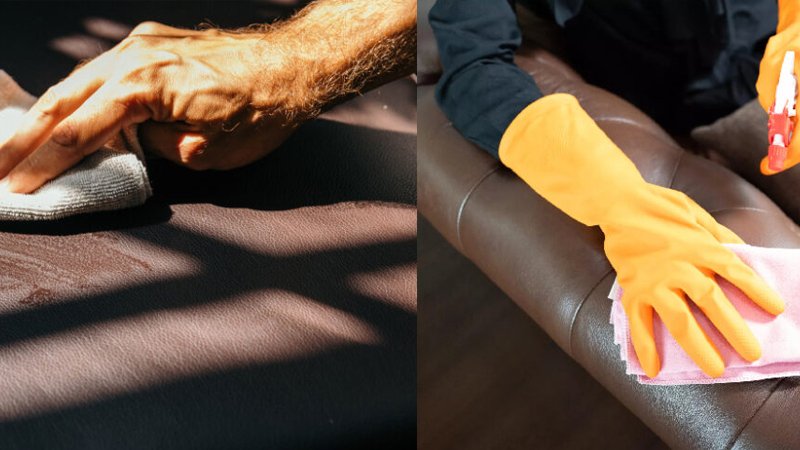
10. Maintenance & Care
For Synthetic Leather:
- Wipe with a damp cloth.
- Avoid heat exposure.
- Use PU-safe polish for shine.
For Real Leather:
- Clean and condition regularly.
- Apply waterproofing spray.
- Store with shoe trees to maintain shape.
11. Best Use Cases: When to Choose Each
| Scenario | Best Material | Reason |
|---|---|---|
| Formal Events | Real Leather | Elegant, luxurious, long-lasting |
| Casual Everyday Wear | Synthetic Leather | Lightweight, versatile, easy care |
| Outdoor or Rainy Weather | Synthetic Leather | Water-resistant |
| Eco-Friendly Lifestyle | Bio-Based Leather | Cruelty-free & sustainable |
| Classic Timeless Look | Real Leather | Develops character with age |
Fashion Audit Verdict: Both have a place in modern fashion — the key is conscious selection.
12. Synthetic Leather vs Real Leather: Summary Table
| Feature | Synthetic Leather | Real Leather |
|---|---|---|
| Origin | Man-Made | Animal Hide |
| Durability | 5–7 Years | 10–20 Years |
| Maintenance | Easy | Moderate |
| Price | Affordable | Expensive |
| Comfort | Moderate | Excellent |
| Water Resistance | High | Moderate |
| Eco Impact | Mixed (varies by type) | High (unless vegetable-tanned) |
| Ethics | Vegan, Cruelty-Free | Animal-Based |
| Style Longevity | Modern | Timeless |
FAQs About Synthetic Leather vs Real Leather
1. Which is better for daily wear?
Synthetic leather — lighter, easier to clean, and budget-friendly.
2. Which lasts longer?
Real leather, especially full-grain types, lasts decades.
3. Is synthetic leather more sustainable?
Yes, particularly bio-based or recycled PU versions.
4. Can synthetic leather crack?
Yes, lower-quality versions may over time — opt for microfiber or high-grade PU.
5. Does Fashion Audit recommend one over the other?
Fashion Audit suggests synthetic leather for everyday versatility and real leather for timeless investment pieces.
Conclusion: A Tale of Two Futures
The debate between synthetic leather vs real leather isn’t about competition — it’s about coexistence. Both serve a purpose in modern fashion, balancing heritage and innovation.
Real leather embodies craftsmanship and endurance. Synthetic leather represents progress and sustainability. Together, they define the future of conscious style.
As Fashion Audit beautifully concludes:
“True fashion isn’t about choosing sides — it’s about walking confidently in what aligns with your values.”
Disclaimer:
All trademarks, logos, product names, and brand identifiers mentioned on FashionAudit.com are the property of their respective owners. They are used solely for the purpose of product review, comparison, and consumer information. FashionAudit.com does not claim any ownership of these marks.
No copyright or trademark infringement is intended. If any brand or rights holder believes their intellectual property has been misused, they can contact us directly and we will address the issue promptly.