
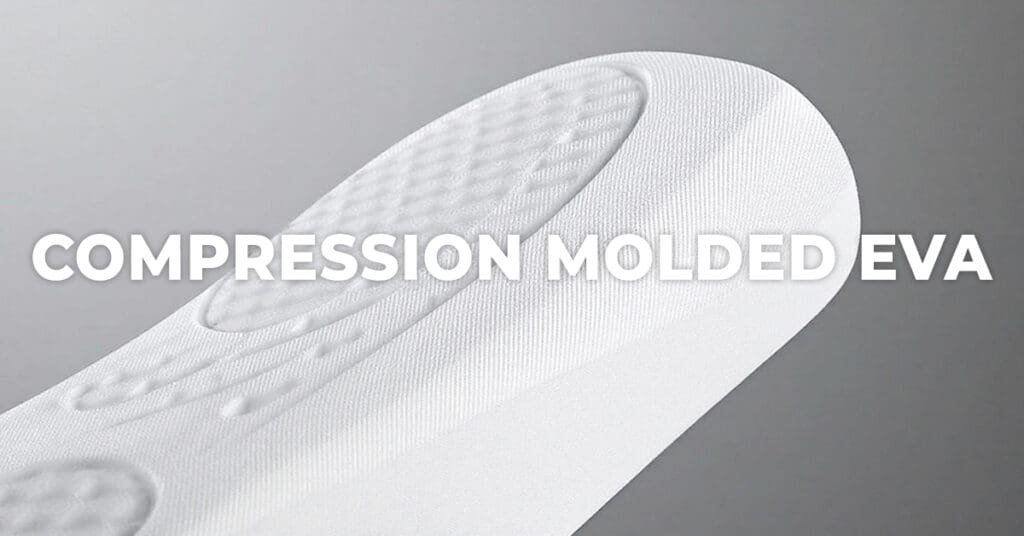
Introduction: Why CMEVA Is a Go-To Sole Material
Modern footwear demands more than just softness. However, too much softness can reduce stability and lifespan. Compression molded EVA (CMEVA) solves this balance by offering controlled cushioning with improved structure.
Moreover, many athletic and lifestyle shoes rely on CMEVA for consistent underfoot feel. As a result, understanding this material helps you choose shoes that deliver comfort without sacrificing performance—especially when assessing midsole quality during a thoughtful fashion audit.
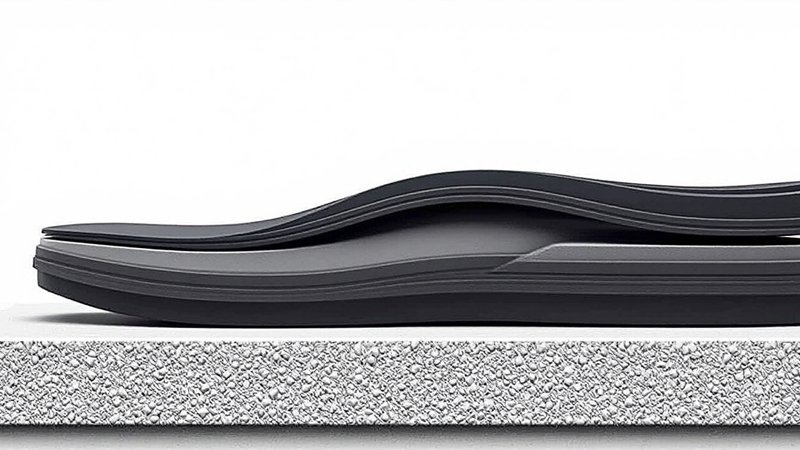
What Is Compression Molded EVA (CMEVA)?
CMEVA is a form of ethylene vinyl acetate foam that manufacturers shape under high heat and pressure. Unlike injection-molded EVA, compression molding creates a denser and more uniform foam structure.
You’ll commonly find CMEVA in:
- Running shoe midsoles
- Training and gym shoes
- Walking and comfort footwear
- Casual athletic sneakers
- Performance-oriented lifestyle shoes
Because the foam compresses evenly, it delivers predictable cushioning.
How CMEVA Is Manufactured
Manufacturers produce CMEVA through a controlled process:
- Heating EVA foam sheets
- Placing material into compression molds
- Applying pressure to shape density
- Cooling the foam to lock structure
- Cutting and finishing midsole shapes
As a result, CMEVA offers better consistency than standard EVA foam.
Key Benefits of Compression Molded EVA
Consistent Cushioning
The foam compresses evenly across the sole. Therefore, it provides uniform comfort.
Improved Stability
Higher density improves foot support and balance.
Lightweight Performance
CMEVA remains lighter than rubber-based soles.
Better Shape Retention
The material resists early flattening.
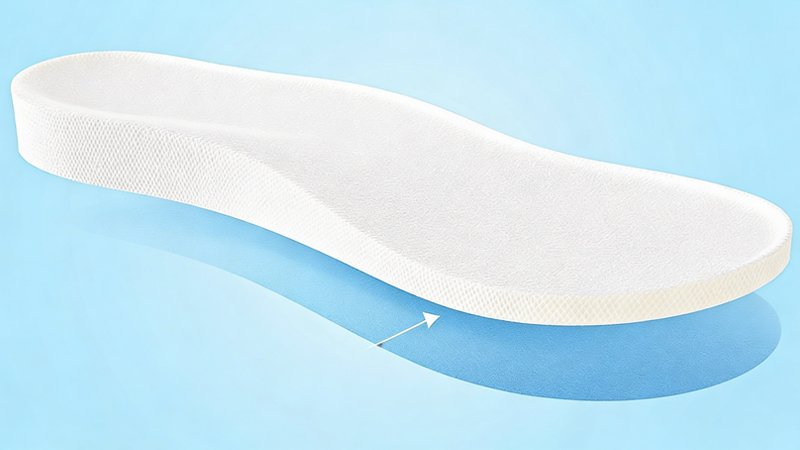
CMEVA vs Injection Molded EVA
| Feature | CMEVA | Injection Molded EVA |
|---|---|---|
| Density | Higher | Lower |
| Cushioning | Controlled | Softer |
| Stability | Better | Moderate |
| Durability | Higher | Moderate |
| Shape retention | Strong | Average |
As a result, CMEVA suits performance footwear better.
Where CMEVA Is Commonly Used
Footwear brands often use compression-molded EVA in:
- Running shoes
- Training footwear
- Sports lifestyle sneakers
- Walking shoes
- Performance casual footwear
Therefore, CMEVA works best where comfort and control must coexist.
How CMEVA Performs Over Time
CMEVA compresses gradually. Instead of collapsing quickly, it maintains structure longer than basic EVA.
Over time:
- Cushioning remains consistent
- Support stays stable
- Compression happens evenly
As a result, shoes retain performance for longer use cycles.
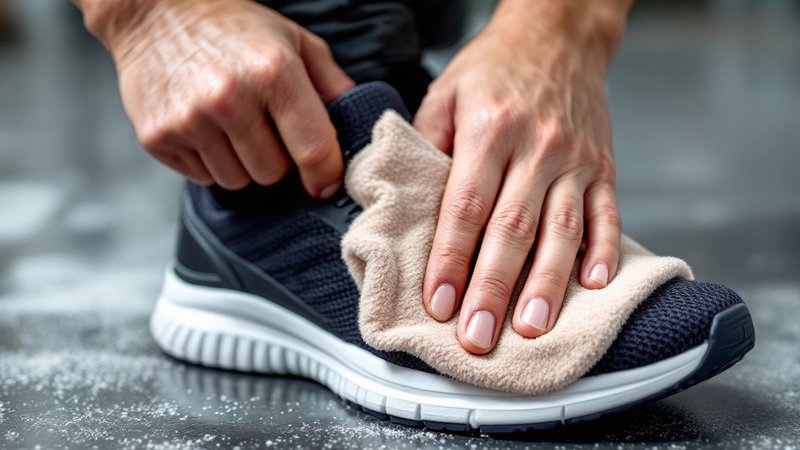
Care Tips for Shoes with CMEVA Soles
Proper care extends cushioning life. For example:
- Avoid prolonged heat exposure
- Let shoes air out after use
- Clean with mild soap and water
- Store in a cool, dry place
Is CMEVA Comfortable for Daily Wear?
Yes, especially for active lifestyles. However, CMEVA feels slightly firmer than soft EVA foams.
Best suited for:
- Running and training
- Long walking hours
- Active daily routines
- Stability-focused footwear
It may feel less plush than soft foam sandals.
Sustainability Perspective
CMEVA is synthetic and not biodegradable. However, its longer lifespan reduces frequent shoe replacement. Some brands now blend recycled EVA into compression-molded designs.
Because of this, footwear using CMEVA may score moderately during a performance-focused fashion audit, especially when durability matters.
When Compression Molded EVA Is the Right Choice
Choose footwear with CMEVA if you want:
- Balanced cushioning
- Better stability
- Lightweight performance
- Longer-lasting midsoles
As a result, CMEVA fits active, comfort-driven lifestyles perfectly.
Common Mistakes to Avoid
However, many people:
- Expect ultra-soft cushioning
- Use CMEVA shoes on extreme terrain
- Expose midsoles to high heat
- Skip regular cleaning
Avoiding these mistakes improves lifespan.
FAQs
Q1: Is CMEVA better than regular EVA?
Yes, it offers better stability and durability.
Q2: Is CMEVA used in running shoes?
Yes, it’s common in performance footwear.
Q3: Does CMEVA lose cushioning over time?
Gradually, but slower than basic EVA.
Q4: Is CMEVA lightweight?
Yes, lighter than rubber soles.
Q5: Is CMEVA eco-friendly?
It’s synthetic, but long-lasting.
Conclusion: Balanced Cushioning for Modern Footwear
In conclusion, compression molded EVA (CMEVA) delivers consistent cushioning, improved stability, and lightweight performance. While it doesn’t feel as soft as plush foams, it excels in durability and control.
Ultimately, whether you’re choosing athletic shoes or reviewing midsole materials during a thoughtful fashion audit, CMEVA offers a smart balance between comfort and performance.