
Introduction: A Journey That Changed How the World Runs
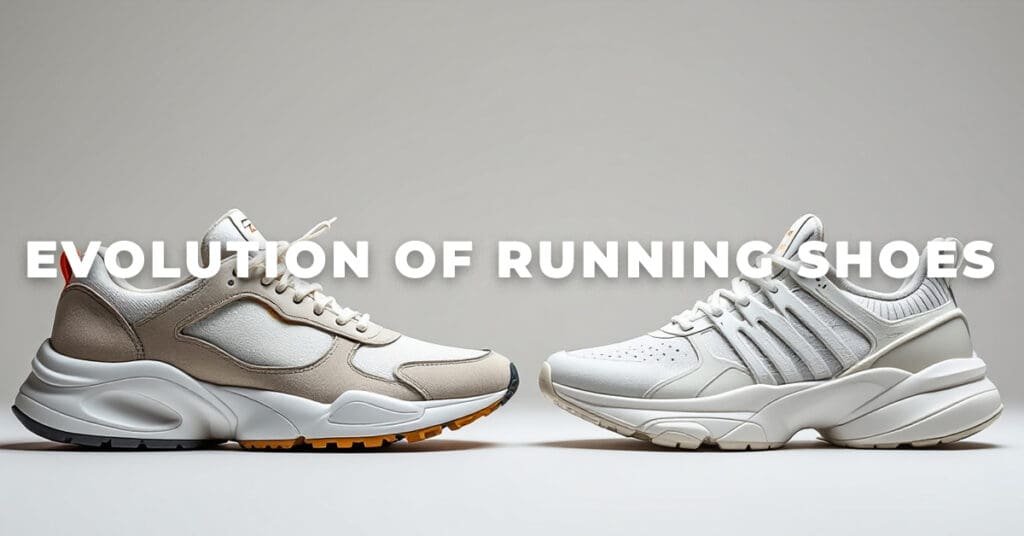
Running is one of the oldest physical activities known to humans, yet the Evolution of Running Shoes is surprisingly recent. What began as simple rubber soles has transformed into an advanced category involving biomechanics, cushioning systems, carbon plates, breathable materials, and lightweight engineering.
As Fashion Audit states,
“Running shoes evolved because runners evolved — their needs, goals, and expectations kept pushing design forward.”
1. The Humble Beginning: Rubber Soles in the Late 1800s
The first step in the Evolution of Running Shoes began when vulcanized rubber changed footwear forever.
Early Milestones
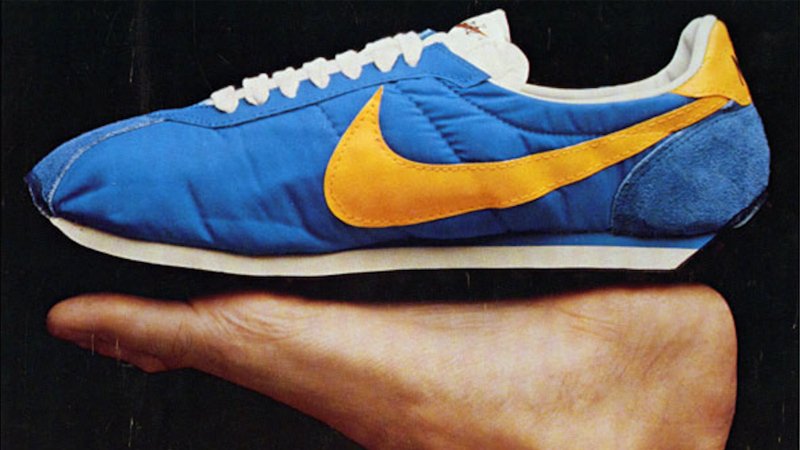
- Late 1800s: Simple plimsolls with flat rubber bottoms
- No cushioning, no stability, no support
- Used mainly for early athletic training or light exercise
These shoes were basic but marked the start of athletic footwear.
2. The 1900s–1940s: The First True Running Shoes Appear
Running shoes slowly became more structured.
Key Developments
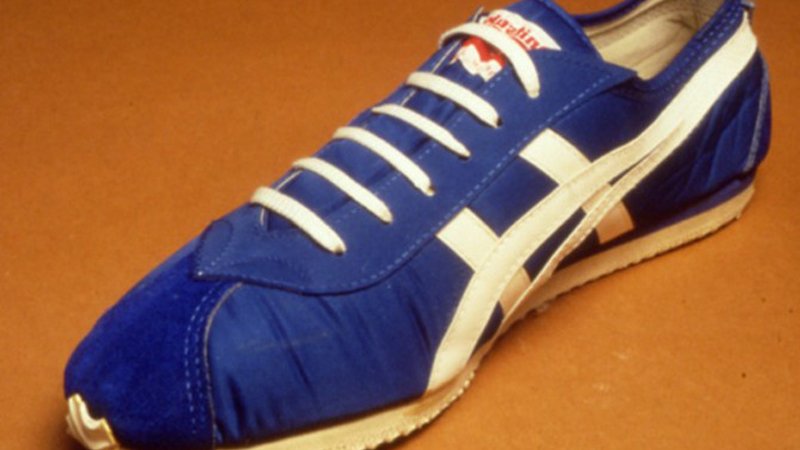
- Spalding and Converse introduced early sports shoes
- Basic leather uppers with rubber soles
- Still heavy, stiff, and not ideal for distance running
By the 1930s, performance-focused artisans began shaping the direction.
1936 Olympics
Jesse Owens wore handcrafted spikes that influenced the athletic footwear industry globally.
This era laid the foundation for performance engineering.
3. The 1950s–1960s: Lightweight Running Shoes Begin to Take Shape
Running grows as a sport and hobby, inspiring more innovation.
Important Changes
- Lighter materials replace heavy leather
- Better grip patterns introduced
- Running culture expands in Europe and the U.S.
- Adidas and Puma lead early innovation in track shoes
Despite progress, cushioning was still minimal.
4. The 1970s Jogging Boom: Running Shoes Get a New Identity
The biggest shift in the Evolution of Running Shoes happened in the 1970s.
Why the 70s Matter
- Jogging becomes mainstream
- Brands create shoes specifically for long-distance running
- Nike introduces the iconic Waffle Sole (1974)
- Better shock absorption becomes essential
Running transitions from an athlete-only activity to a lifestyle movement.
5. The 1980s: Cushioning Technology Takes Over
The 80s mark one of the biggest leaps in footwear engineering.
Innovations That Changed Running Forever
- Nike Air (visible cushioning)
- ASICS Gel technology
- New Balance EVA foam expansion
- Reebok lightweight runners
Running shoes now had real cushioning, better shock absorption, and more stability.
Fashion Audit describes this era as
“the decade that made running shoes more than equipment — they became performance machines.”
6. The 1990s: Biomechanics Enters Running Shoe Design
For the first time, brands studied how people actually move.
Engineering Improvements
- Pronated vs neutral foot mechanics
- Motion-control shoes
- Stability-focused midsoles
- Better heel-to-toe transitions
- Durable rubber outsoles for road running
Popular pairs began including dual-density foam to reduce overpronation.
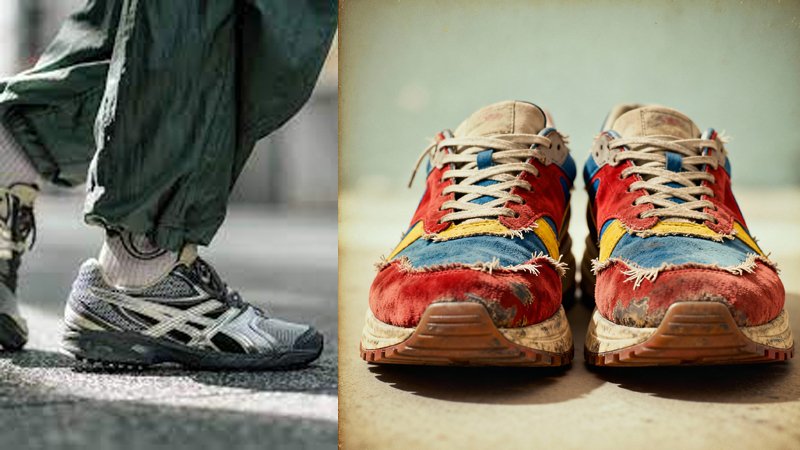
7. The 2000s: Lightweight Performance Becomes the Goal
The early 2000s reshaped running footwear once again.
What Changed
- Materials became lighter
- Mesh uppers improved breathability
- EVA blends became more responsive
- Minimalist and barefoot running trends emerged
Companies like Nike, Adidas, and ASICS created shoes that felt featherlight compared to older models.
8. The 2010s: The Era of Super Shoes and Innovation
This decade changed everything, making the Evolution of Running Shoes enter its most advanced stage.
Game-Changing Innovations
- Carbon-plated running shoes revolutionized speed
- ZoomX, Boost, Fresh Foam, DNA Loft elevated cushioning
- Knit uppers improved comfort and breathability
- Energy-return foams replaced traditional EVA
- Brands focused heavily on marathon performance
Nike’s Vaporfly series transformed competitive running by reducing fatigue and improving efficiency.
As Fashion Audit explains,
“Modern running shoes do not just protect your feet. They help you run faster with less effort.”
9. The 2020s–2025: Sustainability, Smart Materials & Precision Fit
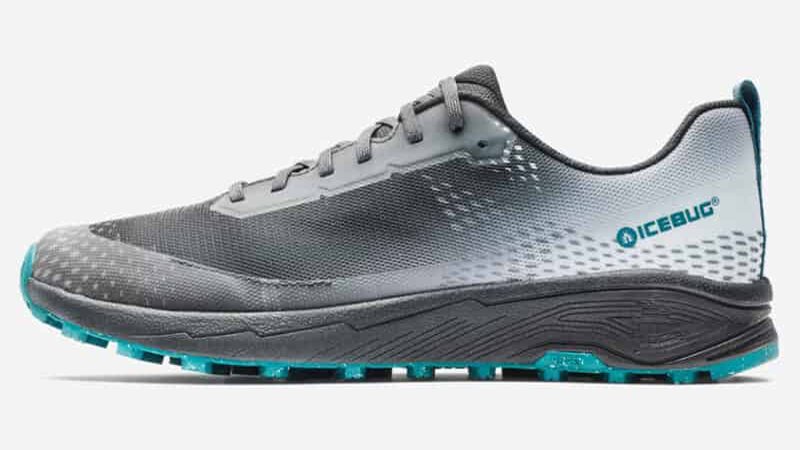
The current era focuses on sustainability, personalization, and performance optimization.
Modern Running Shoe Trends
- Recycled plastic uppers (e.g., Adidas Parley)
- Sugarcane EVA alternatives
- 3D-printed midsoles
- AI-assisted sizing tools
- Hyper-responsive foams
- Eco-friendly glue and dye processes
Brands now balance performance with environmental responsibility.
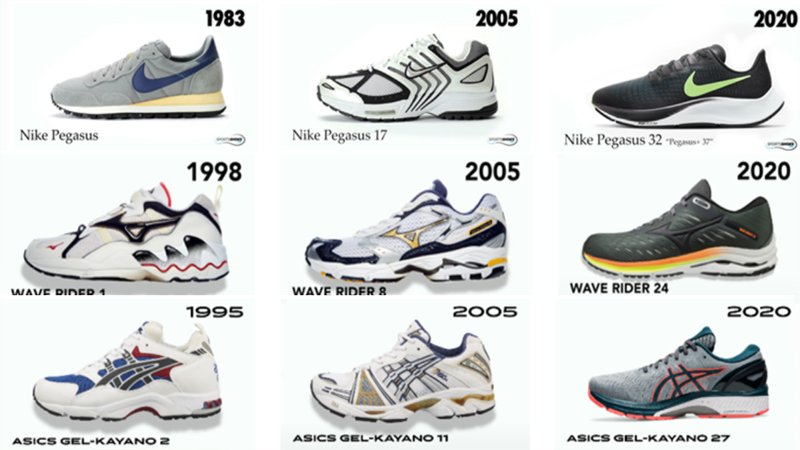
10. How Running Shoe Tech Has Changed Over Time
Old Running Shoes vs Modern Ones
| Feature | Early Running Shoes | Modern Running Shoes |
|---|---|---|
| Weight | Heavy | Ultra-light |
| Cushioning | Almost none | Advanced foam + plates |
| Materials | Leather/canvas | Mesh, knit, recycled fibers |
| Purpose | Basic exercise | Speed, comfort, endurance |
| Durability | Limited | High tech + long-lasting |
| Support | Minimal | Stability and guided motion |
The Evolution of Running Shoes shows how much engineering goes into every pair today.
FAQs About the Evolution of Running Shoes
1. When did modern running shoes begin?
The 1970s jogging boom created the first true running shoe models.
2. What made carbon plates revolutionary?
They improve energy return, reduce fatigue, and increase running efficiency.
3. Are today’s running shoes lighter?
Yes, modern materials make shoes significantly lighter than older models.
4. How did cushioning evolve?
From simple EVA to advanced technologies like ZoomX and Boost.
5. Does Fashion Audit recommend understanding shoe evolution?
Yes — Fashion Audit believes the past helps runners choose smarter now.
Conclusion: A Story of Innovation, Comfort & Human Progress
The Evolution of Running Shoes reflects our desire to run farther, faster, and more comfortably. Each era solved a new problem — from cushioning to stability to energy return. Today’s running shoes combine science, sustainability, and style in ways early designers could never imagine.
As Fashion Audit summarizes,
“Running shoe evolution is not just about footwear — it’s about progress, performance, and human ambition.”
Disclaimer:
All trademarks, logos, product names, and brand identifiers mentioned on FashionAudit.com are the property of their respective owners. They are used solely for the purpose of product review, comparison, and consumer information. FashionAudit.com does not claim any ownership of these marks.
No copyright or trademark infringement is intended. If any brand or rights holder believes their intellectual property has been misused, they can contact us directly and we will address the issue promptly.