

Introduction: What Is a Kinetic Movement Watch?
A Kinetic Movement Watch is a fascinating hybrid between traditional automatic watches and quartz technology. It harnesses your body’s motion to generate electricity, which is then stored in a small rechargeable battery or capacitor — eliminating the need for disposable batteries.
When you wear it, the motion of your wrist activates an internal rotor that powers the watch, offering the precision of quartz timekeeping and the sustainability of self-charging energy.
How the Concept of Kinetic Energy Revolutionized Timekeeping
Kinetic energy — the energy of motion — is one of the most efficient renewable sources of power. By applying this principle to wristwatches, engineers created a system that turns human movement into electrical energy, bridging the best of both worlds: mechanical movement and electronic regulation.
The History of Kinetic Movement Technology
The Birth of Seiko Kinetic Watches
The Seiko Corporation introduced the world’s first kinetic watch in 1988, known as the A.G.S. (Automatic Generating System). This groundbreaking innovation combined the automatic rotor of mechanical watches with a quartz oscillator’s accuracy.
The Evolution from Quartz to Kinetic Innovation
Over the years, Seiko improved the technology, introducing variations such as Kinetic Auto Relay, Kinetic Direct Drive, and Kinetic Perpetual, each enhancing efficiency and energy conservation.
How Does a Kinetic Watch Work?
A kinetic watch operates through a miniature electrical generator inside the case.
The Science Behind Kinetic Energy
When the wearer moves their wrist, a rotor spins, converting kinetic energy into electrical energy.
From Motion to Power: The Charging Mechanism
The energy is stored in a capacitor or rechargeable lithium-ion battery, which powers the quartz crystal oscillator, ensuring accuracy.
The Role of the Capacitor
The capacitor acts like a small rechargeable cell — storing energy generated by movement and supplying it steadily over days or even months.
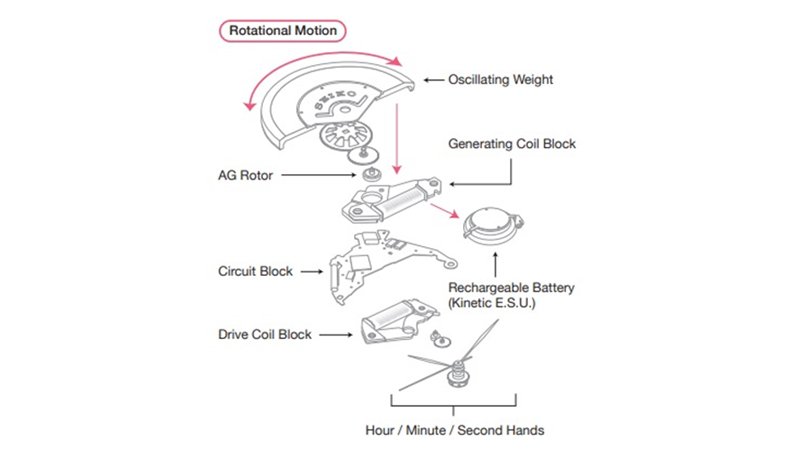
Components of a Kinetic Movement Watch
- Rotor System: Converts wrist motion into electrical power.
- Energy Storage Unit: A capacitor or lithium-ion battery.
- Quartz Oscillator: Regulates timekeeping accuracy.
- Integrated Circuit: Manages power distribution.
- Display System: Analog or hybrid digital display.
Types of Kinetic Movement Watches
Seiko Kinetic Direct Drive
Lets wearers charge the watch manually by turning the crown — combining kinetic and manual power generation.
Kinetic Auto Relay
Automatically enters sleep mode after 72 hours of inactivity, preserving power for up to 4 years!
Kinetic Perpetual Models
Feature a perpetual calendar that automatically adjusts the date, month, and leap years until 2100.
Advantages of a Kinetic Movement Watch
- Eco-Friendly: No disposable batteries required.
- Long Power Reserve: Some models last months without wear.
- Quartz Accuracy: +/- 15 seconds per month precision.
- Sustainability: Combines renewable energy with long-term reliability.
Limitations of Kinetic Watches
- Battery Aging: Over years, the capacitor or lithium cell may degrade.
- Requires Motion: Long inactivity periods can discharge the power reserve.
- Limited Models: Mostly produced by Seiko and Citizen.
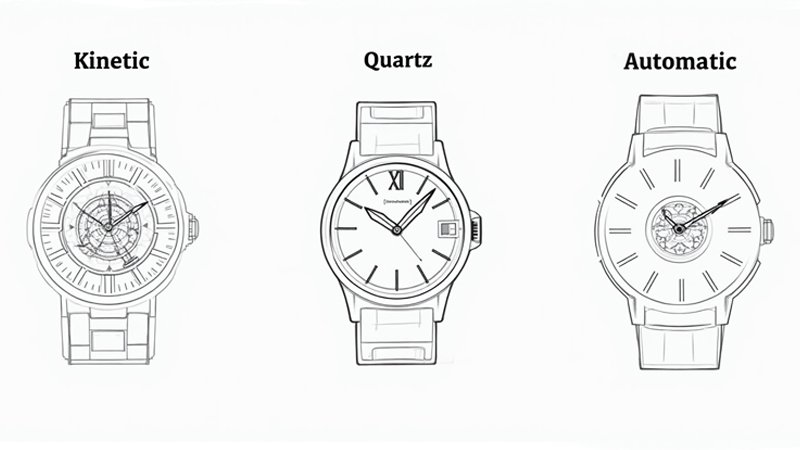
Kinetic vs. Quartz vs. Automatic: A Comparison
| Feature | Kinetic Watch | Quartz Watch | Automatic Watch |
|---|---|---|---|
| Power Source | Motion (Kinetic Energy) | Battery | Mechanical Winding |
| Accuracy | High (Quartz-based) | High | Moderate |
| Maintenance | Low | Low | Medium |
| Power Reserve | Months | 1–2 Years (Battery) | 2–3 Days |
| Eco-Friendly | Yes | No | Yes |
Popular Brands Offering Kinetic Watches
Seiko Kinetic Collection
Pioneers of kinetic technology, offering models like the Seiko Kinetic Diver’s, Kinetic GMT, and Kinetic Perpetual.
Citizen Eco-Drive and Other Hybrids
While Citizen’s Eco-Drive uses solar energy instead of kinetic, both represent sustainable watch technologies redefining modern horology.
How to Maintain a Kinetic Movement Watch
- Wear regularly to keep it charged.
- Avoid long storage without use; occasional motion maintains capacitor health.
- Keep away from magnets and extreme heat.
- Service every 5 years for optimal performance.
Common Myths About Kinetic Watches
“They Don’t Last Long” – Debunked
Modern capacitors can last 10–15 years before replacement, and the quartz mechanism ensures long-term reliability.
“They’re Just Like Quartz Watches” – Explained
While they share quartz oscillation, kinetic watches don’t rely on external batteries. They self-generate power through motion — a major distinction.
Are Kinetic Watches Worth Buying in 2025?
Absolutely. In an era focusing on sustainability and innovation, kinetic movement watches strike the perfect balance between eco-conscious technology and classic craftsmanship. They’re ideal for watch lovers who want precision, reliability, and environmental responsibility.
FAQs About Kinetic Movement Watches
1. How long can a kinetic watch run without movement?
Most can store energy for 1–6 months, depending on the model.
2. Can I overcharge my kinetic watch?
No, built-in circuits prevent overcharging.
3. How often do I need to replace the capacitor?
Typically every 10–15 years.
4. Do kinetic watches need batteries?
No disposable batteries — only a rechargeable cell.
5. Are kinetic watches waterproof?
Many Seiko Kinetic models are water-resistant up to 100 meters.
6. What’s the difference between Kinetic and Eco-Drive watches?
Kinetic uses motion to generate power, Eco-Drive uses light.
Conclusion: The Future of Kinetic Timekeeping
The Kinetic Movement Watch represents a beautiful harmony between tradition and technology. It’s a step forward in sustainable watchmaking, offering energy efficiency, precision, and timeless appeal — a perfect fit for the modern wrist.
Disclaimer:
All trademarks, logos, product names, and brand identifiers mentioned on FashionAudit.com are the property of their respective owners. They are used solely for the purpose of product review, comparison, and consumer information. FashionAudit.com does not claim any ownership of these marks.
No copyright or trademark infringement is intended. If any brand or rights holder believes their intellectual property has been misused, they can contact us directly and we will address the issue promptly.