
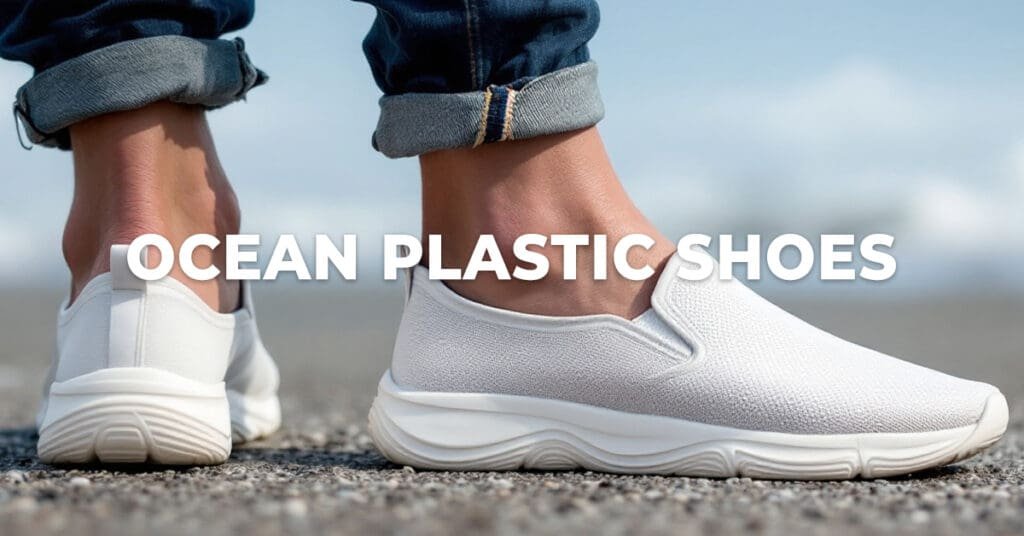
Introduction: Addressing Plastic Pollution Through Footwear Innovation
Plastic pollution in oceans has become a global environmental concern. However, innovative material solutions are helping address this challenge. One such solution involves transforming ocean-bound plastic waste into usable footwear materials.
As sustainability becomes central to footwear design, materials derived from marine plastic waste are gaining traction. As a result, shoes made with recycled ocean plastics often score well in sustainability-focused fashion audits, particularly in athletic and lifestyle categories.
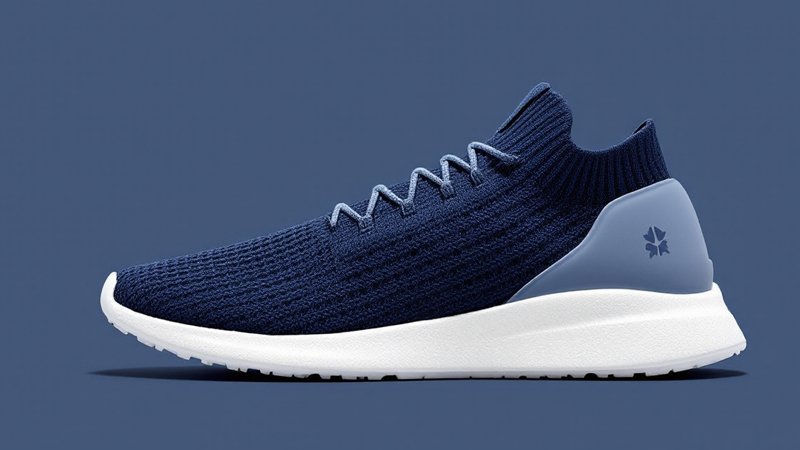
What Is Ocean Plastic Shoes Material?
Ocean plastic shoes material refers to textiles and components made from plastic waste collected from oceans, coastlines, or waterways. Unlike virgin synthetic materials, these fibers reuse discarded plastics such as bottles, fishing nets, and packaging.
Key characteristics include:
- Made from recycled marine plastic waste
- Lightweight and durable fiber structure
- Consistent texture suitable for uppers
- Comparable performance to conventional synthetics
Because the base material is recycled, it supports waste reduction efforts.
How Marine Plastic Waste Becomes Shoe Material
Manufacturers typically convert marine plastic waste through:
- Collecting plastic from oceans and coastal areas
- Sorting and cleaning the waste
- Shredding plastic into flakes
- Melting and spinning fibers
- Knitting or weaving uppers and textiles
As a result, harmful waste is transformed into functional footwear components.
Key Benefits of Marine Plastic-Based Shoe Materials
Reduction of Ocean Pollution
Plastic waste is removed from marine environments.
Durable and Lightweight Performance
Recycled fibers maintain strength and flexibility.
Lower Environmental Impact
Reusing plastic reduces demand for new petroleum-based materials.
Versatile Design Applications
Fibers work well in sneakers, liners, and laces.
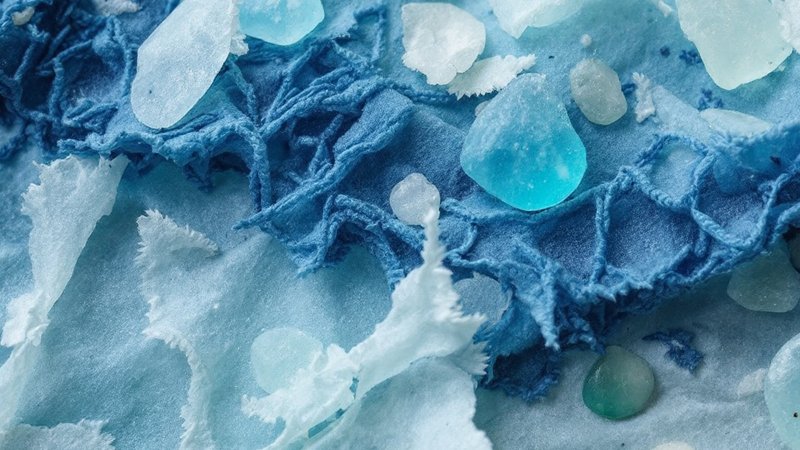
Ocean Plastic Material vs Virgin Synthetic Materials
| Feature | Recycled Marine Plastic | Virgin Synthetic |
|---|---|---|
| Raw source | Ocean & coastal waste | New plastic |
| Environmental impact | Lower | Higher |
| Durability | High | High |
| Weight | Lightweight | Lightweight |
| Sustainability value | Strong | Limited |
As a result, performance remains similar while environmental impact improves.
Where Ocean Plastic Materials Are Commonly Used
Footwear brands often use marine plastic fibers in:
- Sneaker uppers
- Knit and mesh constructions
- Shoe linings
- Laces and overlays
- Casual and athletic footwear
Therefore, it works best in breathable, lightweight shoe designs.
Comfort and Wearing Experience
Shoes using recycled marine plastic materials feel:
- Light on foot
- Flexible during movement
- Comfortable for extended wear
However, cushioning depends on the midsole and insole design rather than the upper material alone.
Durability and Long-Term Performance
High-quality recycled ocean plastic fibers offer dependable durability. Instead of breaking down quickly, these materials resist stretching, tearing, and abrasion.
With normal use:
- Fabric structure remains intact
- Shape stays stable
- Color retention remains good
As a result, long-term performance matches conventional materials.
Care Tips for Shoes Made with Marine Plastic Fibers
Proper care helps preserve appearance. For example:
- Clean with mild soap and water
- Avoid excessive heat exposure
- Air dry naturally
- Store in dry conditions

Sustainability Perspective
Using marine plastic waste supports cleanup efforts and circular material use. Because of this, footwear made with ocean-recovered plastics often receives positive sustainability ratings.
During a sustainability-focused fashion audit, these materials score well for waste reduction, recycling innovation, and environmental responsibility.
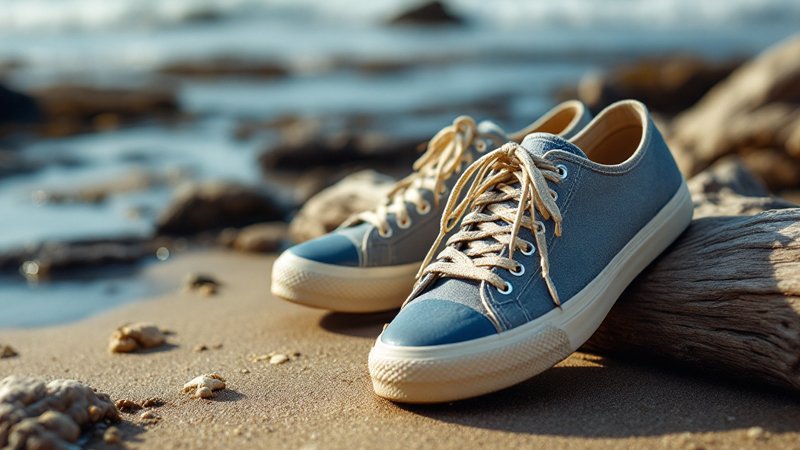
When Ocean Plastic-Based Materials Are the Right Choice
Choose footwear made with recycled marine plastics if you want:
- Reduced environmental footprint
- Support for ocean cleanup initiatives
- Lightweight, breathable uppers
- Modern athletic or casual style
As a result, they appeal strongly to eco-conscious consumers.
Common Misconceptions to Avoid
However, many people:
- Assume recycled plastic feels rough
- Expect biodegradability
- Confuse ocean-bound with deep-sea plastics
- Ignore overall shoe construction quality
Avoiding these misconceptions leads to better expectations.
FAQs
Q1: Is ocean plastic shoes material durable?
Yes, recycled marine fibers are strong and long-lasting.
Q2: Does it feel different from regular synthetic materials?
Most users notice little to no difference.
Q3: Is this material eco-friendly?
It reduces ocean waste and lowers plastic production.
Q4: Where is ocean plastic material used in shoes?
Commonly in uppers, linings, and laces.
Q5: Are shoes made from ocean plastic washable?
Many can be gently cleaned, depending on construction.
Conclusion: From Pollution to Purpose
In conclusion, ocean plastic shoes material demonstrates how innovation can turn environmental challenges into practical solutions. By repurposing marine waste into durable footwear components, brands reduce pollution while delivering modern performance.
Ultimately, whether you’re choosing eco-conscious sneakers or evaluating materials during a detailed fashion audit, marine plastic-based footwear materials represent a meaningful step toward a cleaner future.