
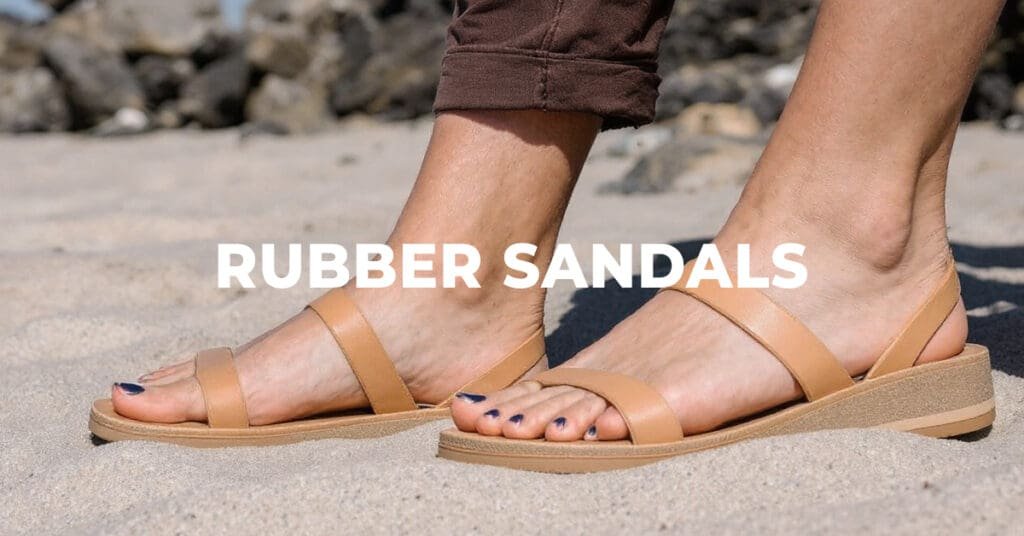
Introduction: Why Rubber Sandals Remain a Classic Choice
Footwear trends change, but some materials remain timeless. However, not all sandals handle water, rough surfaces, and daily wear equally well. Rubber sandals continue to stand out because they offer excellent grip, flexibility, and resistance to moisture.
Moreover, people often choose these sandals for outdoor use, travel, and wet environments. As a result, rubber-based designs remain popular—especially when durability and function are evaluated during a practical fashion audit.

What Makes Rubber Ideal for Sandals?
Rubber is a naturally flexible and resilient material. Unlike foam-based options, rubber provides strong traction and holds up well on wet or uneven surfaces.
Sandals made with rubber are commonly used for:
- Beach and poolside wear
- Rainy or wet conditions
- Casual outdoor activities
- Daily errands
- Travel and sightseeing
Because rubber repels water and resists slipping, it performs well in demanding environments.
How Rubber-Sole Sandals Are Made
Manufacturers produce rubber-based footwear through:
- Processing natural or synthetic rubber compounds
- Molding soles under heat and pressure
- Adding tread patterns for traction
- Attaching straps or molded uppers
- Finishing surfaces for flexibility
As a result, the sandals deliver durability and reliable grip.
Key Benefits of Rubber-Sole Footwear
Excellent Grip
Rubber provides strong traction on wet and dry surfaces. Therefore, it reduces the risk of slipping.
Water Resistance
The material does not absorb moisture, making it ideal for wet areas.
High Durability
Rubber withstands rough use and outdoor conditions.
Flexible Movement
The sole bends naturally with the foot.

Rubber Sandals vs EVA Sandals
| Feature | Rubber Sandals | EVA Sandals |
|---|---|---|
| Grip | Excellent | Moderate |
| Water resistance | High | High |
| Cushioning | Firm | Soft |
| Durability | High | Moderate |
| Best use | Outdoor & wet use | Casual comfort |
As a result, rubber works better where traction matters.
Where Rubber-Based Sandals Are Commonly Used
People prefer these sandals for:
- Beach and pool environments
- Rainy weather
- Outdoor daily use
- Travel and sightseeing
- Shower and bathroom use
Therefore, they perform best in wet or rugged settings.
Long-Term Performance and Wear
Rubber maintains structure over time. Instead of flattening quickly, it keeps grip and shape with regular use.
Over time:
- Traction remains reliable
- Sole shape stays stable
- Flexibility remains consistent
As a result, rubber sandals often last longer than soft foam alternatives.
Care Tips for Rubber-Sole Sandals
Proper care extends lifespan. For example:
- Rinse after exposure to saltwater
- Clean with mild soap
- Air dry naturally
- Avoid prolonged direct sunlight

Are Rubber-Based Sandals Comfortable for Daily Use?
Yes, for outdoor and casual use. However, rubber soles feel firmer than cushioned foams.
Best suited for:
- Short to moderate walking
- Wet environments
- Outdoor activities
- Casual daily use
They are less ideal for long indoor wear where softness matters.
Sustainability Perspective
Natural rubber is renewable, while synthetic rubber is petroleum-based. However, the long lifespan of rubber footwear reduces frequent replacement.
Because of this, rubber-based sandals may score well during a durability-focused fashion audit, especially when longevity outweighs softness.

When Rubber Sandals Are the Right Choice
Choose rubber sandals if you want:
- Strong grip and traction
- Water-resistant footwear
- Durable outdoor use
- Reliable everyday performance
As a result, they suit active and outdoor-focused lifestyles.
Common Mistakes to Avoid
However, many people:
- Expect soft cushioning like foam
- Leave sandals in extreme heat
- Skip cleaning after saltwater use
- Ignore worn tread patterns
Avoiding these mistakes improves comfort and safety.
FAQs
Q1: Are sandals with rubber soles waterproof?
Yes, rubber resists water very well.
Q2: Do rubber soles slip on wet floors?
No, they provide strong traction when designed properly.
Q3: Are they durable for daily use?
Yes, especially for outdoor wear.
Q4: Do they provide cushioning?
They offer firm support rather than plush cushioning.
Q5: Are they suitable for beach use?
Yes, they are ideal for beach and pool environments.
Conclusion: Reliable Footwear for Wet and Outdoor Conditions
In conclusion, rubber sandals deliver excellent grip, water resistance, and long-term durability. While firmer than foam-based options, they excel in outdoor reliability and traction.
Ultimately, whether you’re choosing beach footwear or reviewing practical essentials during a thoughtful fashion audit, rubber-based sandals remain a dependable and functional choice.