
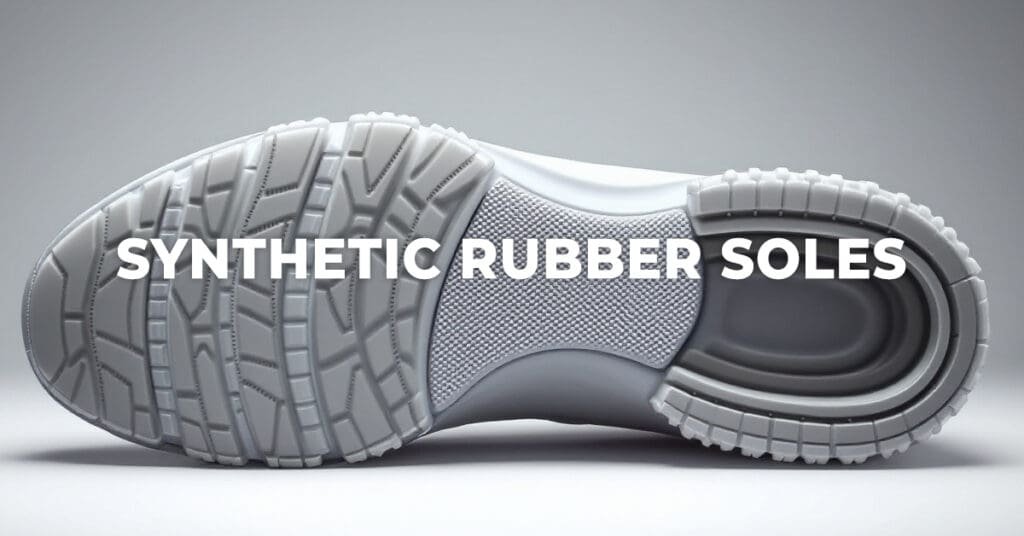
Introduction: Why Synthetic Rubber Soles Are Everywhere
Shoe soles absorb impact, provide traction, and protect feet throughout the day. However, not every material handles repeated wear efficiently. Synthetic rubber soles have become a standard choice because they combine durability, grip, and affordability in one solution.
Moreover, manufacturers prefer man-made rubber compounds for their predictable quality and large-scale production. As a result, understanding this sole material helps you choose practical footwear—especially during a thoughtful fashion audit focused on longevity and value.
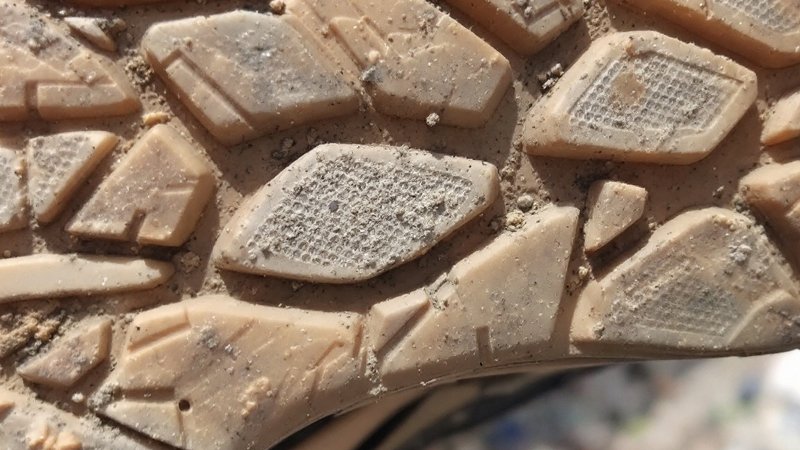
What Are Man-Made Rubber Outsoles?
These outsoles use engineered rubber compounds, usually derived from petroleum-based polymers. Manufacturers adjust the formulation to achieve specific levels of hardness, flexibility, and abrasion resistance.
You’ll commonly find this outsole type in:
- Casual daily footwear
- Sports and training shoes
- School and uniform shoes
- Work and utility footwear
- Budget-friendly lifestyle shoes
Because the composition is controlled, performance stays consistent across pairs.
How Synthetic Rubber Soles Are Made
Manufacturers follow a precise process:
- Blending rubber polymers with stabilizers
- Vulcanizing the compound for strength
- Molding tread patterns for traction
- Cooling and finishing the outsole
- Bonding it securely to the upper
As a result, the outsole maintains uniform thickness and strength.
Key Benefits of Synthetic Rubber Soles
High Wear Resistance
This material withstands abrasion from daily walking and movement.
Reliable Everyday Grip
Patterned treads improve traction on common surfaces.
Predictable Performance
Controlled formulations ensure consistent behavior over time.
Cost-Effective Construction
Production costs remain lower than many natural alternatives.
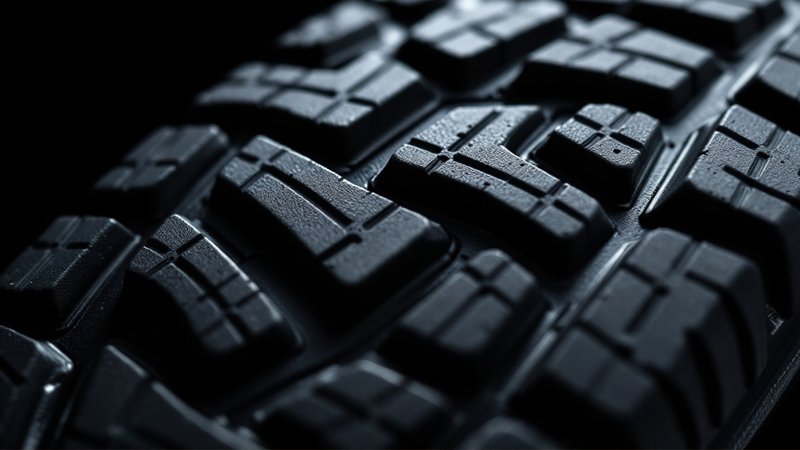
Synthetic Rubber vs Natural Latex Rubber
| Feature | Engineered Rubber | Natural Latex Rubber |
|---|---|---|
| Source | Man-made polymers | Rubber tree latex |
| Durability | High | Moderate |
| Flexibility | Moderate | High |
| Grip | Good | Excellent |
| Cost | Lower | Higher |
| Sustainability | Limited | Renewable |
As a result, engineered rubber works best for durability-focused footwear.
Where Synthetic Rubber Soles Are Commonly Used
Footwear brands frequently choose rubber-based outsoles for:
- Training and athletic shoes
- Casual everyday wear
- School footwear
- Work and safety shoes
- Travel-friendly designs
Therefore, this sole type performs well in high-use environments.
How Synthetic Rubber Soles Perform Over Time
This material retains structure well. Instead of softening, it may gradually become firmer with age.
Over time:
- Tread wears evenly
- Grip stays reliable
- Flexibility reduces slightly
As a result, proper care helps preserve comfort.
How to Care for Shoes with Synthetic Rubber Soles
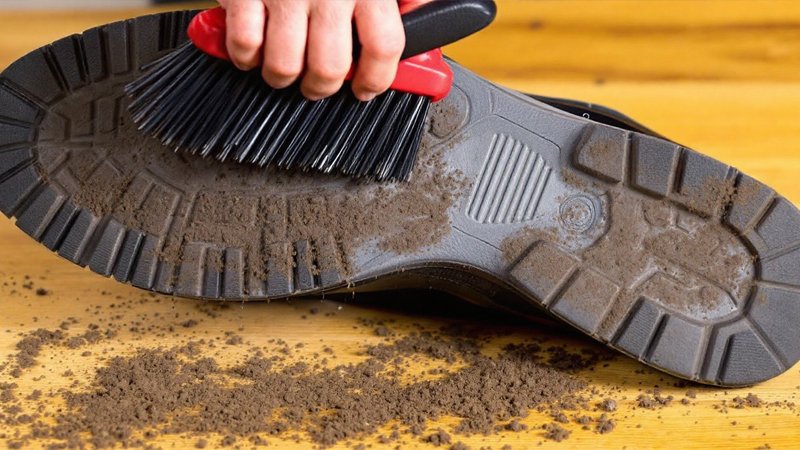
Simple habits extend outsole life. For example:
- Remove dirt with a soft brush
- Wash with mild soap and water
- Dry away from direct heat
- Avoid harsh chemicals
Are These Soles Suitable for Daily Wear?
Yes, especially for frequent use. However, they feel firmer than plant-based rubber during long wear.
Best suited for:
- Daily commuting
- Sports and training
- School and work footwear
- Urban walking
They are less ideal for barefoot-style comfort.
Sustainability Perspective
Man-made rubber does not biodegrade easily. However, long service life reduces frequent replacement. Some brands now incorporate recycled rubber into outsole production.
Because of this, footwear using this sole type may score moderately during a durability-focused fashion audit, particularly when longevity matters more than sourcing.
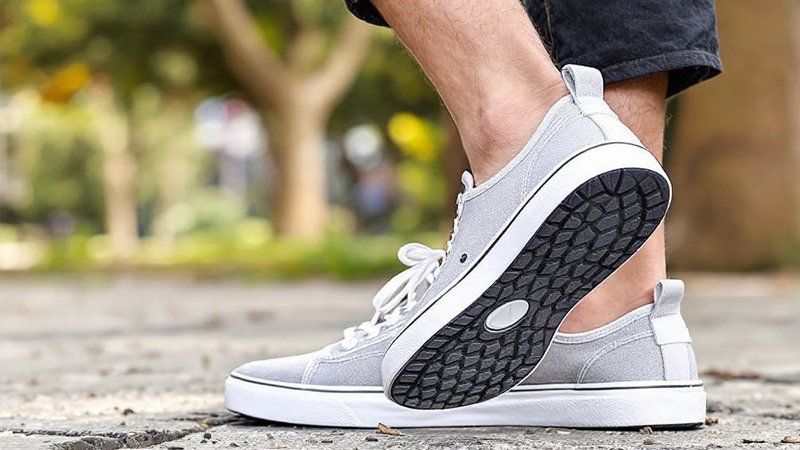
When a Synthetic Rubber Sole Is the Right Choice
Choose footwear with Synthetic rubber outsoles if you want:
- Long-lasting durability
- Reliable daily traction
- Affordable pricing
- Consistent performance
As a result, this outsole suits practical, high-use lifestyles.
Common Mistakes to Avoid
However, many people:
- Store shoes near heat sources
- Expect plush cushioning
- Skip regular cleaning
- Leave shoes wet after use
Avoiding these mistakes improves lifespan.
FAQs
Q1: Are Synthetic Rubber Soles durable?
Yes, they resist abrasion very well.
Q2: Do these soles provide good grip?
Yes, especially on dry and urban surfaces.
Q3: Are they flexible?
Moderately, depending on formulation.
Q4: Are Synthetic Rubber Soles waterproof?
They resist water but are not fully waterproof.
Q5: Are they eco-friendly?
They last long, but natural rubber is more sustainable.
Conclusion: Practical Performance for Everyday Footwear
In conclusion, synthetic rubber soles deliver durability, grip, and cost efficiency for daily footwear. While they lack the natural elasticity of latex-based rubber, they excel in consistency and long-term wear.
Ultimately, whether you’re choosing work shoes or reviewing outsole performance during a thoughtful fashion audit, this sole type offers dependable, everyday reliability.