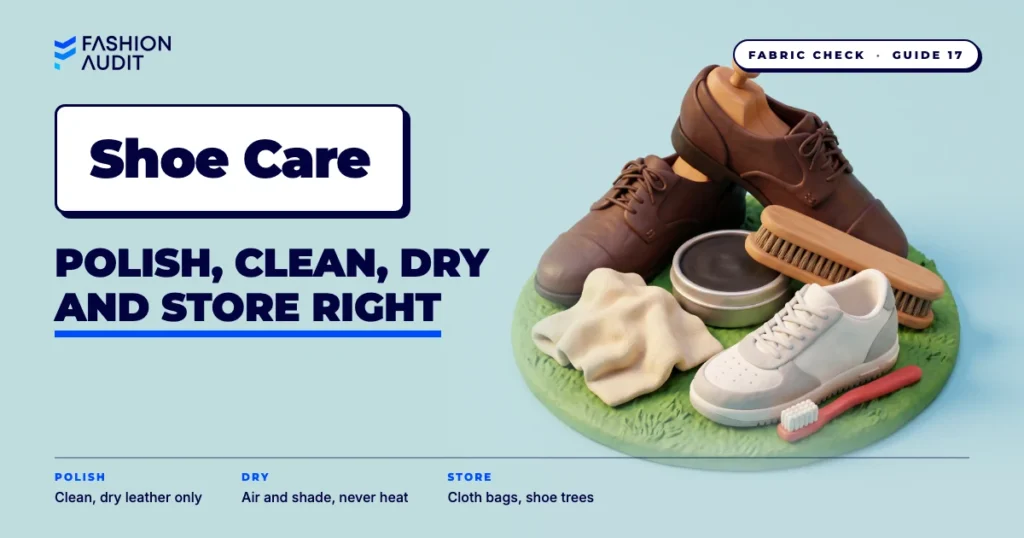
Good shoes last for years with a few minutes of care a week; neglected ones fall apart in a season. Indian conditions are tough on footwear: dust in winter, sweat in summer and soaking rain in the monsoon. This guide covers a simple care routine, the right polish, how to polish leather and clean white sneakers, monsoon care, shoe trees, smelly shoes, storage, and when to repair or replace.
Fabric Check is Fashion Audit’s series on the materials and making of what you wear.
The short answer
Wipe shoes after wearing, let them dry between wears, and do not wear the same pair two days running. Polish leather with wax or cream polish, brush suede instead of washing it, and clean sneakers gently by hand. Dry wet shoes with air, never heat. Store them clean, in cloth bags, with shoe trees or paper inside. And take good shoes to a cobbler before they are beyond saving.
A simple shoe-care routine
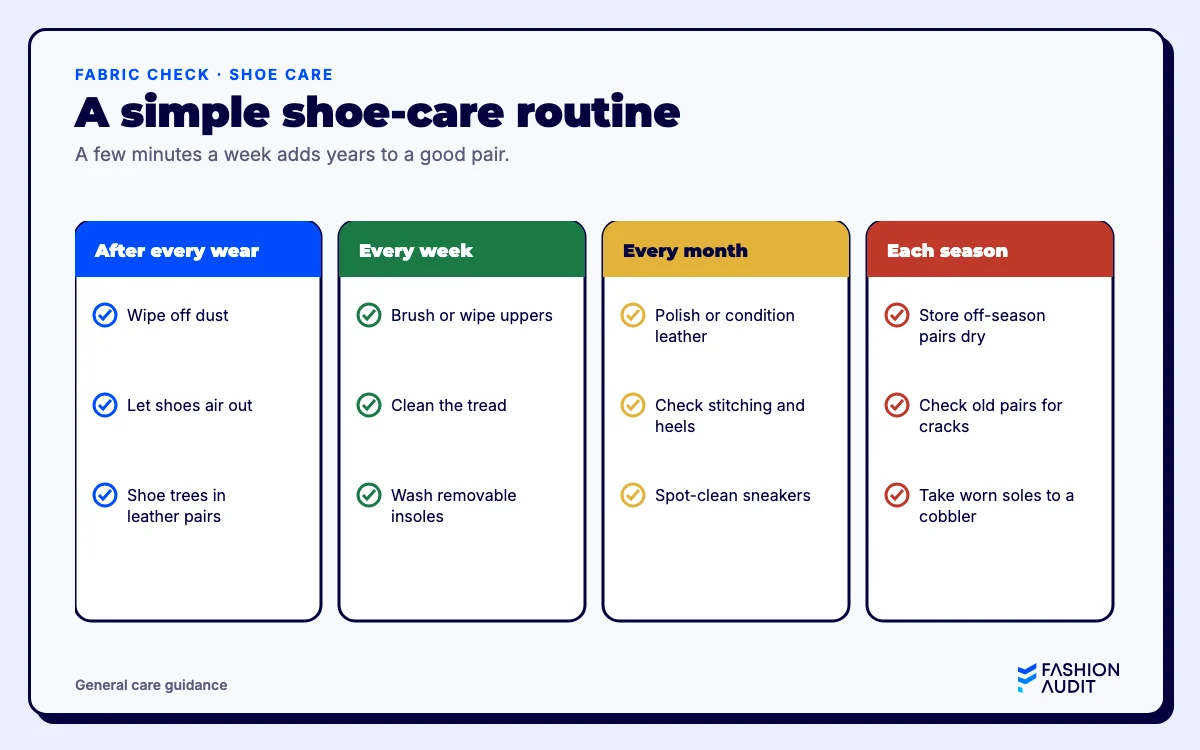
- After every wear: wipe off dust, let the shoes air out, and put shoe trees in leather pairs.
- Every week: brush or wipe the uppers, clean the tread, and wash removable insoles.
- Every month: polish or condition leather, check the stitching and heels, and spot-clean sneakers.
- Each season: store off-season pairs clean and dry, check old pairs for cracks, and take worn soles to a cobbler.
Wax, cream or liquid polish?
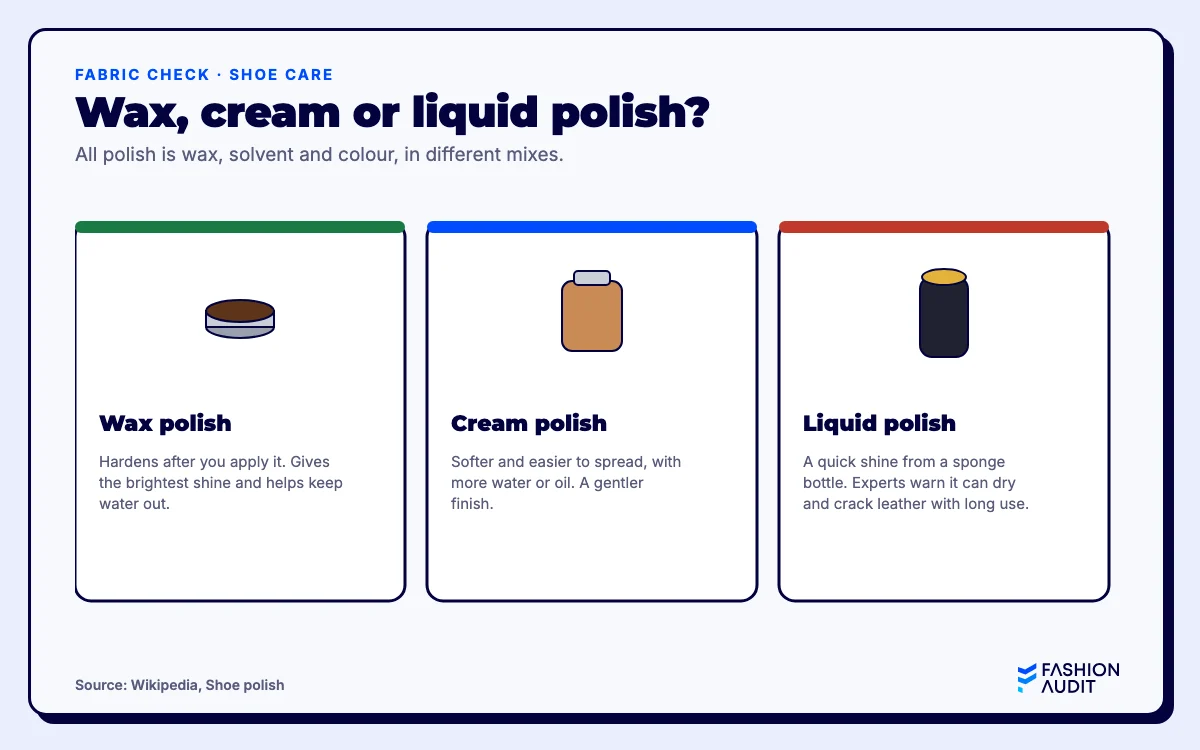
Shoe polish is made of waxes, solvents and colour. The type changes what it does (Wikipedia: Shoe polish):
- Wax polish has a lot of solvent that evaporates, so it hardens after you apply it while keeping its gloss. It gives the brightest shine and helps keep water out.
- Cream polish is softer, with more water or oil, and easier to spread.
- Liquid polish in a sponge-top bottle gives a fast shine, but many experts warn that using it for a long time can dry out leather and make it crack.
Use polish in a ventilated room: its fumes can irritate the eyes, skin and throat. Keep it away from children.
How to polish leather shoes
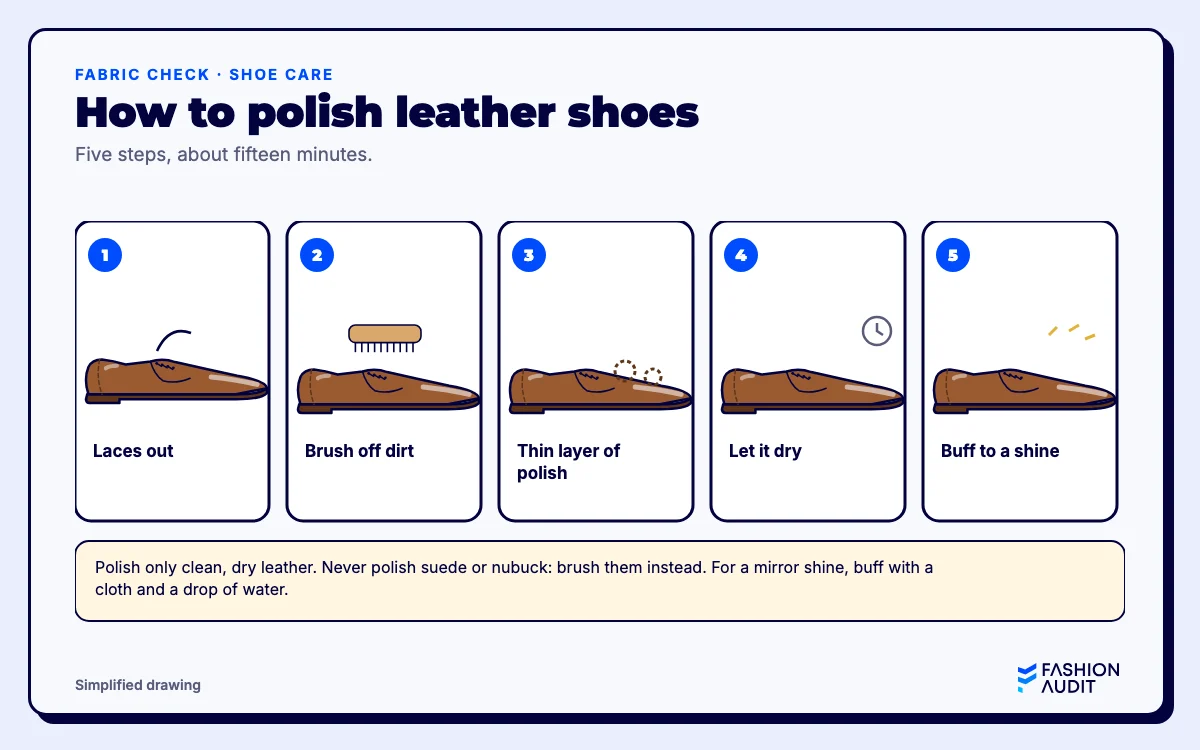
- Take the laces out so polish does not stain them.
- Brush off dirt and make sure the shoes are dry.
- Apply a thin layer of polish with a cloth or brush, in small circles.
- Let it dry for a few minutes.
- Buff to a shine with a clean cloth or brush. For a mirror finish, polish in small circles with a cloth and a drop of water, a method called spit-polishing.
Polish only smooth leather. Suede and nubuck should be brushed, not polished: see our shoe uppers guide.
How to clean white sneakers
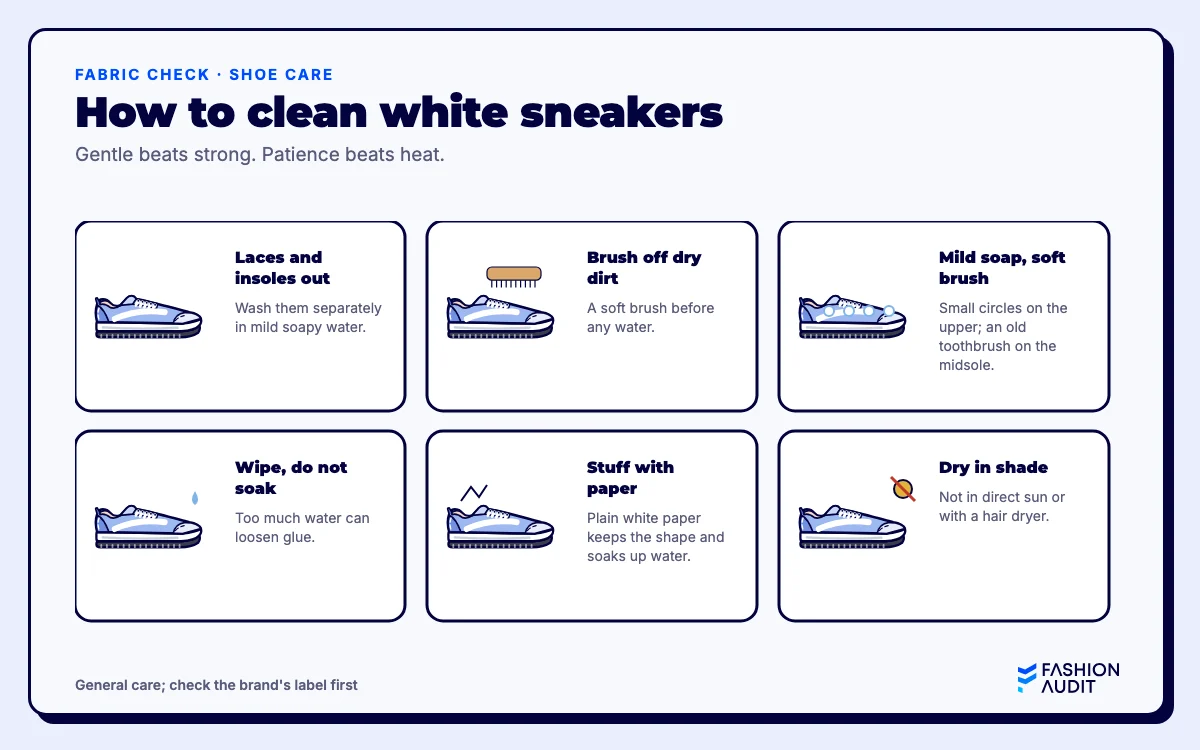
- Laces and insoles out: wash them separately in mild soapy water.
- Brush off dry dirt with a soft brush before using any water.
- Mild soap and a soft brush: work in small circles on the upper, and use an old toothbrush on the midsole.
- Wipe, do not soak: too much water can loosen the glue that holds the sole.
- Stuff with plain white paper to keep the shape and soak up water. Printed newspaper can mark white shoes.
- Dry in shade, not in direct sun or with a hair dryer.
Always check the brand’s own care label first: some sneakers can go in a washing machine, many should not.
Monsoon shoe care
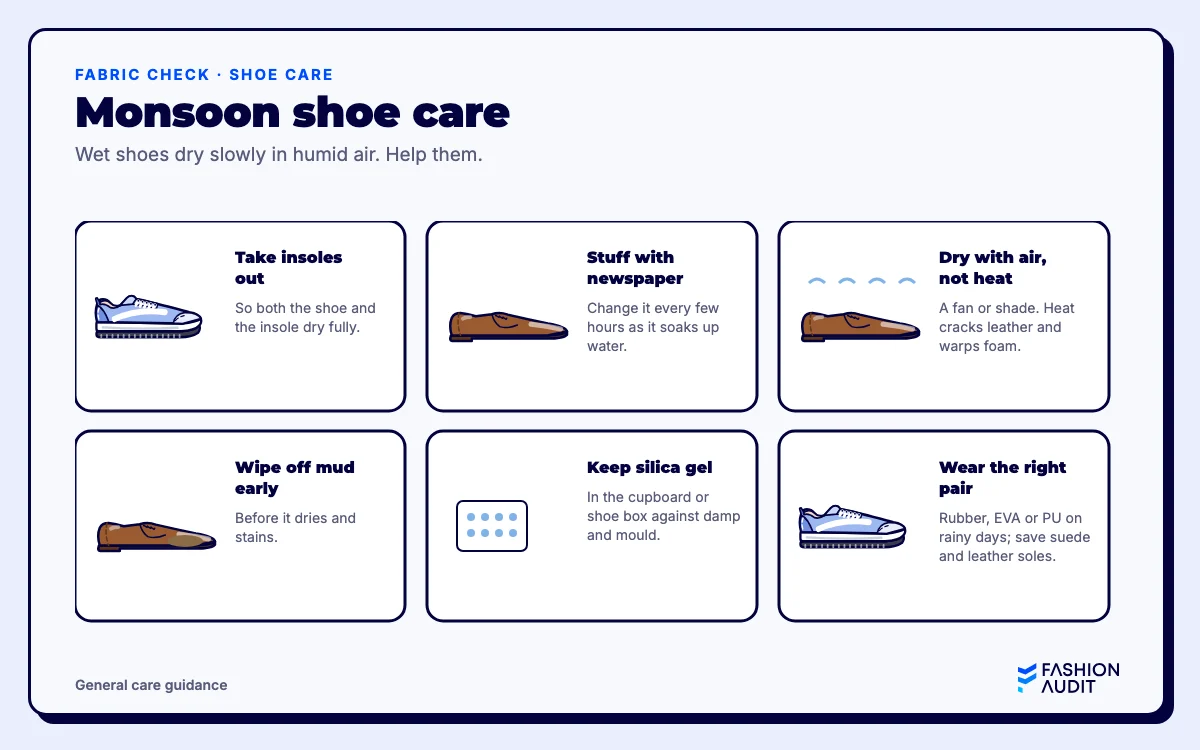
- Take insoles out so both the shoe and the insole dry fully.
- Stuff with newspaper and change it every few hours as it soaks up water.
- Dry with air, not heat: a fan or a shaded spot. Heat can crack leather and warp foam soles.
- Wipe off mud early, before it dries and stains.
- Keep silica gel in the cupboard or shoe box to fight damp and mould.
- Wear the right pair: rubber, EVA or PU on rainy days; keep suede and leather-soled shoes for dry days. Our shoe soles guide explains which soles cope best.
Why shoe trees are worth it
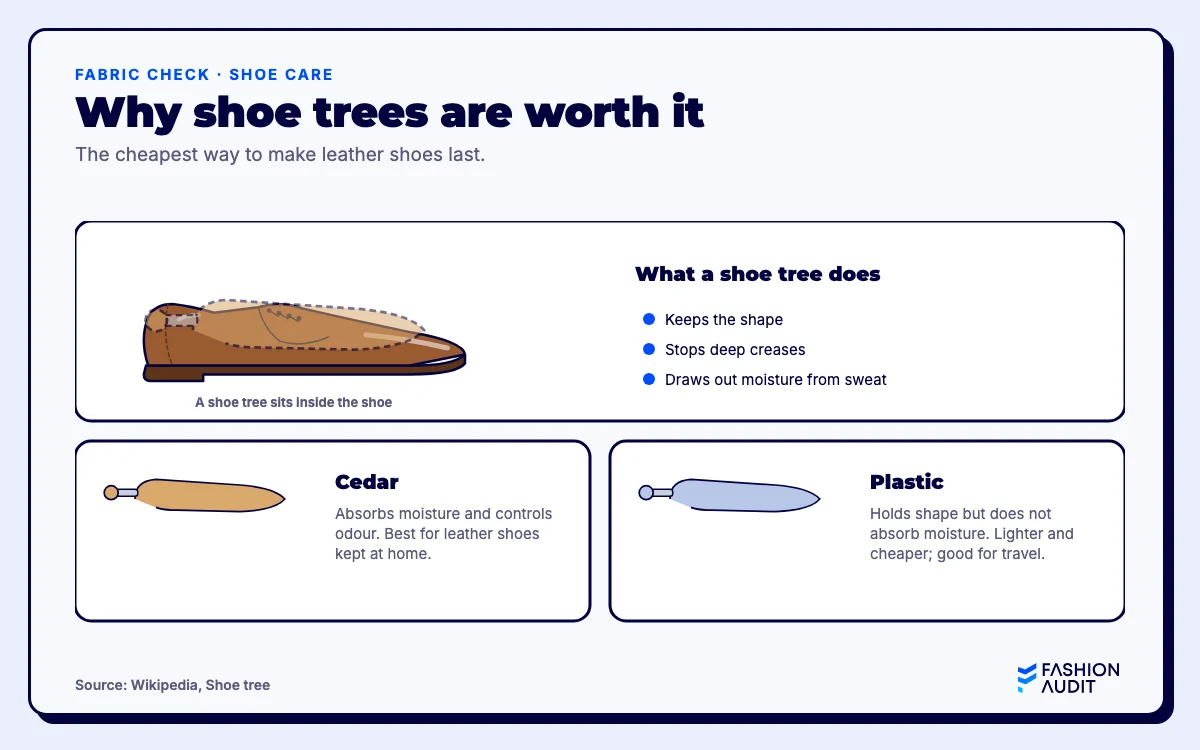
A shoe tree is a foot-shaped insert that keeps a shoe’s shape, stops deep creases and helps draw out moisture from sweat, which can otherwise rot the lining and damage the leather. Cedar shoe trees absorb moisture and help control odour. Plastic ones hold the shape but do not absorb moisture; they are lighter and cheaper, which makes them handy for travel (Wikipedia: Shoe tree). If you do not have shoe trees, plain paper stuffed into the toe is better than nothing.
Stop shoes from smelling
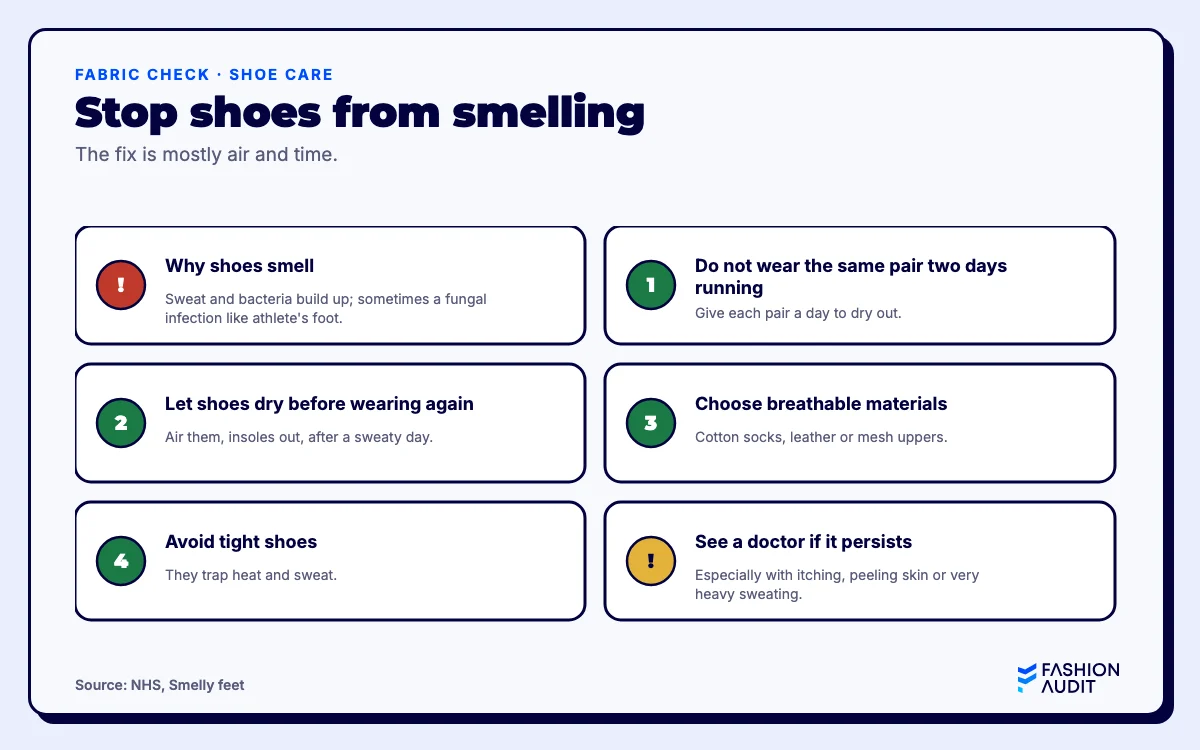
Smelly feet and shoes are usually caused by a build-up of sweat and bacteria, and sometimes by a fungal infection such as athlete’s foot. The NHS suggests (NHS: Smelly feet):
- do not wear the same socks or shoes two days in a row;
- let shoes dry out before you wear them again;
- choose breathable or natural materials, such as cotton socks and leather shoes;
- avoid tight shoes.
If the smell persists, or comes with itching, peeling skin or very heavy sweating, see a doctor or pharmacist.
How to store shoes
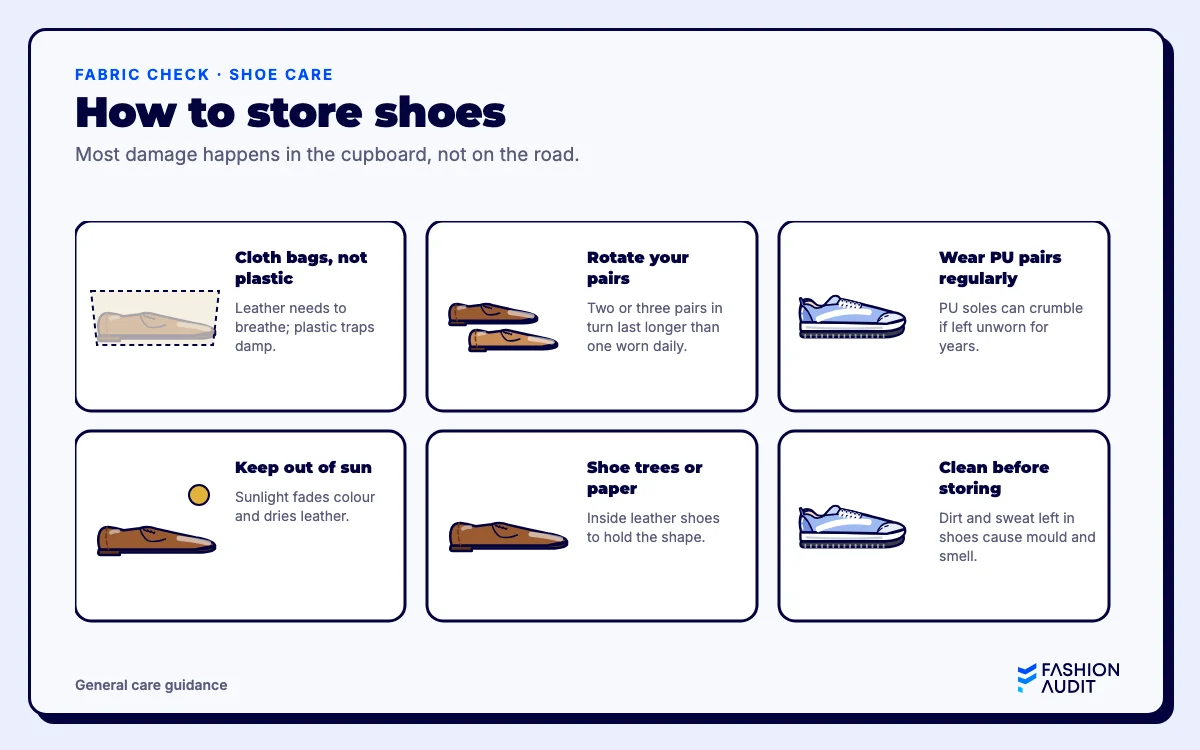
- Cloth bags, not plastic: leather needs to breathe, and plastic traps damp.
- Rotate your pairs: two or three pairs worn in turn dry out properly between wears.
- Wear PU-soled pairs regularly: polyurethane soles can crumble when left unworn for years.
- Keep out of strong sun, which fades colour and dries leather.
- Shoe trees or paper inside leather shoes hold their shape.
- Clean before storing: dirt and sweat left in shoes encourage mould and smell.
Repair or replace?
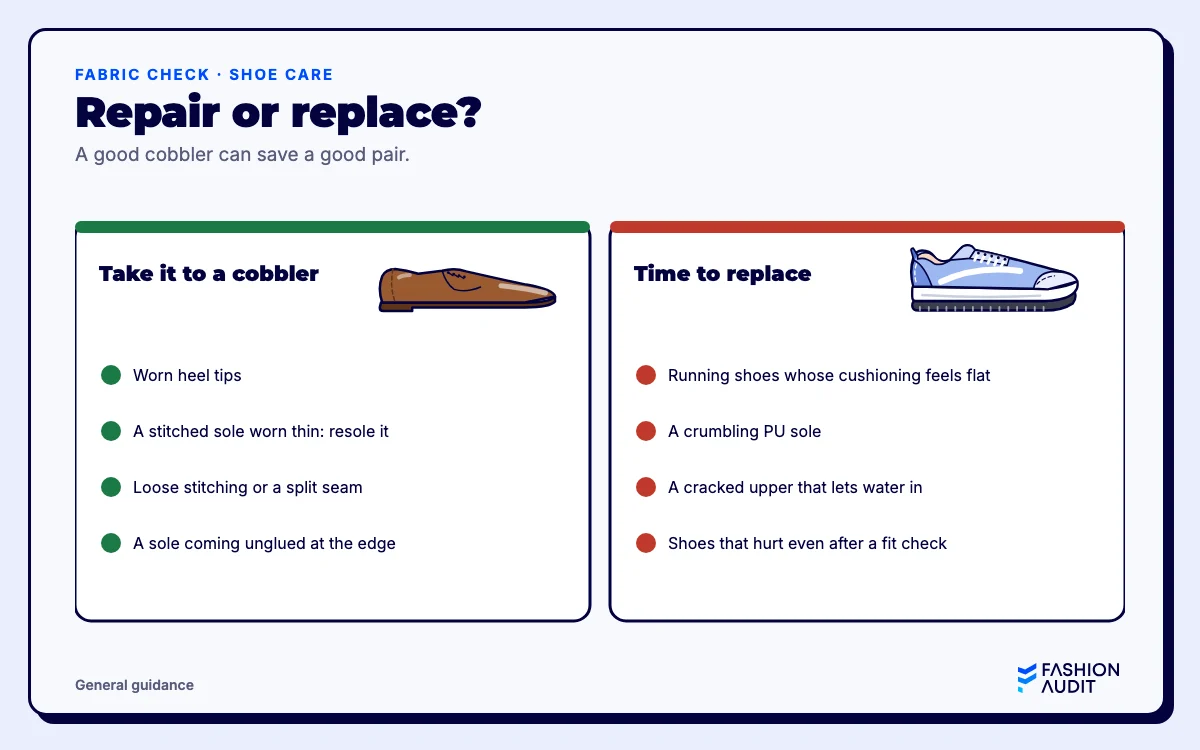
Take it to a cobbler for worn heel tips, a thin stitched sole that can be resoled, loose stitching or a split seam, or a sole coming unglued at the edge. India’s neighbourhood cobblers can often fix these quickly and cheaply.
Replace running shoes whose cushioning feels flat, any pair with a crumbling PU sole, a cracked upper that lets water in, or shoes that still hurt after a proper fit check (see our shoe size and fit guide).
A short history of shoe polish
Early polishes were mixtures of wax, oil and tallow, called dubbin, used to soften and weatherproof leather rather than shine it. Commercial “blacking” was made in London from the late 1700s, and in Philadelphia from 1832. Kiwi, made by Scottish settlers in Melbourne from 1904 and launched in 1906, spread around the world with soldiers in both World Wars (Wikipedia: Shoe polish).
Your shoe-care kit
- A soft cloth and a horsehair or soft-bristle brush.
- Wax or cream polish in your shoe colours, plus a neutral one.
- A suede brush or suede rubber, if you own suede or nubuck.
- An old toothbrush and mild soap for sneakers.
- Shoe trees (cedar for home, plastic for travel), or plain paper.
- Silica gel sachets and cloth shoe bags.
We have not listed prices: these items are widely available, and prices vary a lot by shop and brand.
Where the marketing misleads
- “Instant shine” liquid polish is quick, but long-term use can dry and crack leather.
- “Machine washable” on one sneaker does not apply to all sneakers. Check each label.
- “Waterproof spray” helps, but suede still marks in heavy rain.
- “Odour-free” insoles do not replace letting shoes dry between wears.
What it means for you
- Rotate pairs and let shoes dry between wears.
- Polish leather with wax or cream; brush suede and nubuck.
- Dry with air, not heat, especially in the monsoon.
- Use shoe trees or paper, and store shoes in cloth, not plastic.
- Repair early: a cobbler can add years to a good pair.
Common questions
How often should I polish leather shoes?
For shoes you wear often, about once a month, or whenever they look dull or dry. Brush or wipe them after every wear.
Can I put shoes in the washing machine?
Only if the brand’s care label says so. Leather, suede and most formal shoes should never go in a machine; many sneakers are safer cleaned by hand.
How do I dry wet shoes fast?
Take out the insoles, stuff the shoes with newspaper, change it every few hours, and leave them in a ventilated, shaded spot or in front of a fan. Avoid direct heat.
Do shoe trees really help?
Yes, especially for leather shoes. They keep the shape, reduce creases and, if cedar, help absorb moisture and odour.
How do I stop my shoes from smelling?
Do not wear the same pair two days running, let shoes dry fully, wear breathable socks and shoes, and avoid tight footwear. See a doctor if it persists.
The bottom line
Shoe care is mostly simple habits. Let shoes rest and dry between wears, polish leather and brush suede, dry wet shoes with air, store them in cloth with shoe trees, and repair them before it is too late. Your shoes, and your wallet, will thank you.
Sources
Illustrations by Fashion Audit. This guide is general information, not medical advice. Have a correction? Write to us through the contact page and we will update this guide with a dated note.