
The sole decides how a shoe feels, grips and lasts, and most Indian shoe listings now name the material of each layer: EVA, PU, rubber, TPR, PVC or leather. Those letters tell you a lot if you know what they mean. This guide explains the three layers of a sole, what each material is good at, why some old shoes crumble, what to check before you buy, and which sole suits which use.
Fabric Check is Fashion Audit’s series on the materials in your wardrobe. Prices checked 11 November 2026.
The short answer
For running and walking, look for an EVA (or similar foam) midsole with a rubber outsole. For office and formal shoes, a rubber or TPR outsole grips better than a smooth leather sole. For sliders, clogs and the monsoon, light, waterproof EVA is ideal. And if you own PU-soled shoes, wear them regularly and store them dry, because PU can crumble when left unworn for years.
What is under your foot
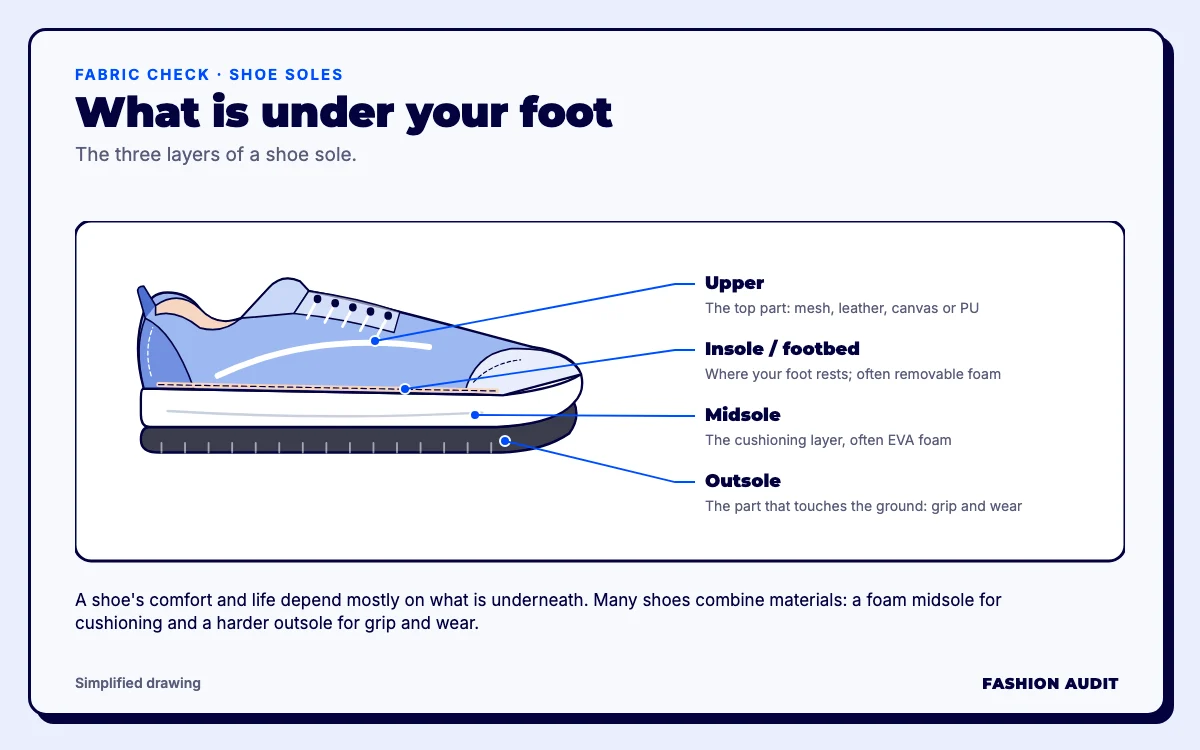
- Insole or footbed: where your foot rests. Often a removable foam layer; listings may say “memory foam”, “PU foam” or “EVA foam”.
- Midsole: the cushioning layer between insole and outsole. In sports shoes it is typically EVA foam, used as a shock absorber (Wikipedia: Ethylene-vinyl acetate).
- Outsole: the part that touches the ground, which decides grip and how fast the shoe wears out.
Many shoes combine materials: a soft foam midsole for comfort and a harder outsole for grip and wear. The upper on top may be mesh, leather, canvas or PU (see our leather guide).
Six sole materials compared
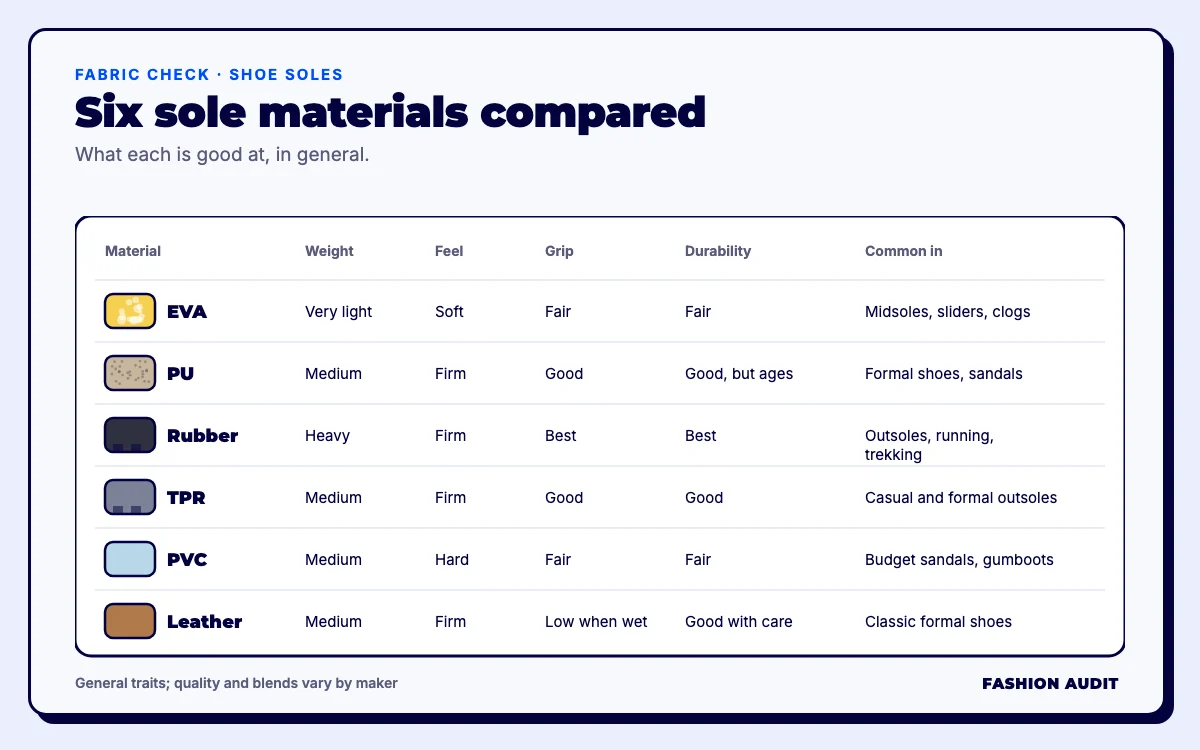
| Material | Good at | Watch for | Common in |
|---|---|---|---|
| EVA foam | Very light, soft, waterproof | Less grip than rubber | Midsoles, sliders, clogs |
| PU (polyurethane) | Durable, comfortable | Can crumble with age if unworn | Formal shoes, sandals |
| Rubber | Grip and wear | Heavier | Running, trekking, outsoles |
| TPR | Good grip, easy to mould | Not as tough as good rubber | Casual and formal outsoles |
| PVC | Cheap, waterproof | Hard and less flexible | Budget sandals, gumboots |
| Leather | Classic look, can be resoled | Slippery and soaks up water when wet | Traditional formal shoes |
These are general traits. Makers use different blends and densities, so a good TPR sole can outlast a poor rubber one.
EVA: the light foam
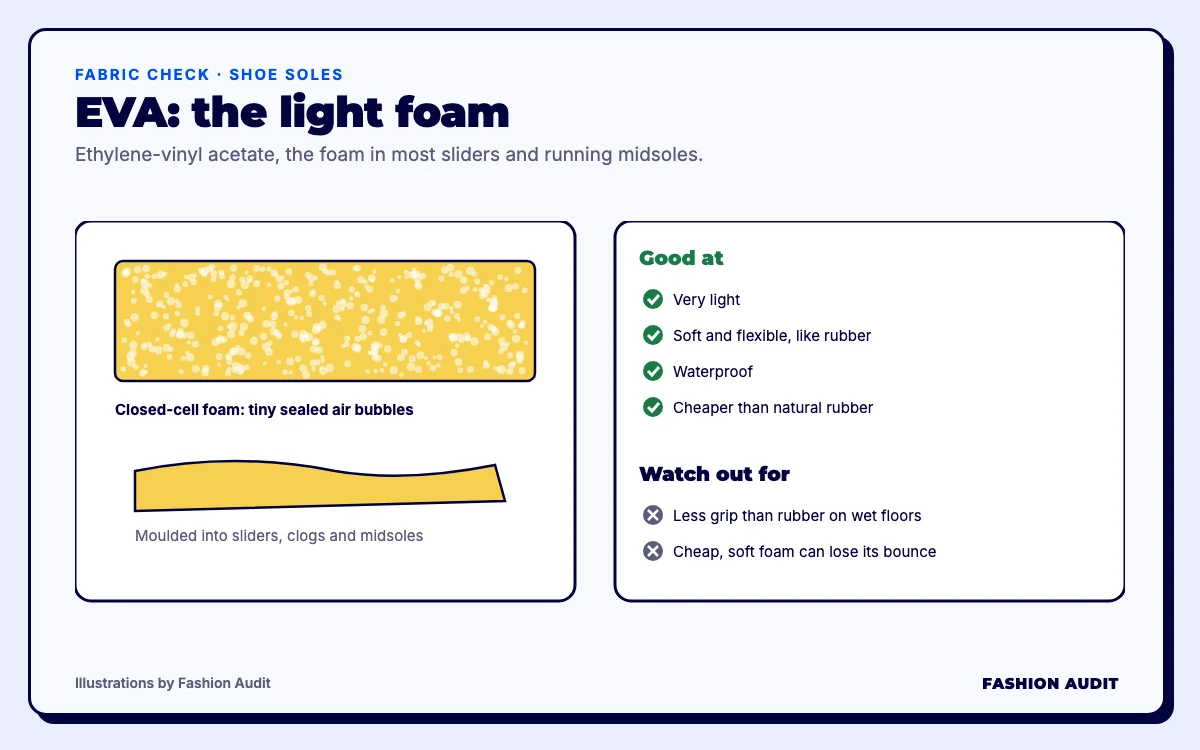
EVA (ethylene-vinyl acetate) is a closed-cell foam, sometimes called foam rubber. It is soft and flexible like rubber, waterproof and very light. EVA slippers and sandals are easy to mould and cost less than natural rubber, and EVA is the usual shock-absorbing midsole in sports shoes (Wikipedia: Ethylene-vinyl acetate). Its weak points: an all-EVA sole grips less than rubber on wet floors, and cheap, soft foam can lose its bounce with heavy use. Press it with your thumb: good foam springs back.
PU: durable, but do not forget it
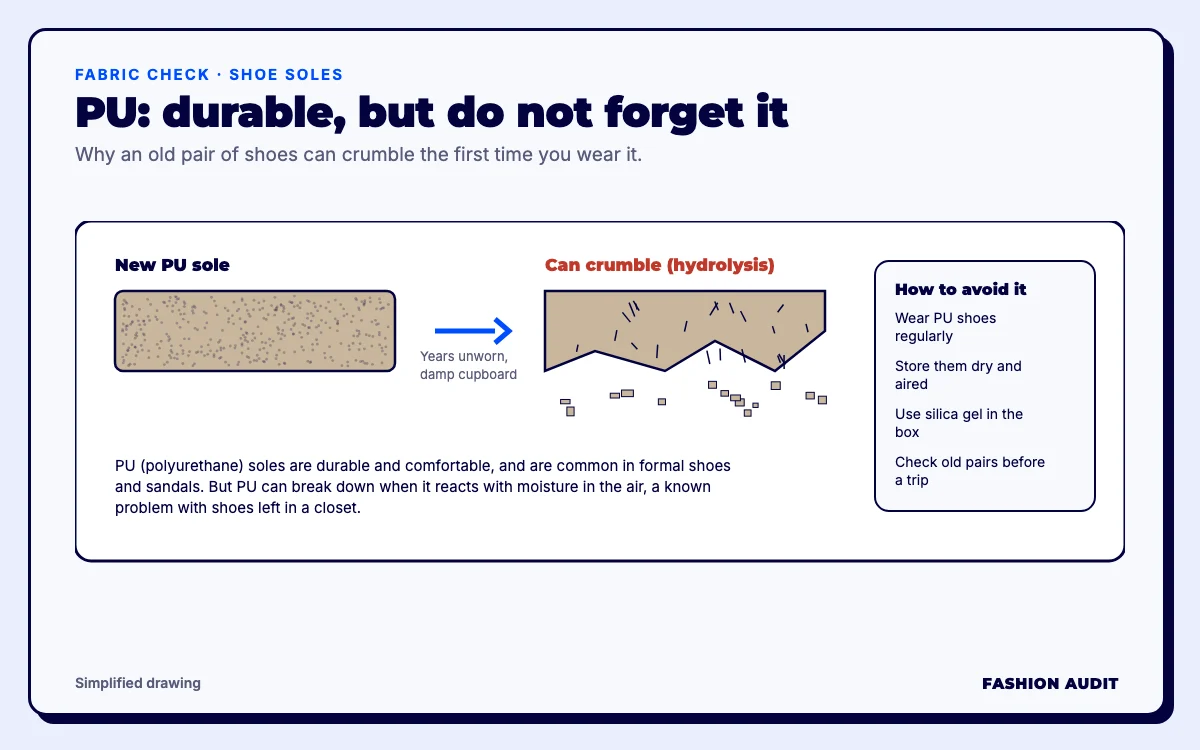
Polyurethane, first made in Germany in 1937, is widely used in shoe soles. But it can degrade through hydrolysis, a reaction with moisture in the air, which is a common problem with shoes left in a closet (Wikipedia: Polyurethane). That is why a pair of party shoes or formal shoes can crack or crumble the first time you wear them after years in a cupboard.
- Wear PU-soled shoes regularly rather than saving them for years.
- Store them dry and aired, with a silica gel sachet in the box.
- Before a wedding or a trip, flex an old pair and check the sole.
Rubber or TPR?
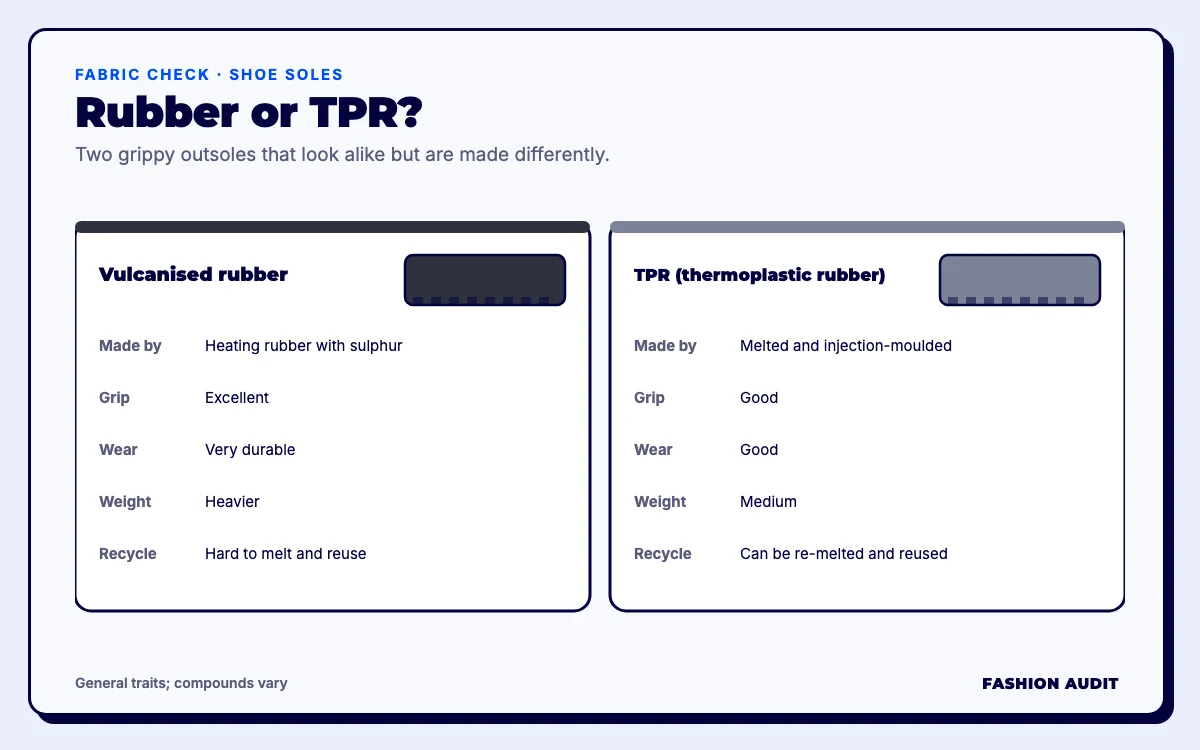
Vulcanised rubber is rubber cured with heat and sulphur, a process Charles Goodyear patented by 1844; shoe soles are one of its classic uses (Wikipedia: Vulcanization). It gives excellent grip and wear, but it is heavier, and once cured it cannot simply be melted down and reused.
TPR (thermoplastic rubber) is a mix of plastic and rubber that behaves like rubber but can be melted and moulded like plastic. That makes it easy to manufacture, and it can potentially be recycled (Wikipedia: Thermoplastic elastomer). Many casual and formal shoes in India now use TPR outsoles.
Six checks before you buy shoes
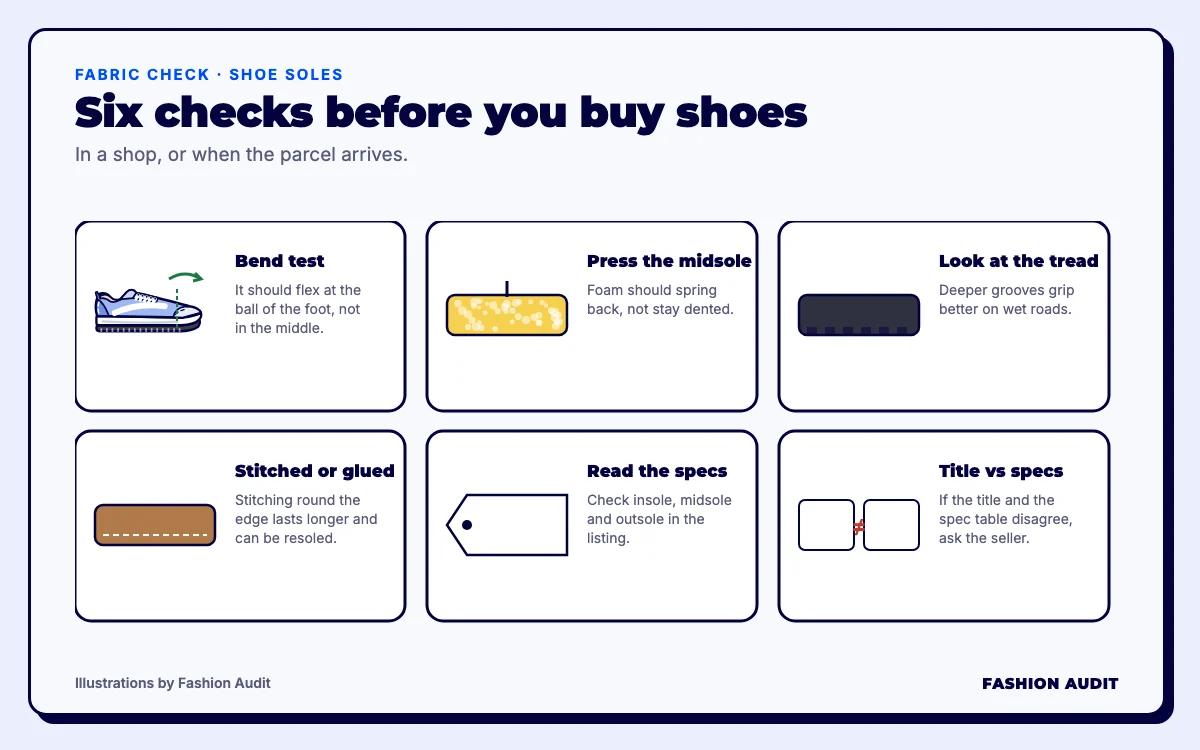
- Bend test: a good shoe flexes at the ball of the foot, not in the middle of the arch.
- Press the midsole: foam should spring back, not stay dented.
- Look at the tread: deeper grooves grip better on wet roads and tiles.
- Stitched or glued: a sole stitched round the edge usually lasts longer and can be resoled.
- Read the specs: most listings give insole, midsole and outsole materials separately.
- Title vs specs: while checking prices for this guide, we found listings where the product name and the specification table did not match (for example, a slider named “EVA” whose description mentioned a polyurethane sole). If they disagree, ask the seller.
How soles went from leather to foam
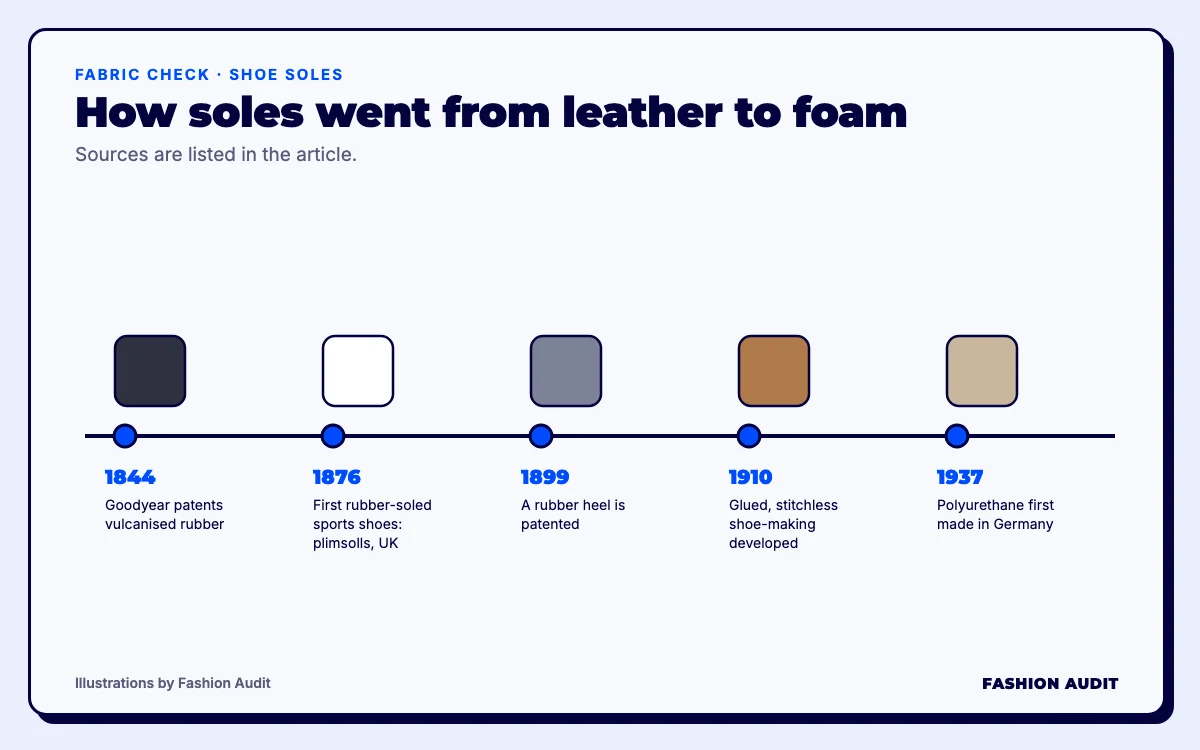
For centuries, soles were leather. Vulcanised rubber changed that: the first rubber-soled athletic shoes, plimsolls, were made in the UK in 1876. A rubber heel was patented in 1899, and the stitchless, glued method of shoe-making was developed in 1910 (Wikipedia: Shoe). Polyurethane arrived in 1937, and foams like EVA later made shoes far lighter.
Shoes in India: made here, and marked
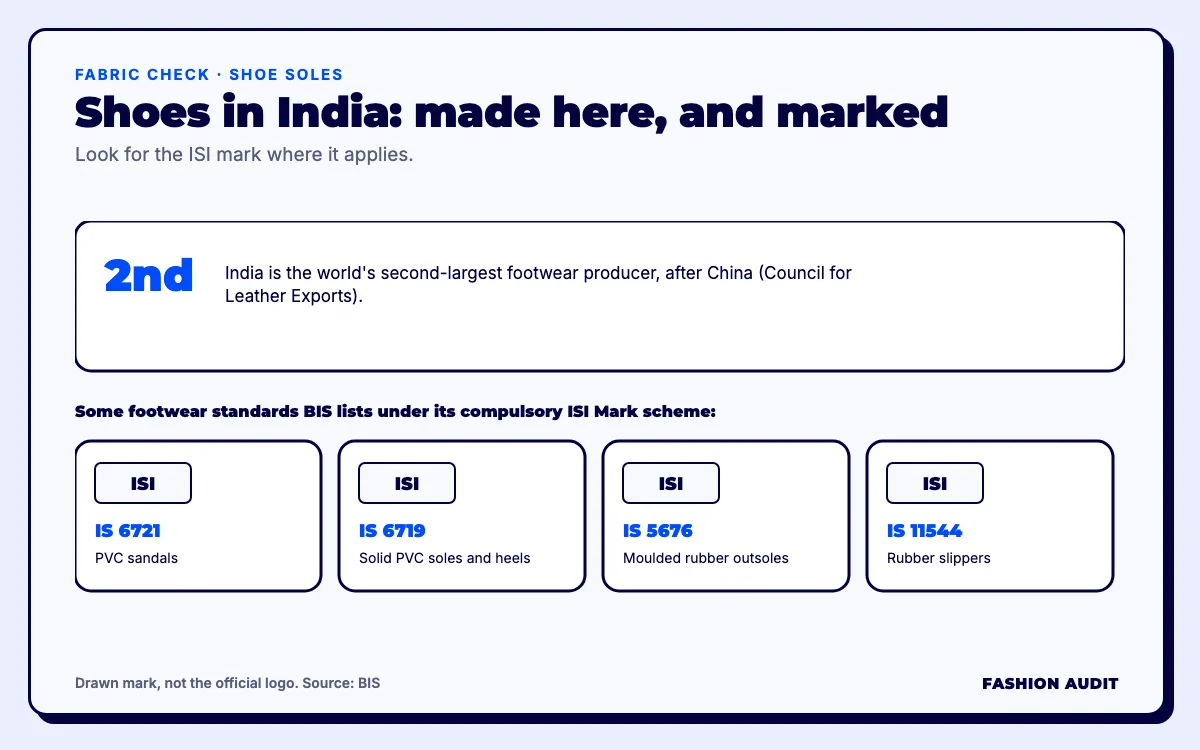
India is the world’s second-largest footwear producer after China (Council for Leather Exports). The Bureau of Indian Standards lists several footwear products under its compulsory ISI Mark scheme, including PVC sandals (IS 6721), solid PVC soles and heels (IS 6719), moulded rubber outsoles (IS 5676) and rubber slippers (IS 11544) (BIS: ISI Mark Scheme). Where a standard applies, look for the ISI mark on the product or box.
Which sole for what?
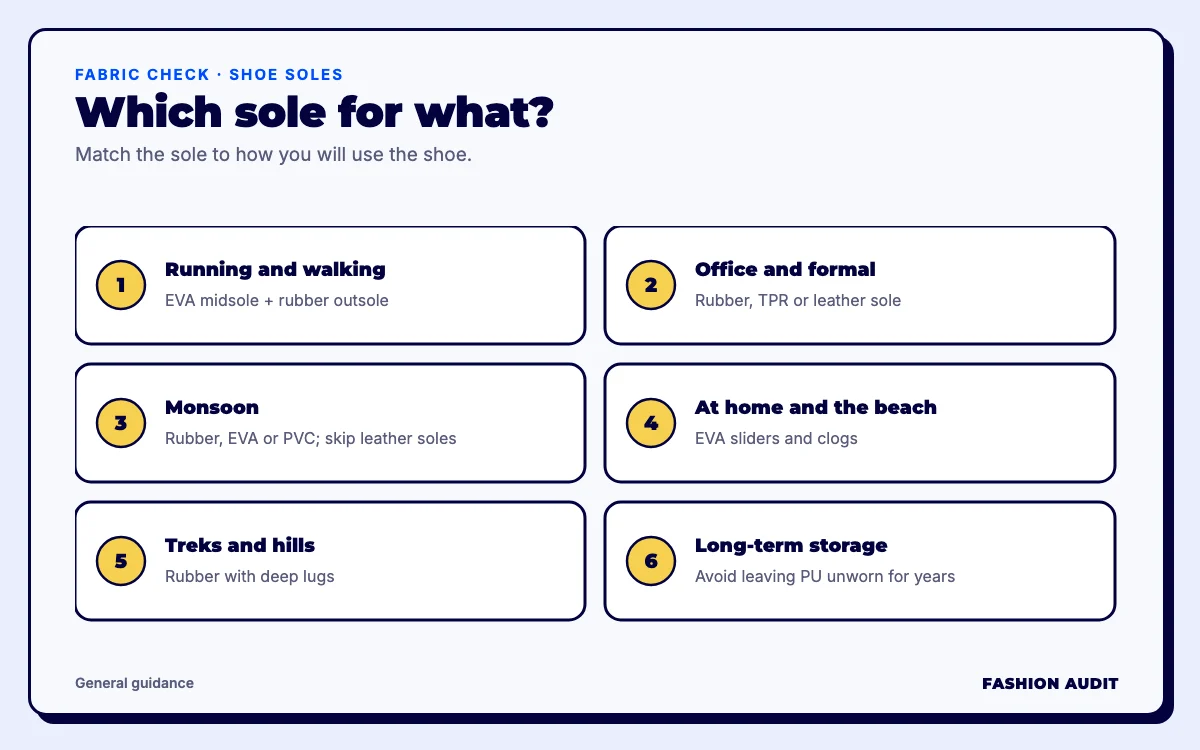
- Running and walking: EVA or similar foam midsole with a rubber outsole.
- Office and formal: rubber, TPR or leather sole. A rubber or TPR sole grips better on polished floors.
- Monsoon: rubber, EVA or PVC. Skip leather soles, which turn slippery and soak up water.
- At home and the beach: EVA sliders and clogs: light, waterproof and easy to wash.
- Treks and hills: rubber outsoles with deep lugs.
- Shoes you rarely wear: avoid leaving PU soles unworn for years.
Caring for soles
- Dry wet shoes naturally, stuffed with newspaper, away from direct heat, which can warp foam and crack leather.
- Clean the tread so grooves keep gripping.
- Rotate pairs so foam has time to recover between wears.
- Replace running shoes when the cushioning feels flat or the outsole is worn smooth.
- Resole good formal shoes: a stitched sole can often be replaced by a cobbler.
Price check: what the soles cost in India
These are prices as listed in the Fashion Audit shop on 11 November 2026, with sole materials as given in each product’s specifications.
EVA sliders and clogs:
- Yoho Dolphy EVA sliders: ₹549 (MRP ₹1,398). EVA midsole and upper. See our Yoho audit.
- Red Tape casual EVA clogs: ₹699 (MRP ₹3,999). EVA footbed and upper. See our Red Tape audit.
- Bacca Bucci Floats EVA slides: ₹719 (MRP ₹2,499). See our Bacca Bucci audit.
- XTEP EVA foam sports slider: ₹1,389 (MRP ₹2,799).
Sneakers and running shoes:
- Campus OG D3 sneakers: ₹825 (MRP ₹1,399). TPU midsole, TPR outsole. See our Campus audit.
- Red Tape slip-resistant sneakers: ₹1,004 (MRP ₹6,699). TPU midsole, TPR outsole.
- Campus FABLE running shoes: ₹1,299 (MRP ₹3,499). EVA midsole, rubber outsole.
- Skechers GO RUN ELEVATE: ₹3,899 (MRP ₹5,999). EVA midsole. See our Skechers audit.
- Asics GEL-CONTEND 9: ₹4,572 (MRP ₹5,999). EVA midsole, rubber outsole. See our Asics audit.
Formal shoes:
- Hush Puppies leather formal derbys: ₹1,937 (MRP ₹3,299). TPR outsole. See our Hush Puppies audit.
- Louis Philippe leather formal derbys: ₹2,949 (MRP ₹4,999). Rubber outsole, padded leather insole. See our Louis Philippe audit.
Where the marketing misleads
- “Memory foam” usually describes only the insole, not the whole sole.
- “Rubber sole” on a listing may mean TPR or another rubber-like compound. Check the specifications.
- “Cushioned” or “comfort” says nothing about the material or how long the cushioning lasts.
- “Slip-resistant” is a claim, not a test result. Look at the tread and the outsole material.
- A product name that mentions one material may not match the specifications. When they disagree, ask the seller.
What it means for you
- Read the insole, midsole and outsole lines in every shoe listing.
- For running, choose foam midsole + rubber outsole; for monsoon, rubber or EVA.
- Do the bend, press and tread checks when the parcel arrives.
- Wear PU-soled shoes regularly and store them dry.
- Where it applies, look for the ISI mark.
Common questions
Which is better, EVA or PU sole?
EVA is lighter and softer, ideal for sliders and midsoles. PU is denser and more durable underfoot, common in formal shoes and sandals, but it can crumble if stored unworn for years. Choose by use.
What is a TPR sole?
TPR is thermoplastic rubber: a rubber-like material that can be melted and moulded like plastic. It gives good grip and is common in casual and formal shoes.
Why did my old shoes crumble?
Most likely a PU sole broke down through hydrolysis, a reaction with moisture in the air that happens to shoes left unworn for a long time.
Are leather soles good for Indian weather?
They are classic and can be resoled, but they get slippery and soak up water in the rain. For the monsoon, a rubber or TPR sole is safer.
How long do running shoe soles last?
It depends on your weight, distance and surface. Replace them when the cushioning feels flat or the outsole tread is worn smooth.
The bottom line
The sole is where a shoe’s comfort and life are decided. Read the specifications, match the sole to how you will use the shoe, and do the bend, press and tread checks. Choose foam with rubber for running, rubber or EVA for the monsoon, and keep PU shoes in use rather than in storage.
Sources
- Wikipedia: Ethylene-vinyl acetate
- Wikipedia: Polyurethane
- Wikipedia: Vulcanization
- Wikipedia: Thermoplastic elastomer
- Wikipedia: Shoe
- Bureau of Indian Standards: ISI Mark Scheme
- Council for Leather Exports: Overview of the Indian Leather Industry 2026
Illustrations by Fashion Audit. Have a correction? Write to us through the contact page and we will update this guide with a dated note.