
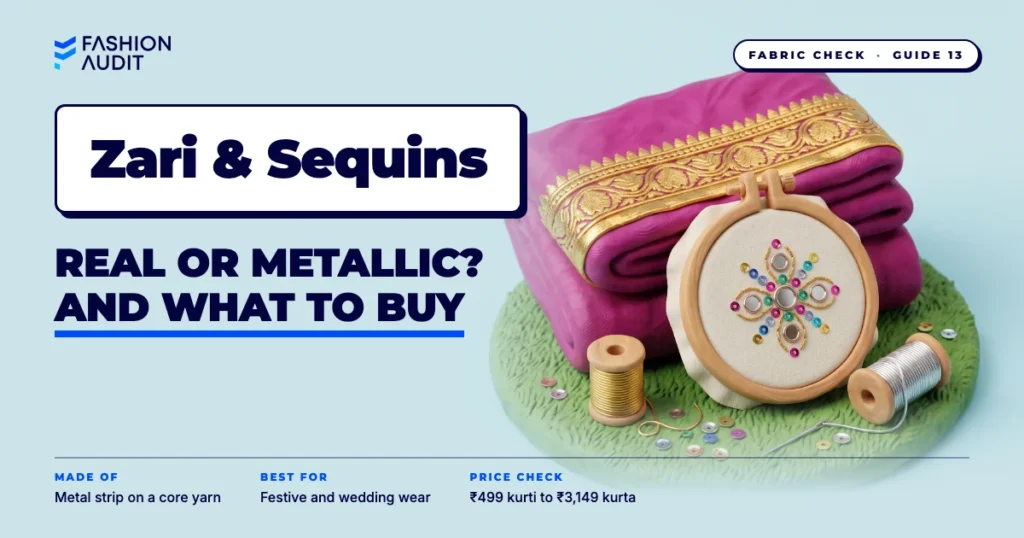
Zari is the metallic thread that makes Indian festive wear shine; sequins, mirrors and embroidery like zardozi, chikankari and gota add the rest of the sparkle. Real zari is mostly silver with a thin gold plating, but most zari sold today is metallised polyester, which looks similar and costs far less. This guide explains the types of zari, the words used in zardozi, India’s famous embellishment crafts, how to check quality, and how to care for embellished clothes.
Fabric Check is Fashion Audit’s series on the materials in your wardrobe. Prices checked 11 November 2026.
The short answer
For everyday festive wear, metallic zari and plastic sequins are light, cheap and do not tarnish, and that is perfectly fine. For a bridal saree or an heirloom piece, real zari is worth the price, but buy from a seller who can confirm what it is. Whatever you buy, turn it over, tug a sequin and feel the inside before the return window closes, and dry clean heavy work.
What zari actually is
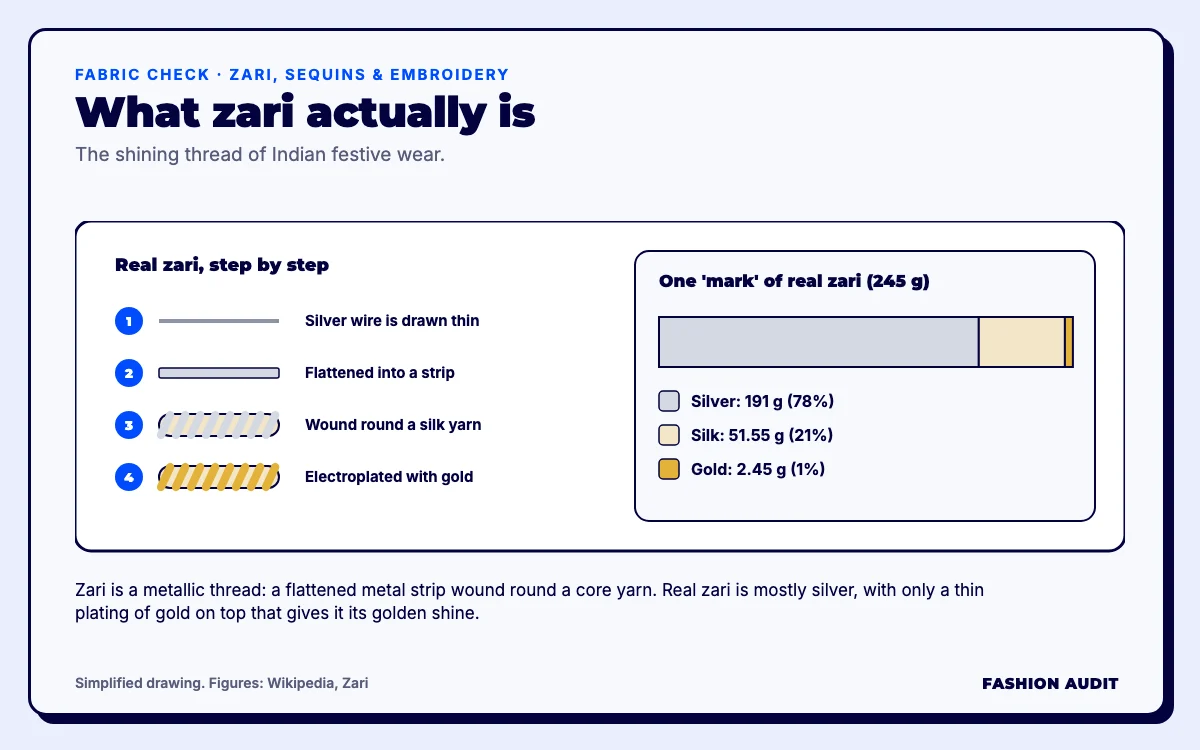
Zari is a thread made by winding a flattened metal strip round a core yarn. For real zari, silver is drawn into fine wire, flattened, wound round a silk yarn, and electroplated with gold. Traditionally, 245 grams of zari is called one “mark”, and it contains about 191 grams of silver (78%), 51.55 grams of silk (21%) and only 2.45 grams of gold (1%) (Wikipedia: Zari). So real zari is mostly silver, with a thin gold plating that gives it its shine.
Real, imitation or metallic zari?
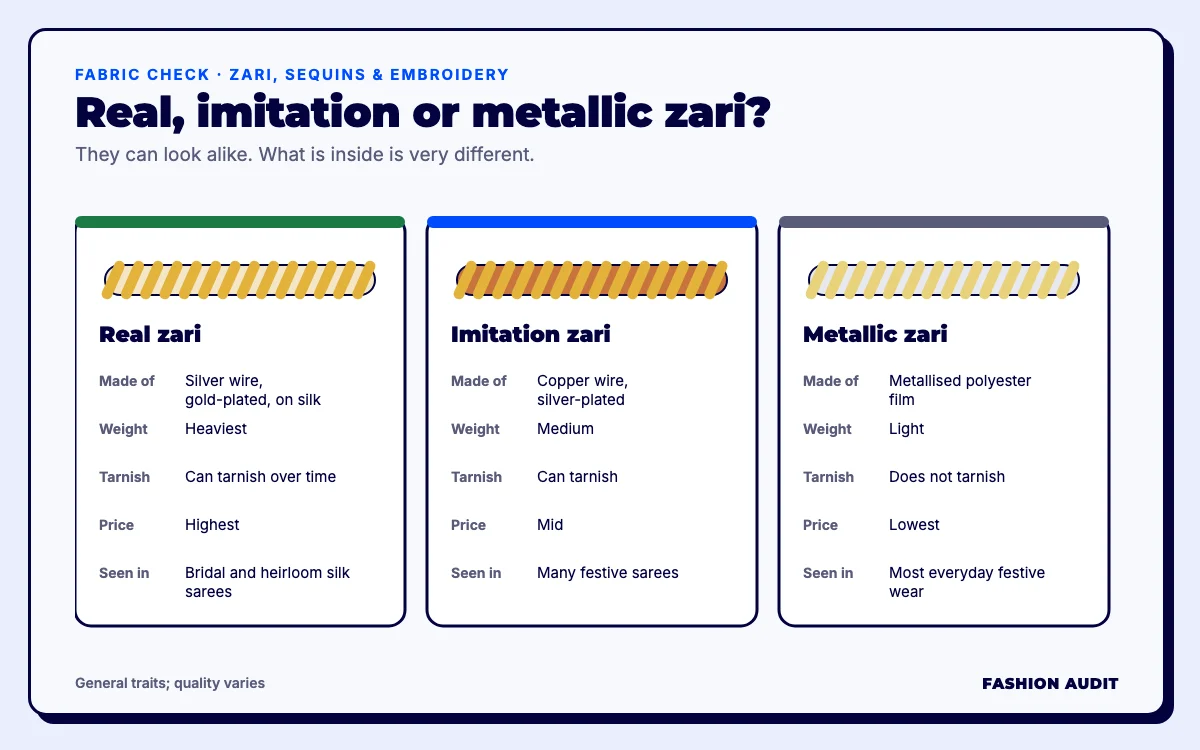
- Real zari: silver wire, gold-plated, on silk. The heaviest and costliest, used in bridal and heirloom silk sarees.
- Imitation zari: copper wire plated with silver, wound on a base yarn. Cheaper, and common in festive sarees.
- Metallic zari: slit metallised polyester film wound on a core yarn. Light, durable, does not tarnish and does not knot easily. This is what most affordable festive wear uses.
Surat in Gujarat is the world’s largest producer of all types of zari (Wikipedia: Zari).
The words of zardozi
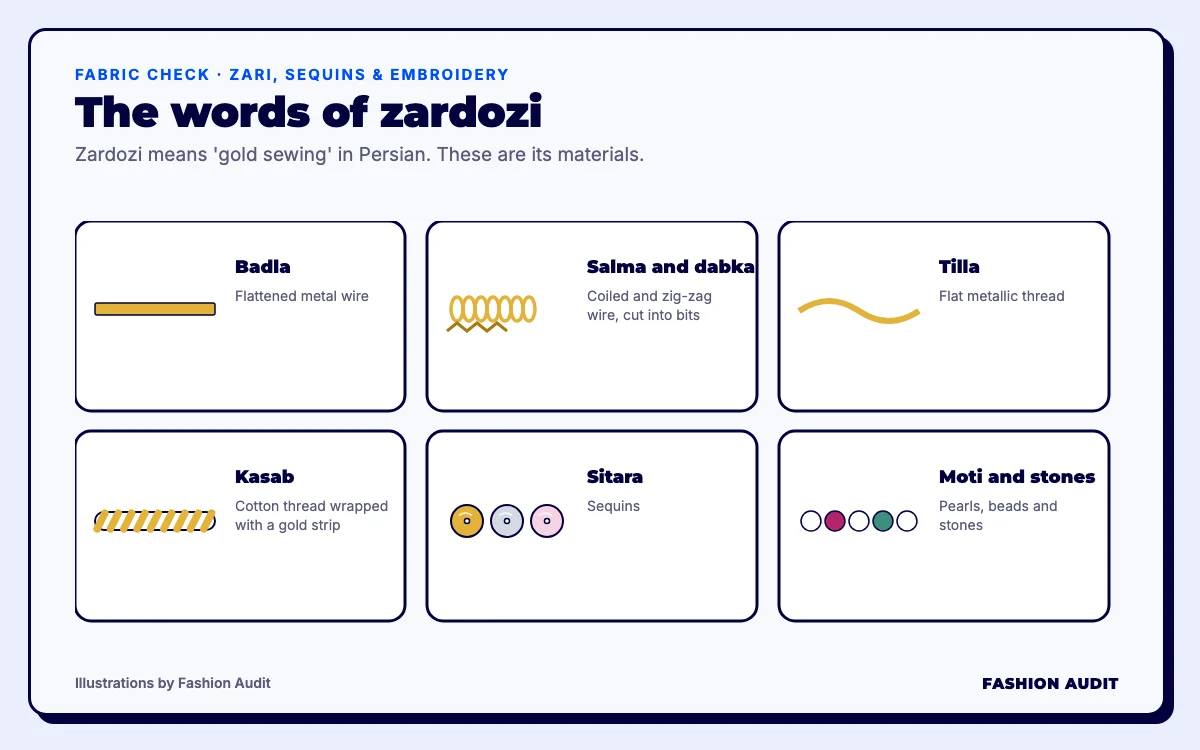
Zardozi is heavy metal embroidery, usually on silk, satin or velvet. The name comes from the Persian zar (gold) and dozi (sewing). Its materials have their own names (Wikipedia: Zardozi):
- Badla: flattened metal wire.
- Salma, nakshi and dabka: coiled and zig-zag wire, cut into small pieces and stitched on.
- Tilla: flat metallic thread.
- Kasab: cotton thread wrapped with a gold strip.
- Sitara: sequins.
- Pearls, beads and stones for extra richness.
Zardozi was first done with pure silver wire and real gold leaf. Today craftspeople mostly use copper wire with a gold or silver polish, along with silk thread.
India’s famous embellishment crafts
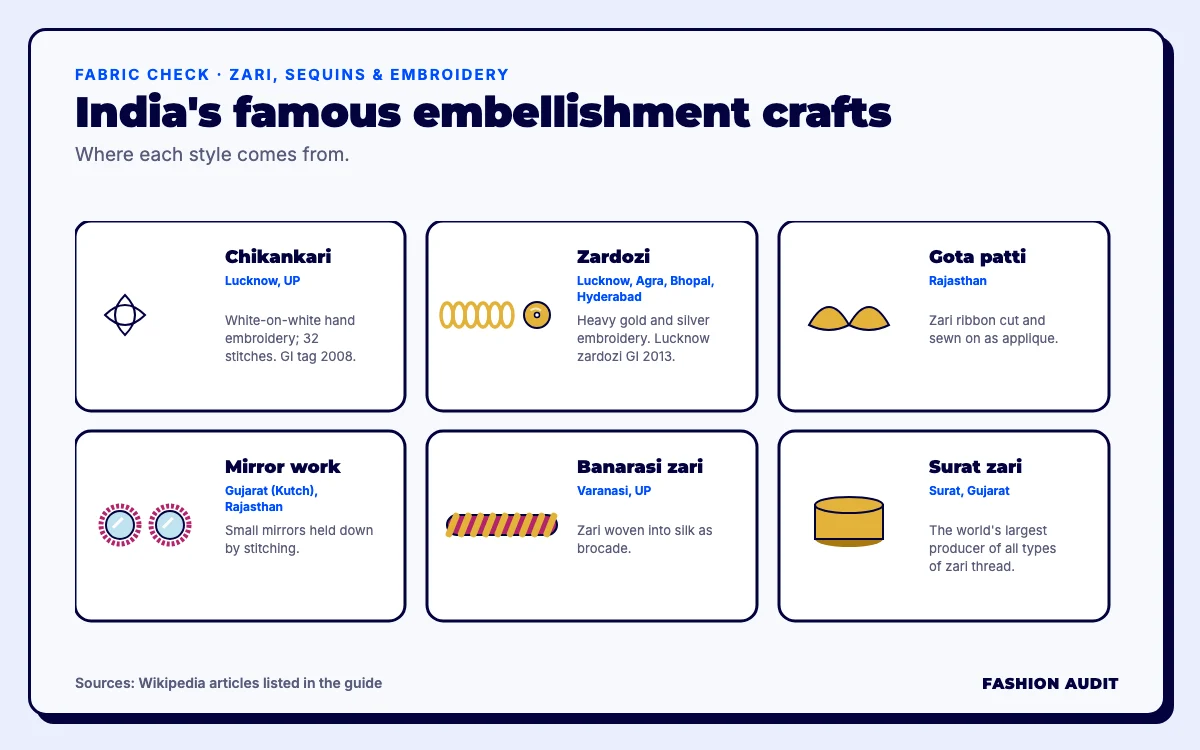
- Chikankari (Lucknow): delicate hand embroidery, traditionally white on white, with 32 stitches. It received a Geographical Indication (GI) tag in December 2008 (Wikipedia: Chikankari).
- Zardozi (Lucknow, Agra, Bhopal, Hyderabad and more): heavy gold and silver embroidery. Lucknow zardozi received a GI tag in 2013 (Wikipedia: Zardozi).
- Gota patti (Rajasthan): pieces of zari ribbon cut and sewn on as appliqué, widely used in wedding wear (Wikipedia: Gota patti).
- Mirror work (Gujarat, including Kutch): small mirrors held in place with stitching. It began with mica and was later done with tiny mirror discs; today most shisha is machine-cut glass (Wikipedia: Shisha).
- Banarasi zari (Varanasi): zari woven into silk as brocade. See our silk guide.
- Surat zari (Gujarat): the thread itself, made in all three types.
Sequins, spangles and paillettes
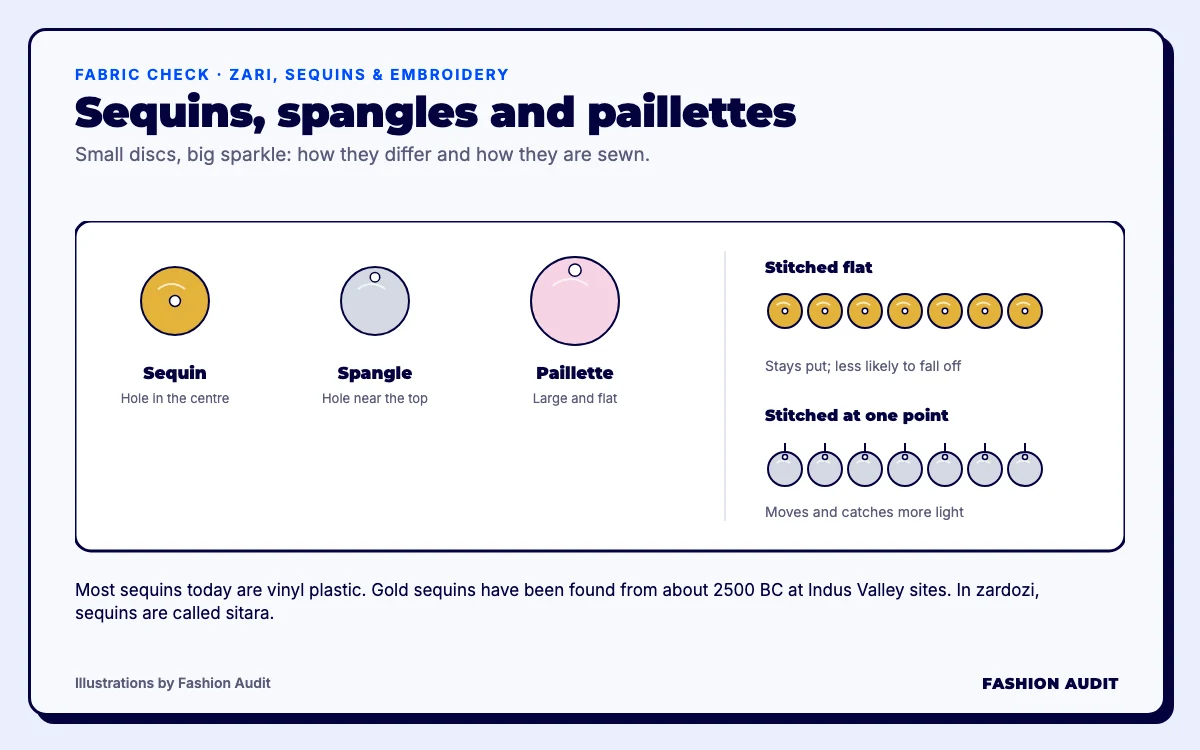
A sequin usually has its hole in the centre, a spangle has it near the top, and a paillette is a large, flat disc. Sequins stitched flat stay put and are less likely to fall off; sequins stitched at one point can move and catch more light. Most sequins today are vinyl plastic. Gold sequins have been found from about 2500 BC at Indus Valley sites, and the word comes from the Venetian name for a gold coin (Wikipedia: Sequin).
Six checks for embellished clothes
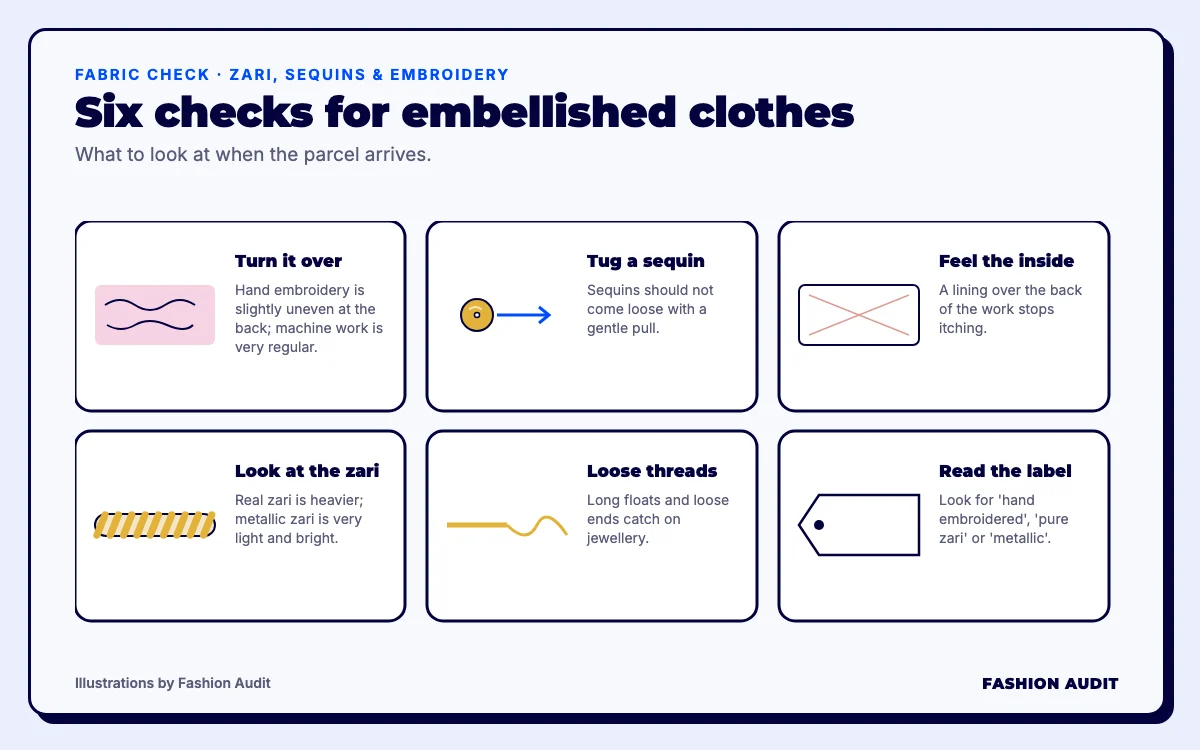
- Turn it over: hand embroidery is slightly uneven on the back; machine work is very regular. Both are fine, but the price should match.
- Tug a sequin: sequins should not come loose with a gentle pull.
- Feel the inside: a lining over the back of heavy work stops it scratching your skin.
- Look at the zari: real zari is heavier; metallic zari is very light and bright.
- Loose threads: long floats and loose ends catch on jewellery and bangles.
- Read the label: look for “hand embroidered”, “pure zari” or “metallic”.
4,500 years of Indian sparkle
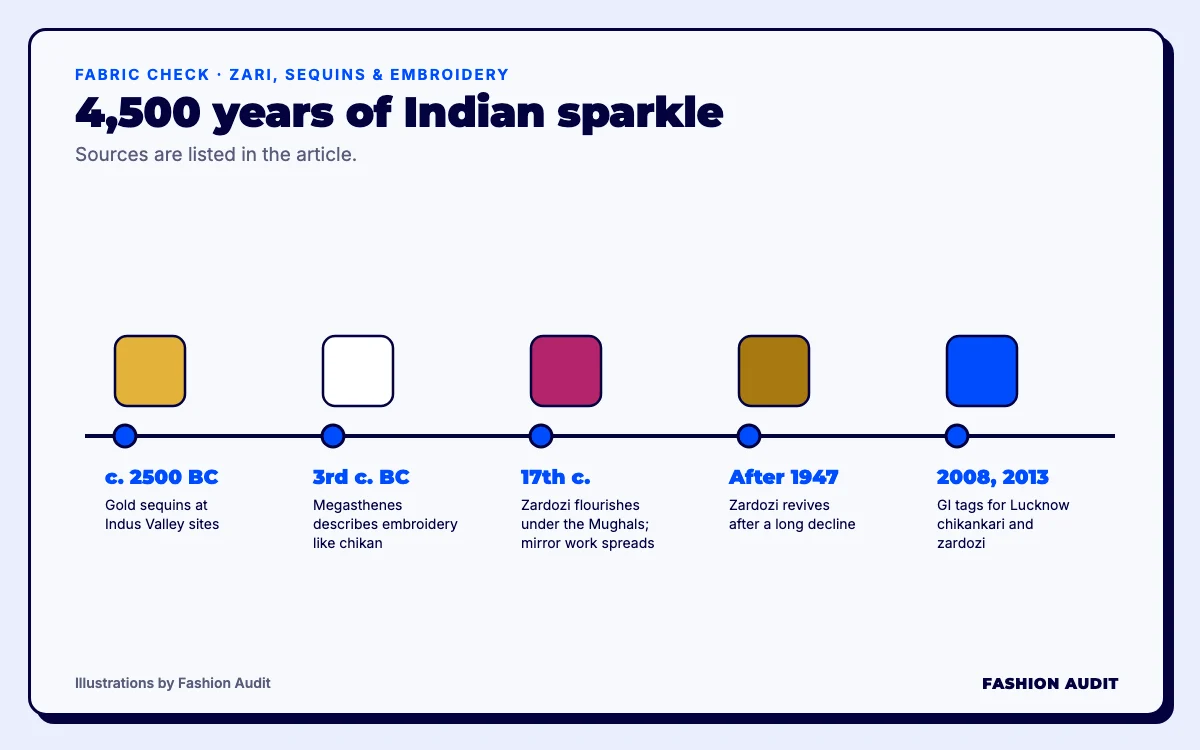
India’s love of sparkle is ancient. Gold sequins have been found from about 2500 BC at Indus Valley sites (Wikipedia: Sequin). Megasthenes, writing in the 3rd century BC, described embroidery similar to chikan (Wikipedia: Chikankari). Zardozi, of Persian origin, flourished under the Mughals in the 17th century, declined with the loss of royal patronage and the rise of industry, and revived after independence in 1947 (Wikipedia: Zardozi). Mirror work also dates from the 17th century. GI tags followed for Lucknow chikankari in 2008 and Lucknow zardozi in 2013.
Read the embellishment label
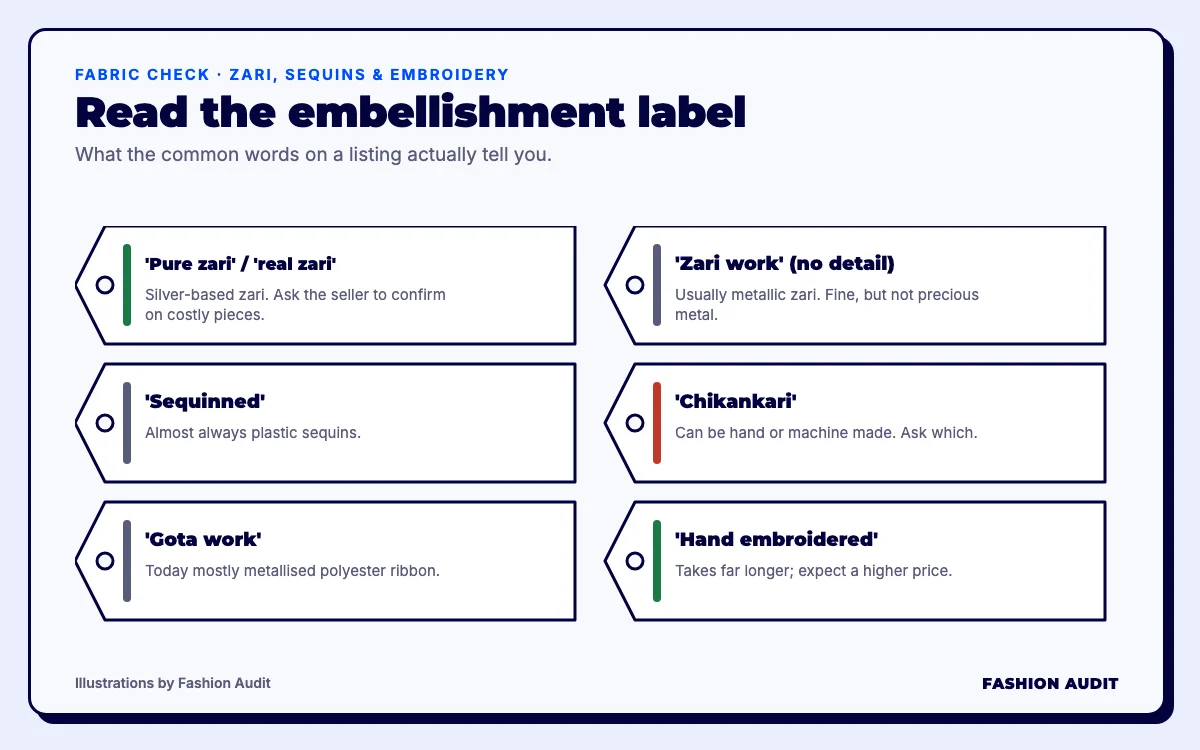
- “Pure zari” or “real zari”: silver-based zari. On costly pieces, ask the seller to confirm.
- “Zari work” with no detail: usually metallic zari. Good looking and practical, but not precious metal.
- “Sequinned”: almost always plastic sequins.
- “Chikankari”: can be hand or machine made. Ask which, as hand work takes far longer and costs more.
- “Gota work”: today mostly metallised polyester ribbon, which resists moisture and does not tarnish (Wikipedia: Gota patti).
- “Hand embroidered”: expect a higher price for the hours of work.
How to care for embellished clothes
| What embellishment does well | Where it needs care |
|---|---|
| Instantly festive and rich | Heavy work can be scratchy without a lining |
| Metallic zari and plastic sequins are light and cheap | Sequins and threads can come loose |
| Hand crafts support artisans | Real and copper zari can tarnish |
| Heirloom pieces last generations with care | Most heavy work needs dry cleaning |
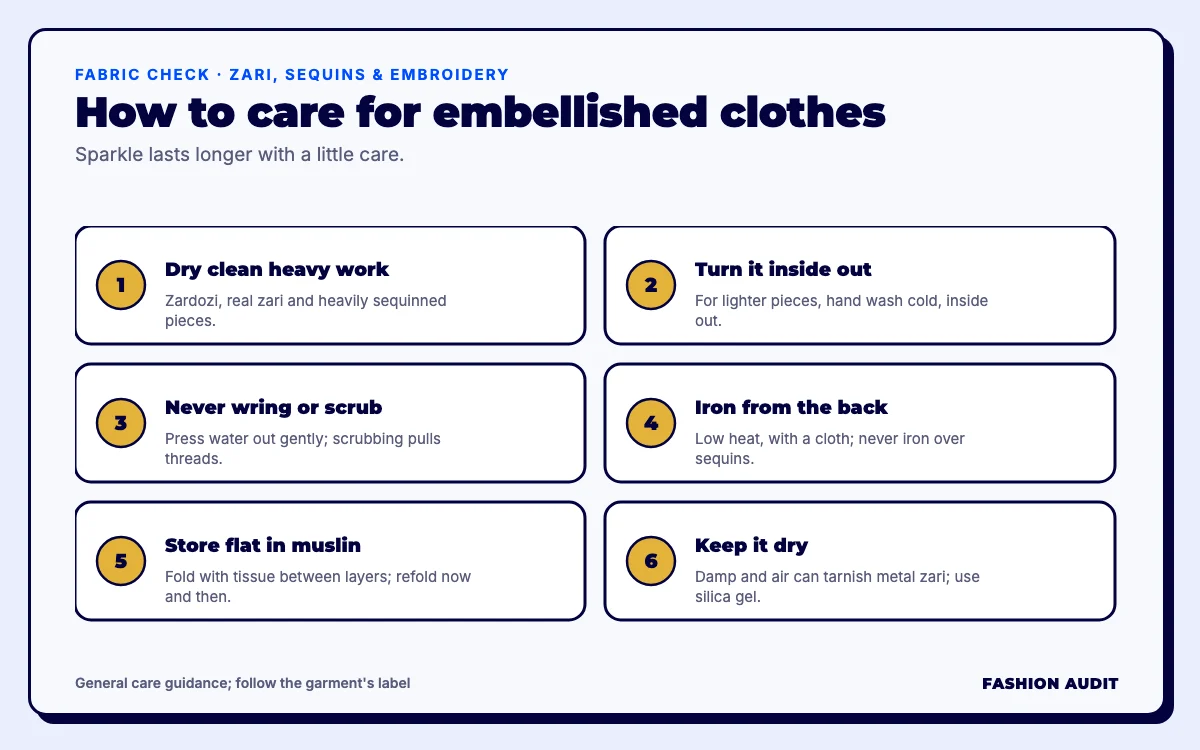
- Dry clean zardozi, real zari and heavily sequinned pieces.
- For lighter pieces, hand wash cold, inside out, and never wring or scrub.
- Iron from the back on low heat with a cloth on top, and never iron directly over sequins.
- Store flat in a muslin or cotton cloth, with tissue between folds, and refold now and then.
- Keep it dry: damp speeds up tarnish on metal zari. A sachet of silica gel in the cupboard helps.
What is right for Indian weather
- Summer functions: choose light cotton or georgette with chikankari or light sequin work. Heavy zardozi traps heat.
- Winter weddings: the season for zardozi on velvet or silk. See our velvet guide.
- Monsoon: store real and copper zari pieces with silica gel; metallic zari and plastic gota cope better with damp.
- Humid coastal cities: check stored heirloom pieces every few months for tarnish or mould.
Price check: what embellished clothes cost in India
These are prices as listed in the Fashion Audit shop on 11 November 2026. Listings rarely say whether the work is by hand or machine, or which kind of zari is used, so check the description or ask the seller.
Sequin work:
- Jompers embroidered sequinned cotton kurta: ₹779 (MRP ₹5,199). See our Jompers audit.
- Aaghnya embroidered sequinned kurta set: ₹905 (MRP ₹4,345).
- Libas sequinned kurta set: ₹1,679 (MRP ₹3,499). See our Libas audit.
- Anouk embroidered sequined kurta set: ₹1,919 (MRP ₹6,399). See our Anouk audit.
- VASTRAMAY sequinned georgette kurta: ₹3,149 (MRP ₹4,999).
Chikankari:
- Angita chikankari kurti: ₹499 (MRP ₹2,499).
- Anouk chikankari kurta with pyjamas: ₹996 (MRP ₹4,299).
- See Designs chikankari kurta with pyjamas: ₹2,216 (MRP ₹4,999).
Mirror work:
- Stylum mirror work kurta set: ₹869 (MRP ₹2,999).
- Anouk mirror work pure cotton kurta set: ₹2,499 (MRP ₹4,399).
At these prices, the work is very likely machine embroidery with metallic zari and plastic sequins. Hand chikankari, hand zardozi and real zari usually cost much more.
Where the marketing misleads
- “Zari” on its own does not mean gold or silver. Most zari today is metallised polyester.
- “Gold work” or “gold embroidery” describes the colour, not the metal.
- “Chikankari” is used for machine embroidery too. Ask whether the piece is hand embroidered and where it was made.
- “Handcrafted” may mean hand-finished rather than fully hand embroidered. Ask what was done by hand.
- “Mirror work” can mean real glass mirrors or plastic mirror-look discs.
What it means for you
- For most festive buys, metallic zari and plastic sequins are practical: light, affordable and tarnish-free.
- For heirloom pieces, pay for real zari or hand work from sellers who can confirm it.
- Do the three quick checks: turn it over, tug a sequin, feel the inside.
- Buying hand chikankari, zardozi, gota or mirror work from artisan sources supports traditional crafts.
- Dry clean heavy work, store flat in muslin and keep it dry.
Common questions
How do I know if zari is real?
Real zari is heavier and costlier, and is usually sold with the seller confirming it. Very light, bright zari on an affordable piece is almost always metallic. For expensive sarees, buy from trusted weavers or stores and ask for confirmation in writing.
Does zari tarnish?
Real and copper-based zari can tarnish over time, especially in damp. Metallic polyester zari does not tarnish.
What is the difference between zari and zardozi?
Zari is the metallic thread. Zardozi is a style of heavy embroidery that uses zari, metal wire, sequins, beads and stones.
Can I wash a sequinned kurta at home?
Light sequin work can often be hand washed cold, inside out, if the label allows. Heavy or delicate work is safer dry cleaned. Never wring it or iron over the sequins.
Is machine chikankari bad?
Not at all. It is a practical, affordable choice. It is simply different from hand chikankari, so the price should reflect that.
The bottom line
Zari, sequins and embroidery are what make Indian festive wear special. Enjoy metallic zari and sequins for everyday celebrations, pay for real zari and hand work when you want an heirloom, and check the back, the sequins and the lining before you keep it. A little care keeps the sparkle for years.
Sources
- Wikipedia: Zari
- Wikipedia: Zardozi
- Wikipedia: Chikankari
- Wikipedia: Gota patti
- Wikipedia: Shisha (embroidery)
- Wikipedia: Sequin
Illustrations by Fashion Audit. Have a correction? Write to us through the contact page and we will update this guide with a dated note.