Leather is animal hide made durable by tanning; “vegan” or “faux” leather is usually fabric coated with plastic, either PU (polyurethane) or PVC, which many Indians call Rexine. Both are in almost every wardrobe: in shoes, bags, belts, wallets and jackets. This guide explains the leather grades, what “genuine leather” really means, how real and faux leather compare, how to tell them apart, and how to care for each.
Fabric Check is Fashion Audit’s series on the materials in your wardrobe. Prices checked 11 November 2026.
The short answer
For shoes, belts and bags you want to keep for years, full-grain or top-grain leather is worth paying for: it lasts, breathes and ages well. For trend pieces, light everyday bags or if you avoid animal products, good PU leather is a fair, cheaper choice, but expect it to wear sooner. Treat “genuine leather” as “contains leather”, not as a sign of top quality, and check the exact material on the label.
Inside a piece of leather
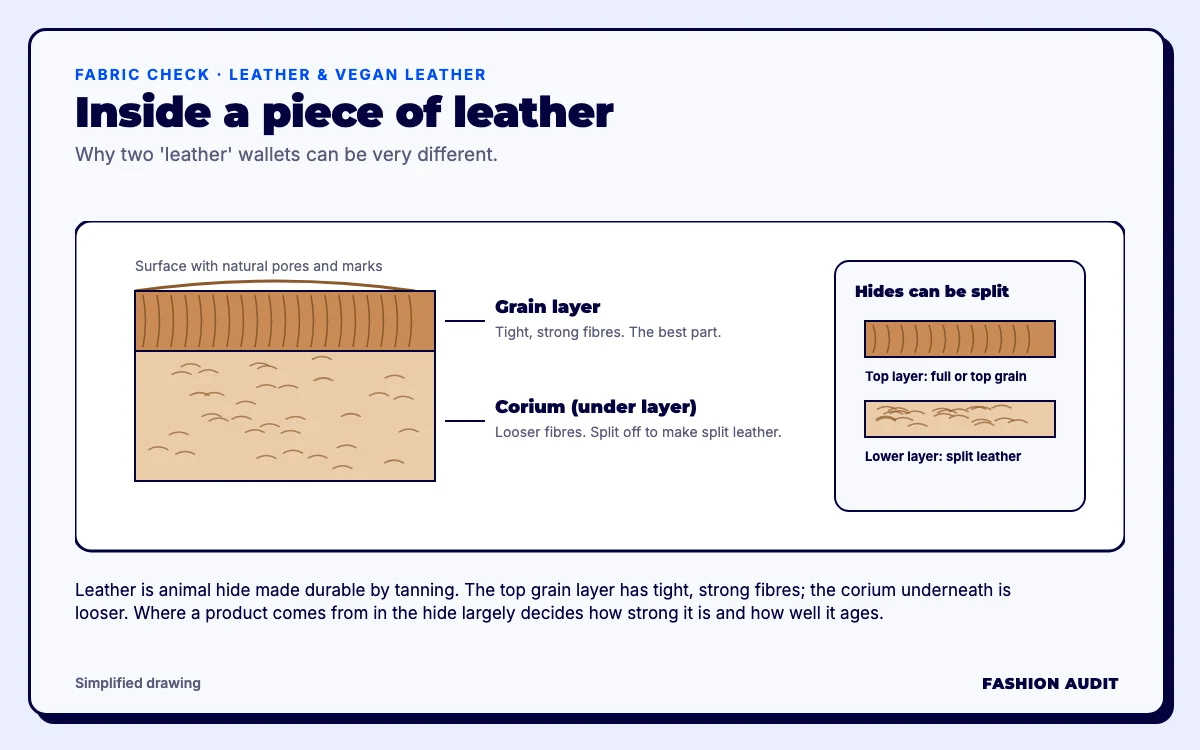
A hide has two main layers. The top grain layer has tight, densely packed fibres and carries the natural surface with its pores and marks. Below it is the corium, with looser fibres. Thick hides can be split into layers: the top becomes full-grain or top-grain leather, and the lower part becomes split leather (Wikipedia: Leather).
The leather grades, best to most basic
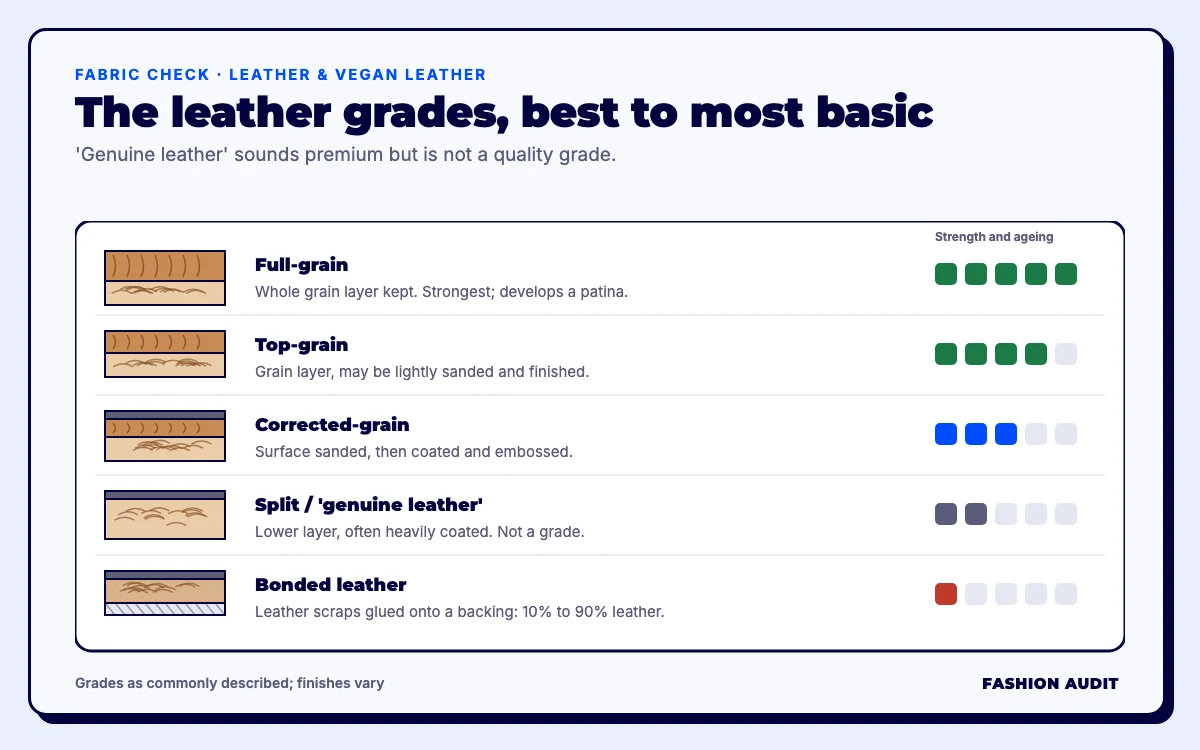
- Full-grain: the whole grain layer is kept. Usually considered the highest quality, and it develops a patina with use.
- Top-grain: the grain layer, which may be lightly sanded and finished.
- Corrected-grain: the surface is sanded to remove flaws, then dyed, coated and embossed for an even look.
- Split leather: made from the lower layer once the grain has been separated. It is often coated to look like grain leather.
- “Genuine leather”: not a specific grade. It often means processed split leather, and on some labels it may mean only that the product contains leather.
- Bonded leather: leather scraps shredded and glued onto a backing. Its leather fibre content can range from 10% to 90%.
Grade definitions are from Wikipedia: Leather. Finishes vary between makers, so treat these as general guides.
From hide to handbag
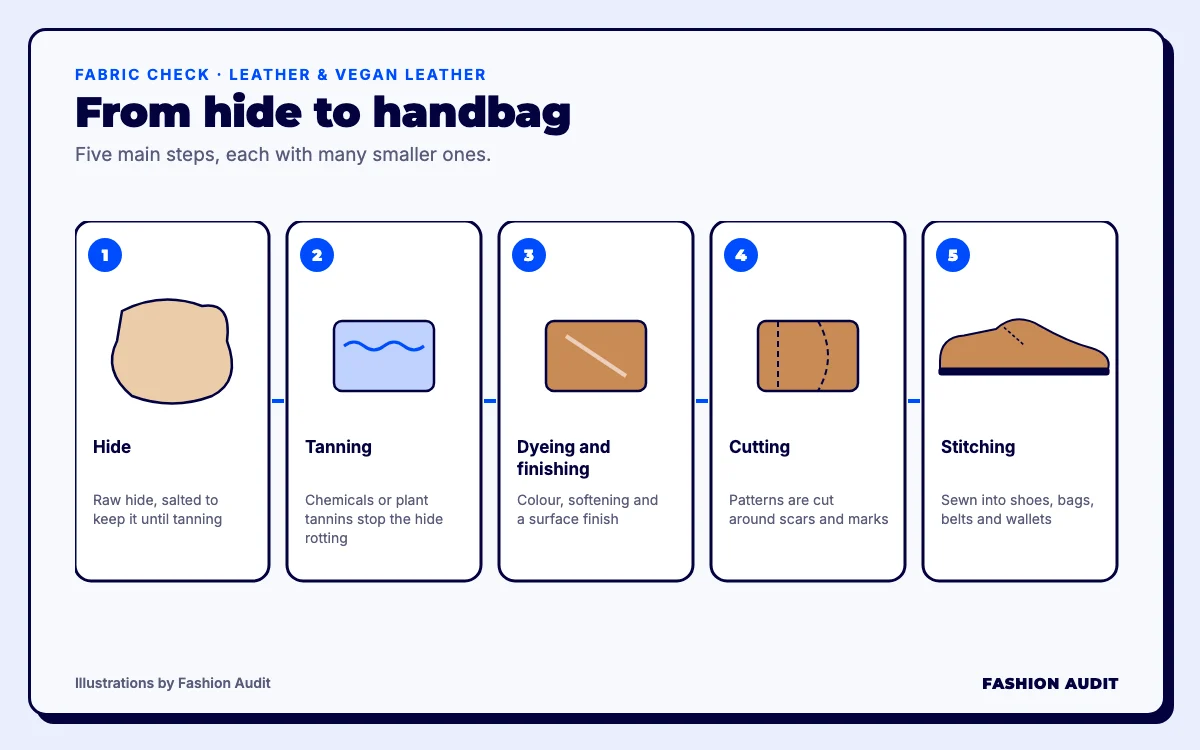
Raw hides are salted to keep them until tanning. Tanning turns the hide into leather that will not rot. The leather is then dyed, softened and finished, cut into pattern pieces around scars and marks, and stitched into shoes, bags, belts and wallets.
Two ways to tan leather
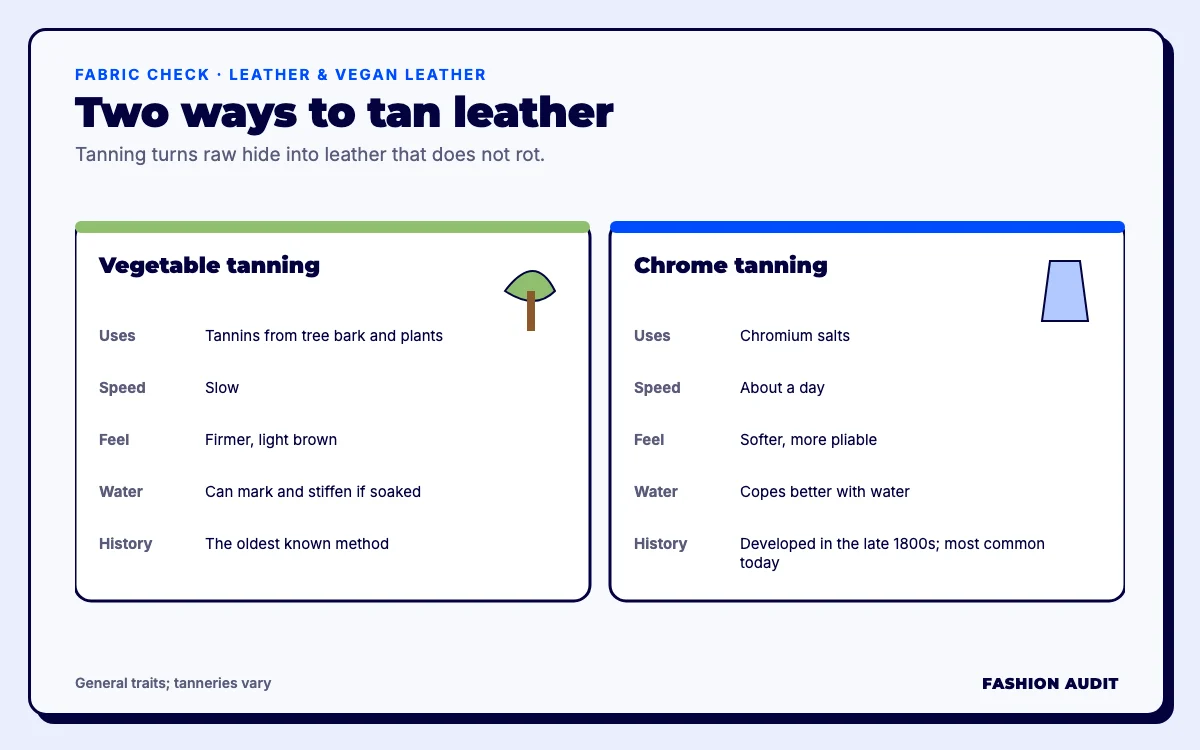
- Vegetable tanning uses tannins from tree bark and other plants. It is the oldest known method. The leather is firmer and light brown, and it can mark or stiffen if soaked.
- Chrome tanning uses chromium salts and takes about a day, which suits large-scale production. Developed in the second half of the 1800s, it is now the most common method. Chrome-tanned leather is softer and copes better with water.
Source: Wikipedia: Leather.
Real leather, PU and PVC
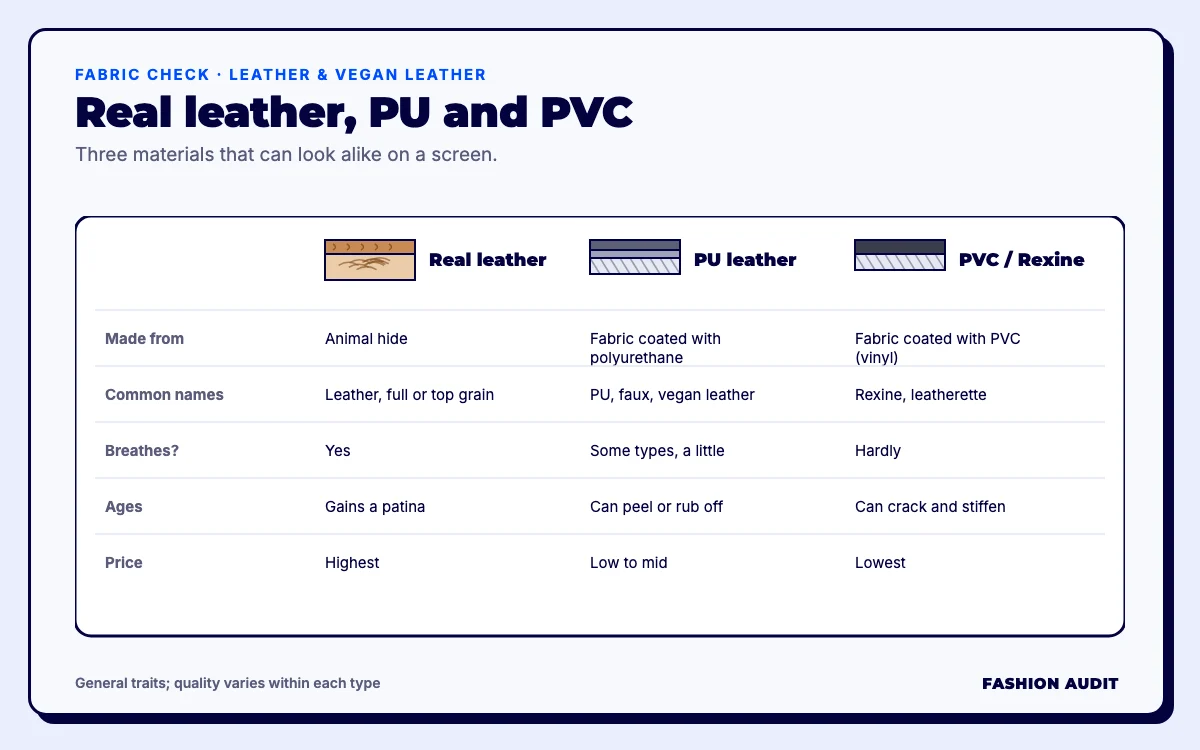
Faux leather goes by many names: PU leather, vegan leather, faux leather, imitation leather, leatherette and pleather (Wikipedia: Artificial leather). Most of it is a fabric base with a plastic coating:
- PU leather: fabric coated with polyurethane. Softer and more flexible, and some types are a little breathable. Its surface can rub or peel off with time.
- PVC leather (leatherette, Rexine): fabric coated with vinyl. Usually the cheapest and stiffest, hardly breathes, and can crack.
- Plant-based leathers, from pineapple leaves, cactus, apple waste or mushrooms, are newer. Makers combine the plant fibre with different coatings and binders, so read the full material list.
Six ways to tell real leather from faux
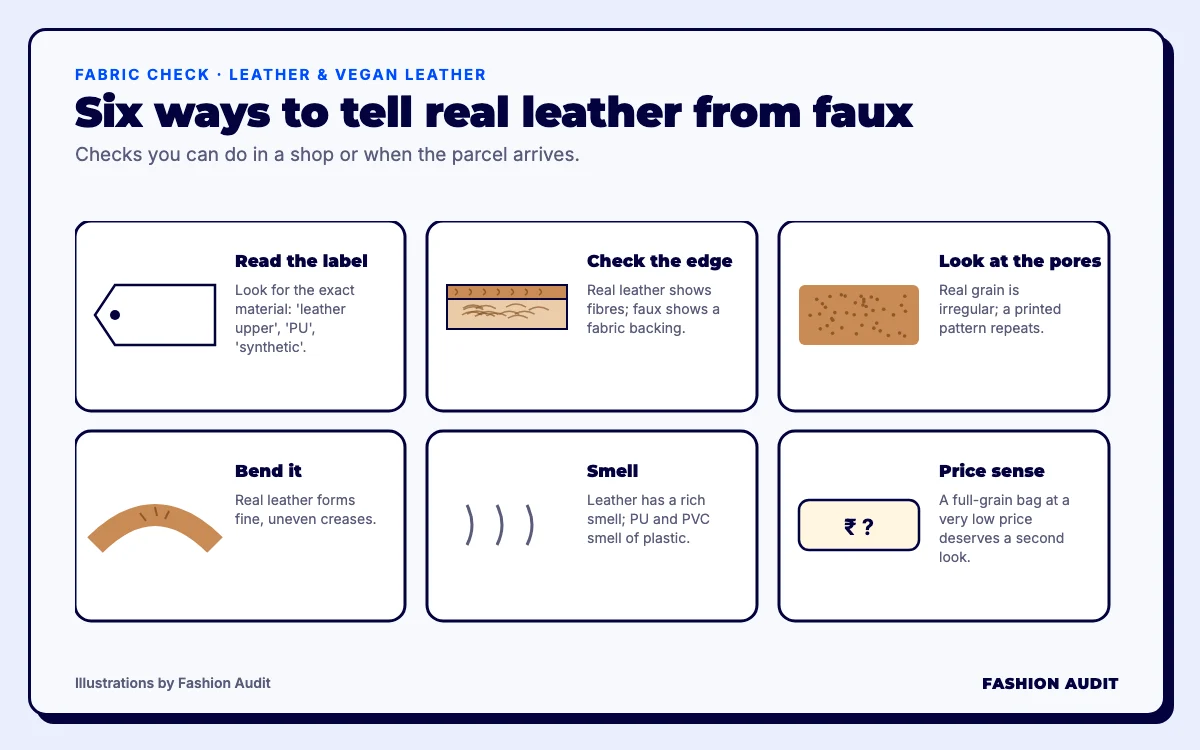
- Read the label: look for the exact material, such as “leather upper”, “PU” or “synthetic”. Shoes often list upper, lining and sole separately.
- Check the edge: a cut edge of real leather shows fibres; faux leather shows a woven or knitted fabric backing.
- Look at the pores: real grain is irregular, while a printed or embossed pattern repeats.
- Bend it: real leather forms fine, uneven creases.
- Smell: leather has a rich smell; PU and PVC usually smell of plastic.
- Price sense: a full-grain bag at a very low price deserves a second look at the description.
India’s leather industry in numbers
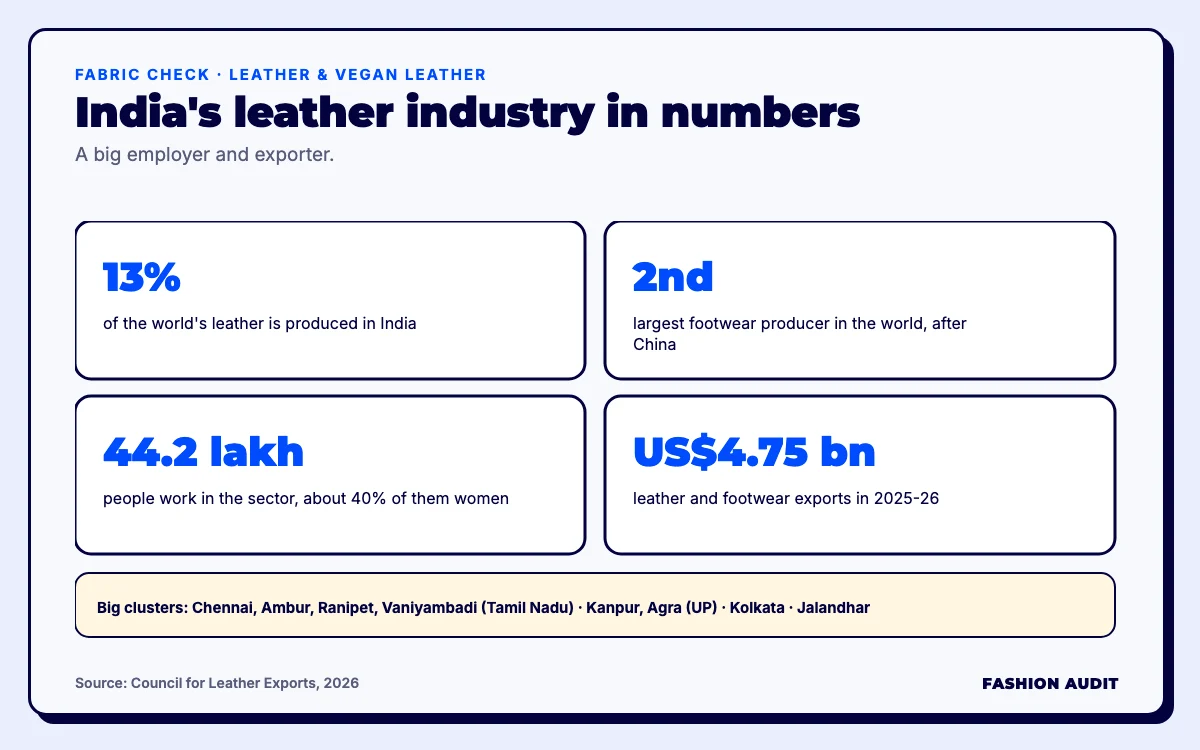
According to the Council for Leather Exports, India produces about 13% of the world’s leather and is the second-largest footwear producer after China. The sector employs about 44.2 lakh people, around 40% of them women, and exports of leather, leather products and footwear were US$4.75 billion in 2025-26. Major clusters include Chennai, Ambur, Ranipet and Vaniyambadi in Tamil Nadu, Kanpur and Agra in Uttar Pradesh, Kolkata and Jalandhar (Council for Leather Exports, Overview of the Indian Leather Industry 2026).
From ancient craft to faux leather
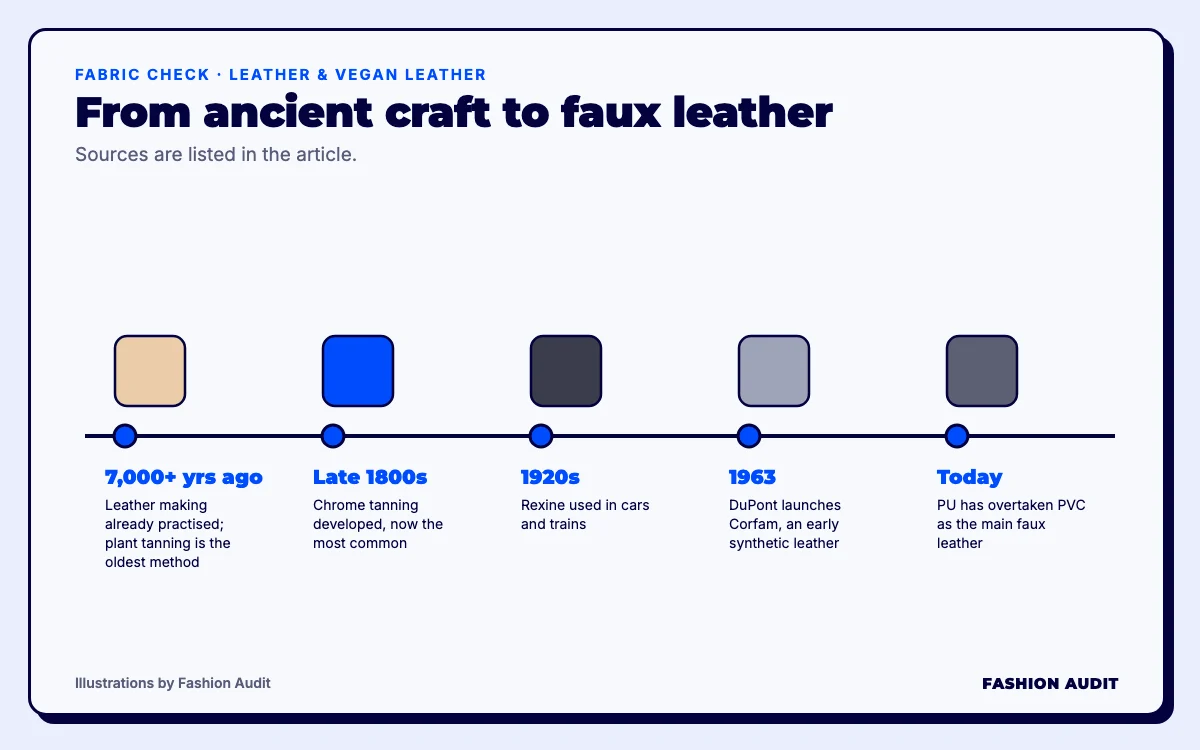
Leather making has been practised for more than 7,000 years, and vegetable tanning is the oldest known method. Chrome tanning came in the second half of the 1800s (Wikipedia: Leather). On the faux side, British makers were using Rexine in cars and railway carriages by the 1920s, DuPont launched Corfam, an early synthetic shoe leather, in 1963, and polyurethane has since overtaken PVC as the more popular coating (Wikipedia: Artificial leather).
Pros, cons and care
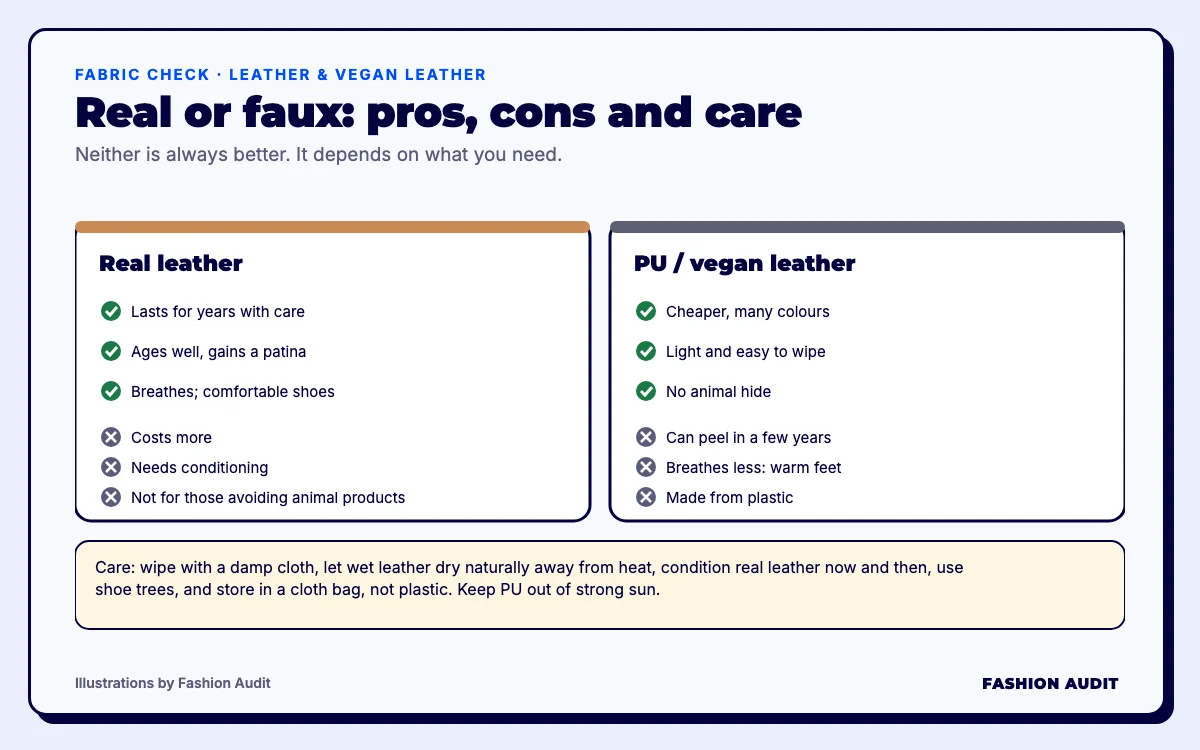
| Real leather | PU / vegan leather | |
|---|---|---|
| Lifespan | Years, with care | Can peel in a few years |
| Comfort | Breathes; shoes mould to your feet | Breathes less; feet can get warm |
| Looks over time | Gains a patina | Surface can wear or crack |
| Upkeep | Needs conditioning now and then | Wipe clean |
| Price | Higher | Lower, many colours |
| Made from | Animal hide | Plastic-coated fabric |
- Clean with a soft, damp cloth. Avoid soaking either kind.
- Let wet leather dry naturally, away from heaters, hair dryers and direct sun.
- Condition real leather every few months with a leather cream, after testing a hidden spot.
- Use shoe trees or stuff shoes with paper so they keep their shape.
- Store in a breathable cloth bag, not plastic, and keep PU out of strong sun, which speeds up peeling.
What is right for Indian weather
- Summer: real leather shoes and sandals with a leather lining breathe better than PU, which can make feet hot and sweaty.
- Monsoon: neither likes soaking. Wipe and air-dry leather after rain, or choose rubber, EVA or water-resistant bags for wet days. Store leather with silica gel to prevent mould.
- Humid coastal cities: mould is the main risk for real leather. Air it out regularly and avoid closed plastic boxes.
- Winter: leather jackets and boots are warm and wind-resistant, and dry winters are easiest on both kinds.
Price check: what leather and faux leather cost in India
These are prices as listed in the Fashion Audit shop on 11 November 2026.
Listed as leather:
- Calfnero genuine leather card holder: ₹392 (MRP ₹799).
- TANSTITCH genuine leather wallet: ₹499 (MRP ₹999).
- Brooklyn Bridge genuine leather slim wallet: ₹899 (MRP ₹2,399). Its specifications say full-grain leather.
- Hush Puppies leather formal derbys: ₹1,937 (MRP ₹3,299). See our Hush Puppies audit.
- Louis Philippe leather formal derbys: ₹2,949 (MRP ₹4,999). See our Louis Philippe audit.
Listed as faux leather:
- PLUGGEAR faux leather three-fold wallet: ₹399 (MRP ₹1,999).
- Shuraim faux leather hobo bag: ₹494 (MRP ₹1,999).
- Fargo faux leather handbag: ₹531 (MRP ₹2,499).
- El Paso faux leather sneakers: ₹868 (MRP ₹2,995).
- Gear faux leather 20L backpack: ₹1,995 (MRP ₹3,999).
Most leather listings say “genuine leather” or just “leather” without a grade. If the grade matters to you, look for “full-grain” or “top-grain” in the description or ask the seller. Always open the specifications too: while checking prices for this guide, we found shoes with “leather” in the title whose specification table lists the upper as synthetic leather. If the title and the specifications disagree, ask the seller before you buy.
Where the marketing misleads
- “Genuine leather” sounds like the best kind but is not a quality grade. It often means split leather.
- “Vegan leather” sounds natural, but most of it is PU or PVC plastic. Check the material list.
- “Leather look”, “leather finish” or “leatherette” means it is not leather.
- “Leather” in a shoe title may refer only to the upper. The lining and sole are often synthetic.
- “Bonded leather” may contain anywhere from 10% to 90% leather fibre.
What it means for you
- For things you want to last, like formal shoes, belts and a daily bag, full-grain or top-grain leather is usually worth the extra cost.
- For trend pieces and budget buys, good PU is fine: just expect a shorter life.
- Read “genuine leather” as “contains leather” and look for the exact grade.
- In shoe listings, check upper, lining and sole separately.
- Keep leather dry, conditioned and stored in cloth, especially in the monsoon.
Common questions
Is genuine leather real leather?
Yes, it contains leather, but “genuine leather” is not a quality grade. It is often split leather that has been heavily processed. Full-grain and top-grain are the higher grades.
Is vegan leather the same as PU leather?
Usually, yes. Most vegan leather is PU or PVC-coated fabric. Some newer versions use plant materials; check the full material list, since makers combine them with different coatings.
What is Rexine?
Rexine was a British product name that many Indians now use for any artificial leather. Today it usually means PVC-coated fabric, often used for car seats, sofas and cheap bags.
Why does my PU bag peel?
The plastic surface layer can wear and separate from the fabric backing with use, heat and sunlight. Storing it away from strong sun and not overloading it helps it last longer.
How do I clean leather shoes?
Wipe off dirt with a damp cloth, let them dry naturally away from heat, then apply a leather cream or polish. Use shoe trees to keep their shape.
The bottom line
Real leather and faux leather each have a place. Pay for full-grain or top-grain leather when you want something to last, choose good PU when price and variety matter more, and always read the exact material, not just the word “leather”. Care well for both, and they will serve you far longer.
Sources
- Council for Leather Exports: Overview of the Indian Leather Industry 2026
- Wikipedia: Leather
- Wikipedia: Artificial leather
Illustrations by Fashion Audit. Have a correction? Write to us through the contact page and we will update this guide with a dated note.