

Chiffon and georgette are light, sheer fabrics woven from tightly twisted crepe yarn, and the same names are used whether the fibre is silk, viscose or polyester. They are everywhere in Indian festive and party wear: sarees, dupattas, anarkalis, shararas and gowns. This guide explains what makes them different from each other and from crepe, which fibre you are actually buying, how to check quality, and how to wear and care for them.
Fabric Check is Fashion Audit’s series on the fabrics in your wardrobe. Prices checked 11 November 2026.
The short answer
Chiffon and georgette are weaves, not fibres. Most of what you will find today, especially at lower prices, is polyester. For festive wear that flows beautifully and costs little, polyester georgette is fine: just check for a lining, ideally cotton. For real luxury, buy pure silk with the Silk Mark. For a softer, more breathable middle option, look for viscose georgette.
Chiffon, georgette or crepe?
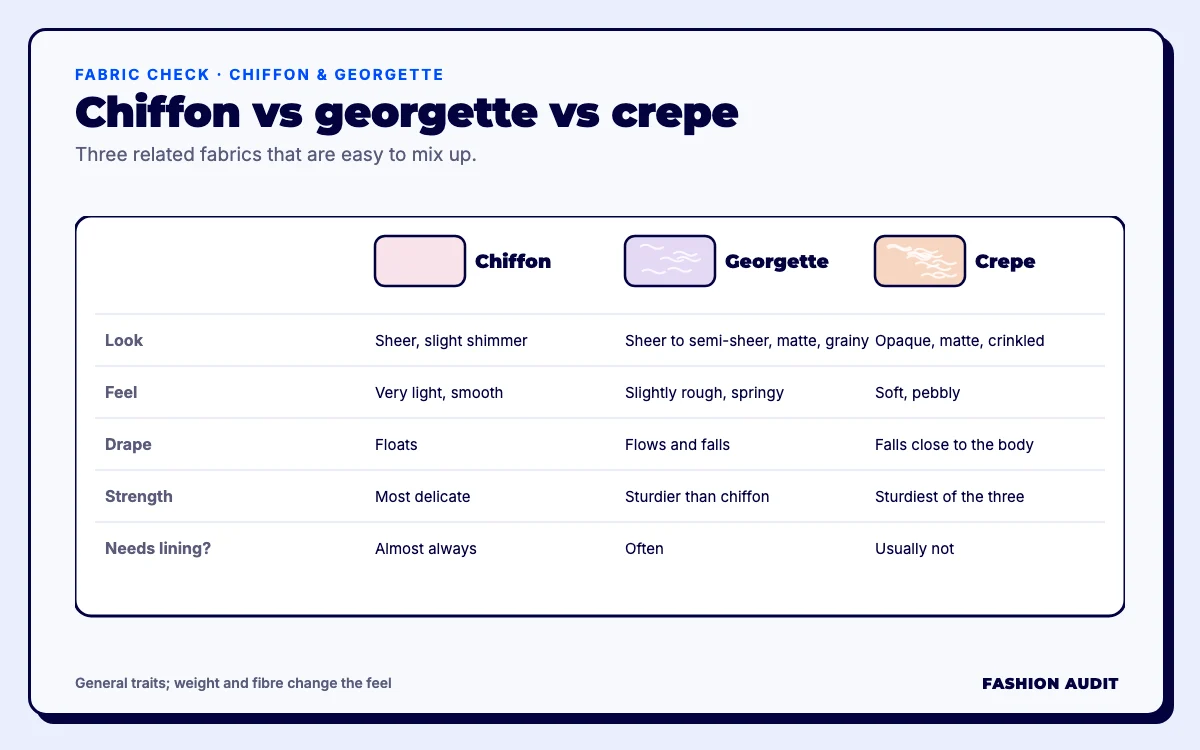
- Chiffon: the lightest and most sheer, smooth to touch, with a slight shimmer. It floats and flows, and it is the most delicate of the three.
- Georgette: a little heavier, more matte and slightly grainy, with more spring. It falls closer to the body and is sturdier than chiffon. Georgette is less lustrous and bouncier than chiffon (Wikipedia: Georgette).
- Crepe: usually opaque, with a soft, pebbly, crinkled surface. It is the sturdiest of the three and often needs no lining.
These are general traits. The weight of the cloth and the fibre it is made from change the feel a lot.
The secret is in the twist
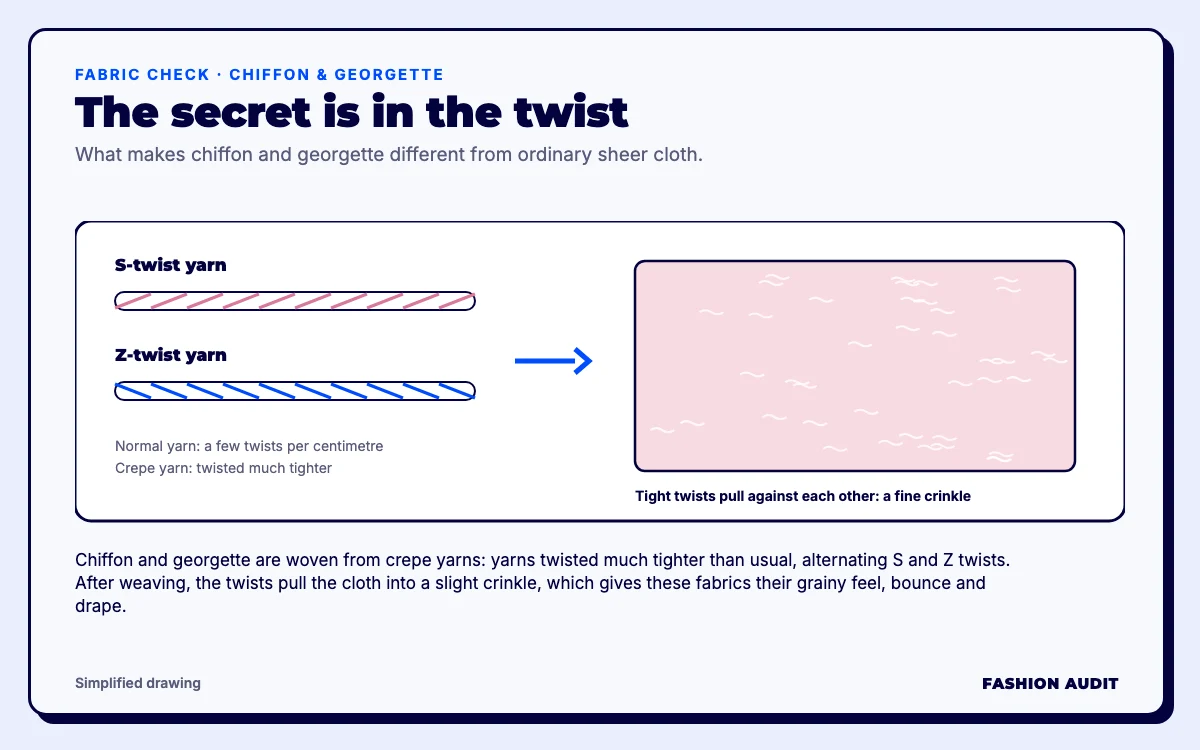
Ordinary yarn has a few twists per centimetre. Chiffon and georgette are woven from crepe yarns, twisted much tighter, with S-twist and Z-twist yarns used alternately (Wikipedia: Chiffon). After weaving, the tight twists pull against each other and give the cloth a fine crinkle. That is where the grainy feel, the bounce and the famous drape come from.
Same name, different fibre
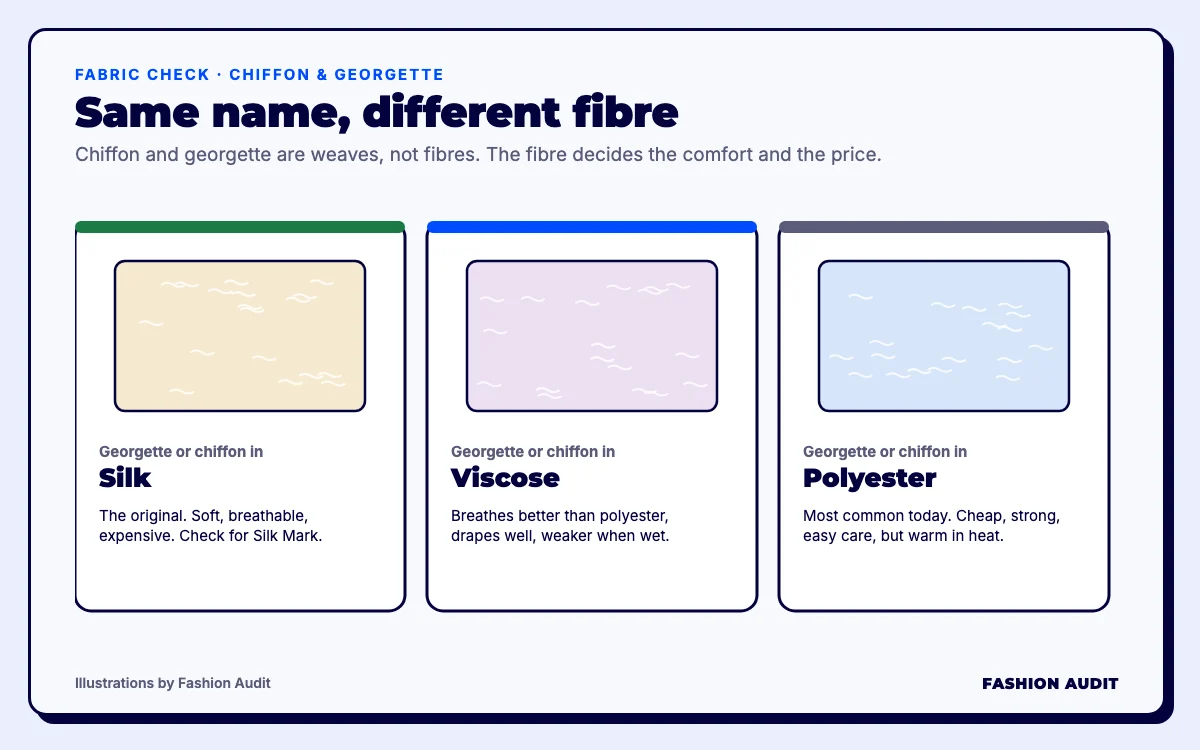
- Silk: the original. Soft, breathable and expensive. On costly pieces, look for the Silk Mark (see our silk guide).
- Viscose: breathes better than polyester and drapes well, but is weaker when wet, so handle it gently in the wash (see our rayon and viscose guide).
- Polyester: the most common today. Cheap, strong and easy to care for, but it can feel warm in Indian heat (see our polyester guide).
From silk luxury to everyday polyester
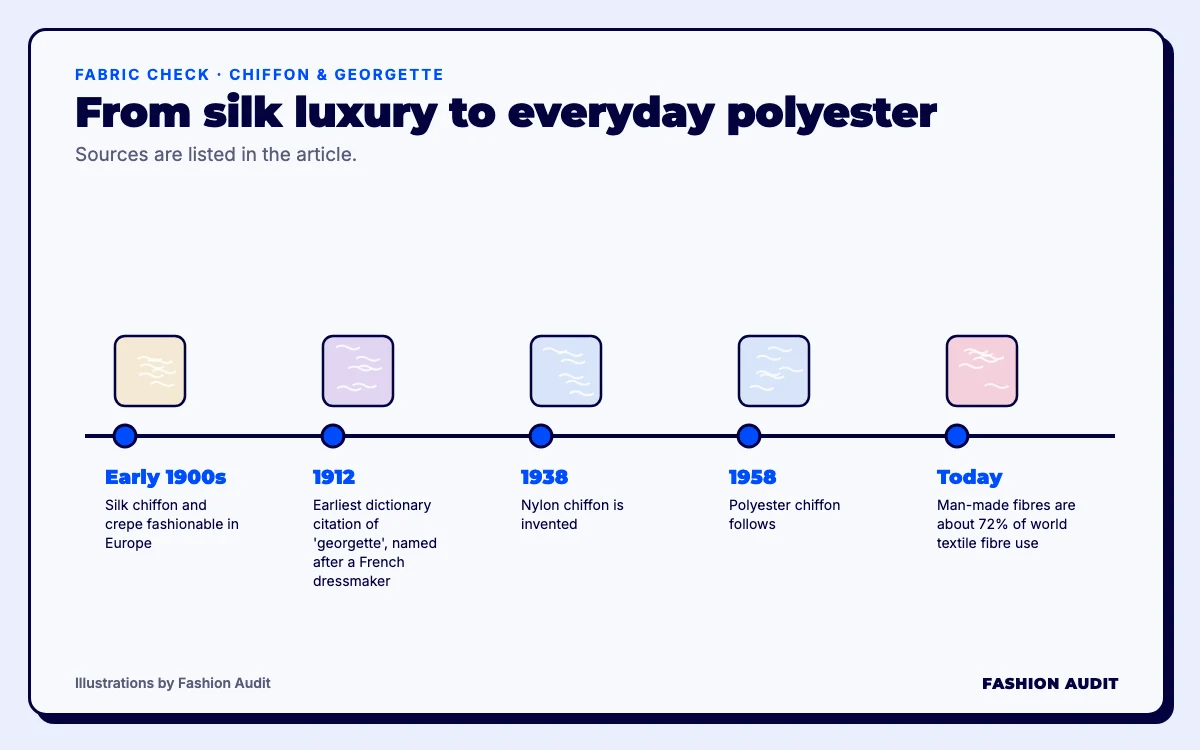
The word chiffon comes from the French chiffe, meaning a cloth or rag. Chiffon began as a silk fabric. Nylon chiffon was invented in 1938 and polyester chiffon followed in 1958, which made it far cheaper (Wikipedia: Chiffon). Georgette is named after the French dressmaker Georgette de la Plante, and the earliest dictionary citation of the word is from 1912 (Wikipedia: Georgette).
Today man-made fibres make up about 72% of global textile fibre use, according to the Ministry of Textiles (Ministry of Textiles, Indian man-made fibre textile industry). That shift is why most chiffon and georgette in shops is now polyester.
Where you will see them

Chiffon and georgette are the go-to fabrics for sarees and dupattas, along with kurtis, anarkalis, shararas, gowns, blouses, tops, scarves and stoles. They are light, take prints and embroidery well, and move beautifully, which is why they are so popular for weddings, festivals and parties.
Check the lining before you buy
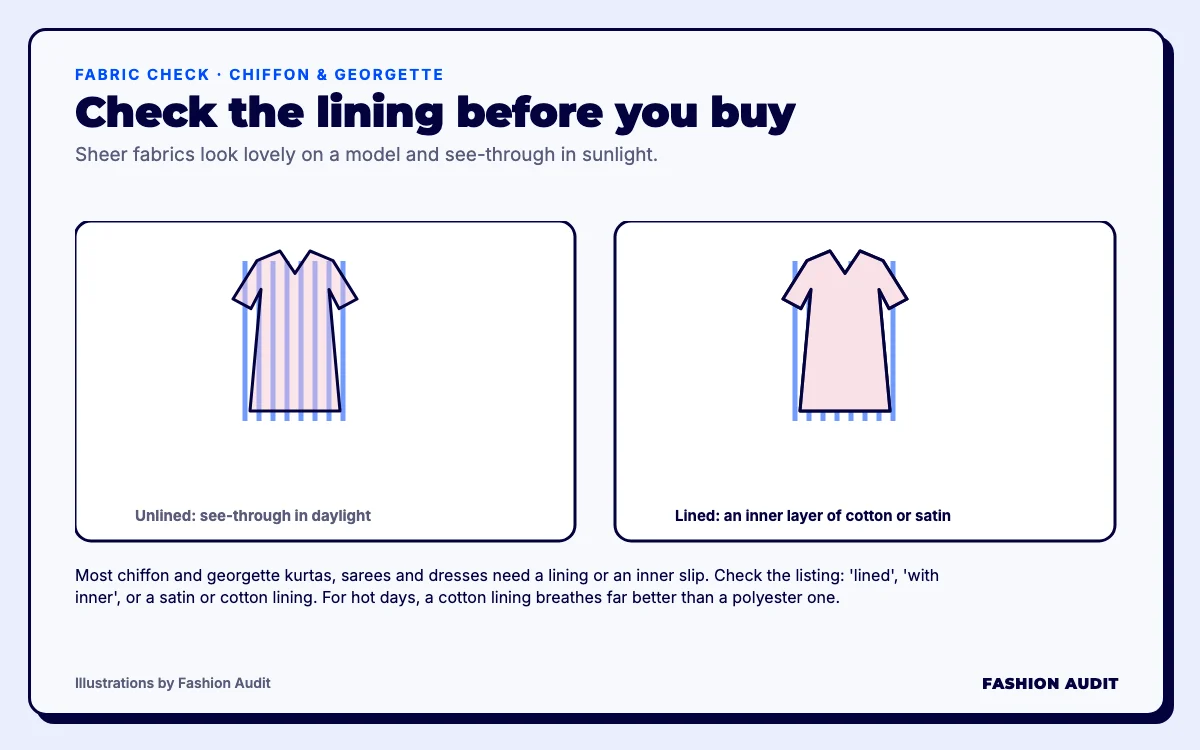
Most chiffon and georgette kurtas, sarees and dresses need a lining or an inner slip. Check the listing for words like “lined”, “with inner”, or a satin or cotton lining. For hot days, a cotton lining breathes far better than a polyester one. If a listing says nothing about a lining, plan for a slip or camisole.
Six quality checks for sheer fabric
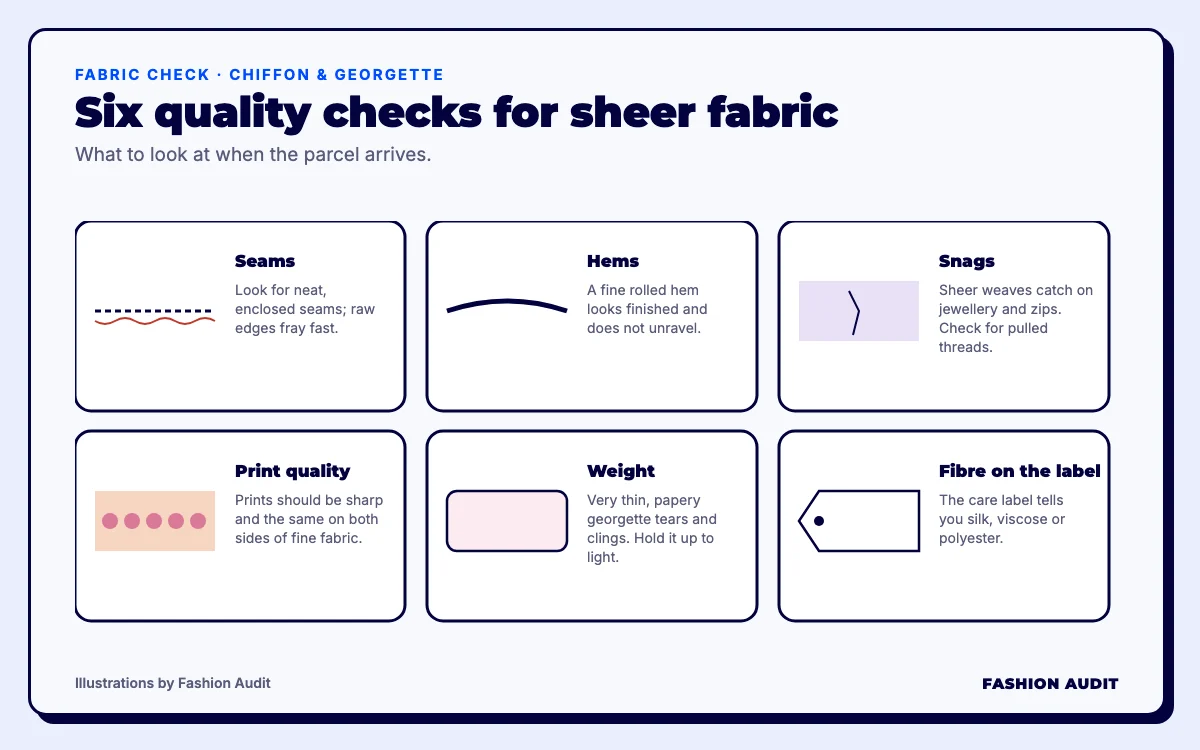
- Seams: look for neat, enclosed seams. Raw edges fray fast in sheer cloth.
- Hems: a fine rolled hem looks finished and does not unravel.
- Snags: sheer weaves catch on jewellery and zips. Check for pulled threads.
- Print quality: prints should be sharp, and on fine fabric they should look the same on both sides.
- Weight: very thin, papery georgette can tear and cling. Hold it up to the light.
- Fibre on the label: the care label tells you whether it is silk, viscose or polyester.
Read the chiffon and georgette label
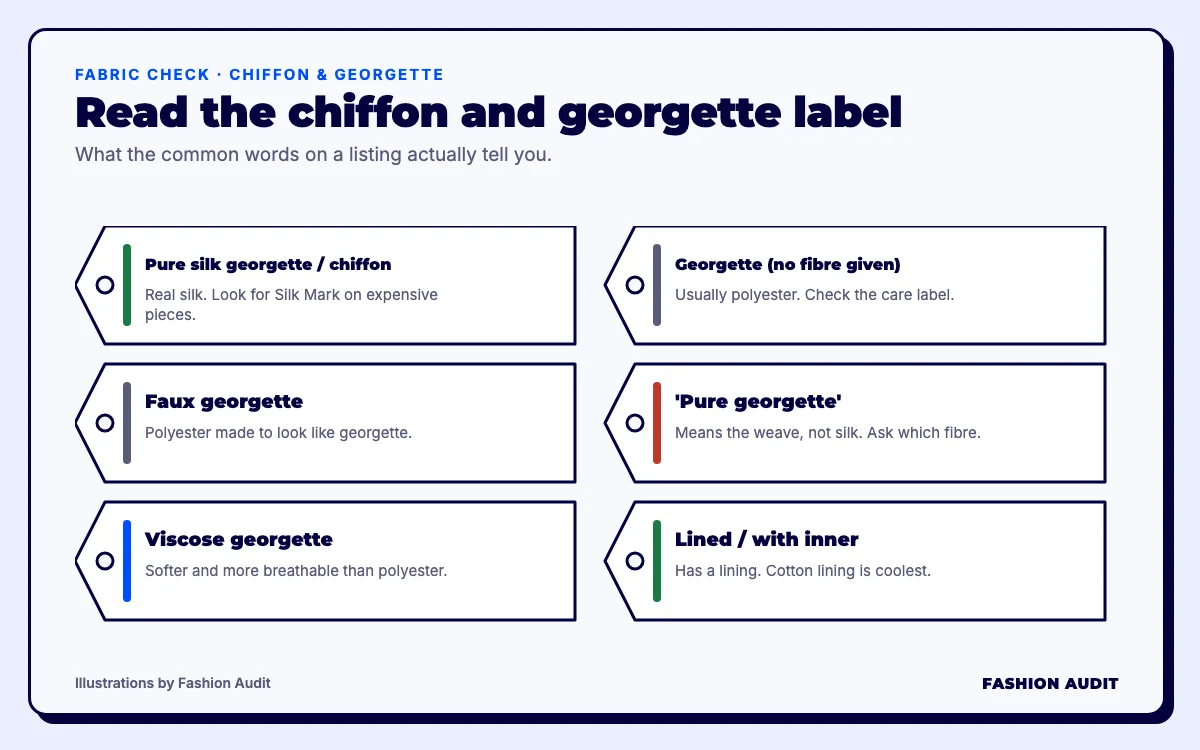
- “Pure silk georgette” or “pure silk chiffon”: real silk. Look for the Silk Mark on expensive pieces.
- “Georgette” with no fibre given: usually polyester. Check the care label.
- “Faux georgette”: polyester made to look like georgette.
- “Pure georgette”: describes the weave, not silk. Ask which fibre it is.
- “Viscose georgette”: softer and more breathable than polyester.
- “Lined” or “with inner”: the piece has a lining. A cotton lining is the coolest.
Pros, cons and care
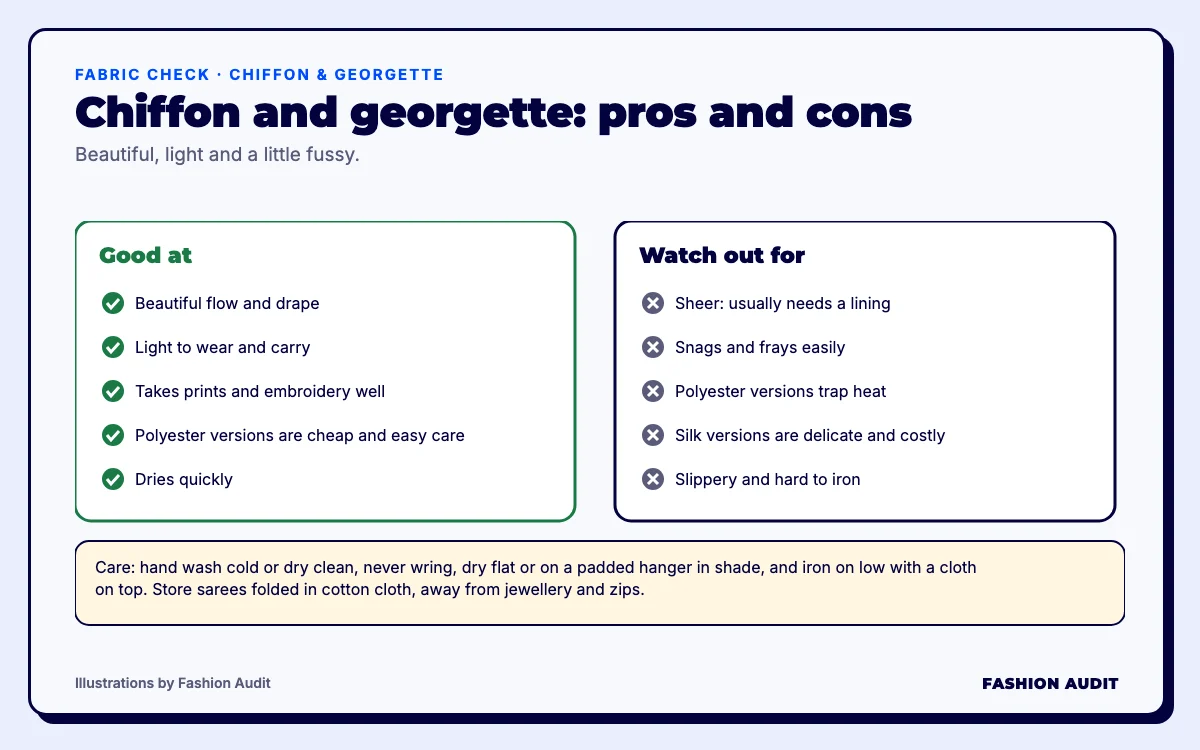
| What chiffon and georgette do well | Where they fall short |
|---|---|
| Beautiful flow and drape | Sheer, so usually needs a lining |
| Light to wear and carry | Snags and frays easily |
| Takes prints and embroidery well | Polyester versions trap heat |
| Polyester versions are cheap and easy care | Silk versions are delicate and costly |
| Dries quickly | Slippery and hard to iron |
- Wash: hand wash in cold water or dry clean, especially silk and embellished pieces.
- Never wring: press water out gently in a towel.
- Dry flat or on a padded hanger, in shade.
- Iron on low with a thin cotton cloth on top.
- Store sarees folded in cotton cloth, away from jewellery and zips that can snag them.
What is right for Indian weather
- Summer: polyester georgette can feel warm and sticky. Choose viscose or silk georgette, a loose fit and a cotton lining, or save it for evenings.
- Humid weather: polyester dries quickly, which helps, but it does not absorb sweat. Light, loose cuts work best.
- Monsoon: polyester georgette copes with rain and dries fast. Avoid silk and viscose on wet days.
- Winter and wedding season: heavier georgette and embroidered pieces work well, layered with a shawl. See our wool guide for warm layers.
Price check: what chiffon and georgette cost in India
These are prices as listed in the Fashion Audit shop on 11 November 2026. Most listings at these prices are polyester, so check the fibre and lining in each description.
- Youthnic georgette kurti: ₹429 (MRP ₹1,716).
- Vishudh georgette kurti: ₹499 (MRP ₹1,199).
- EthnicJunction georgette tie-dye kurta set: ₹659 (MRP ₹2,568).
- RATAN georgette sharara: ₹699 (MRP ₹1,899).
- Libas printed chiffon kurta with trousers: ₹1,349 (MRP ₹5,699).
- Sajavat faux georgette kurta set: ₹1,695 (MRP ₹2,999).
- Inddus embroidered georgette sharara set: ₹2,247 (MRP ₹7,799).
If you like the crinkled look but want something opaque, crepe is worth a look: the Scube Designs viscose crepe palazzo is ₹399 (MRP ₹999) and the FIORRA crepe kurta set is ₹999 (MRP ₹3,999). Pure silk chiffon and georgette sarees usually cost much more than any of these.
Where the marketing misleads
- “Pure georgette” sounds like silk but usually only describes the weave. Ask which fibre it is.
- “Silk touch”, “silky” or “soft silk feel” describes a feel, not silk fibre.
- “Faux georgette” is polyester, which is fine at the right price, but it is not silk.
- Model photos are often shot with an inner layer that may not be included. Check whether the lining comes with the piece.
What it means for you
- Chiffon and georgette are weaves. Always check the fibre on the label.
- For affordable festive wear, polyester georgette with a cotton lining is a sensible choice.
- For breathability, choose viscose or silk. For real silk, look for the Silk Mark.
- Check seams, hems and snags as soon as the parcel arrives, so you can return it in time if needed.
- Hand wash cold, never wring, iron low, and store away from jewellery.
Common questions
What is the difference between chiffon and georgette?
Both are sheer fabrics woven from crepe yarns. Chiffon is lighter, smoother and more sheer, with a slight shimmer. Georgette is a little heavier, more matte and grainy, and sturdier.
Is georgette silk or polyester?
It can be either, or viscose. Georgette is a weave. Most affordable georgette in India is polyester, so check the label.
Is georgette good for summer?
Polyester georgette can feel warm in strong heat. Viscose or silk georgette, a loose fit and a cotton lining make it far more comfortable.
How do I wash a georgette saree?
Hand wash in cold water with a mild detergent or dry clean, do not wring it, dry it in shade, and iron on low with a cloth on top. Dry clean heavily embellished or silk pieces.
Why does my georgette kurta need a lining?
Because the fabric is sheer, it can be see-through in daylight. A lining, ideally cotton, makes it opaque and more comfortable against the skin.
The bottom line
Chiffon and georgette give Indian festive wear its flow and lightness. Read the fibre, not just the fabric name, check for a lining, and handle them gently. Polyester georgette is a good-value everyday choice, viscose is softer and cooler, and real silk with the Silk Mark is the luxury option.
Sources
- Wikipedia: Chiffon (fabric)
- Wikipedia: Georgette (fabric)
- Ministry of Textiles: Indian man-made fibre textile industry
Illustrations by Fashion Audit. Have a correction? Write to us through the contact page and we will update this guide with a dated note.