

Polyester is a fabric made from plastic: the same PET family used for drinking bottles, melted and spun into thread. It is now the most-made fibre in the world and almost certainly in your wardrobe: in gym tees, uniforms, georgette sarees, puffer jackets and backpacks. This guide explains how it is made, the types you will see, where it works well in India and where it does not.
Fabric Check is Fashion Audit’s series on the fabrics in your wardrobe. Prices checked 11 November 2026.
The short answer
Polyester is the right fabric for sportswear, rainwear, winter jackets, bags and low-maintenance uniforms. It dries fast, hardly creases and lasts. It is the wrong fabric for long days in still Indian heat, because it does not breathe like cotton or linen and can hold body odour. For everyday summer clothes, keep polyester to a minority share in a blend, or skip it.
What polyester is, in one line
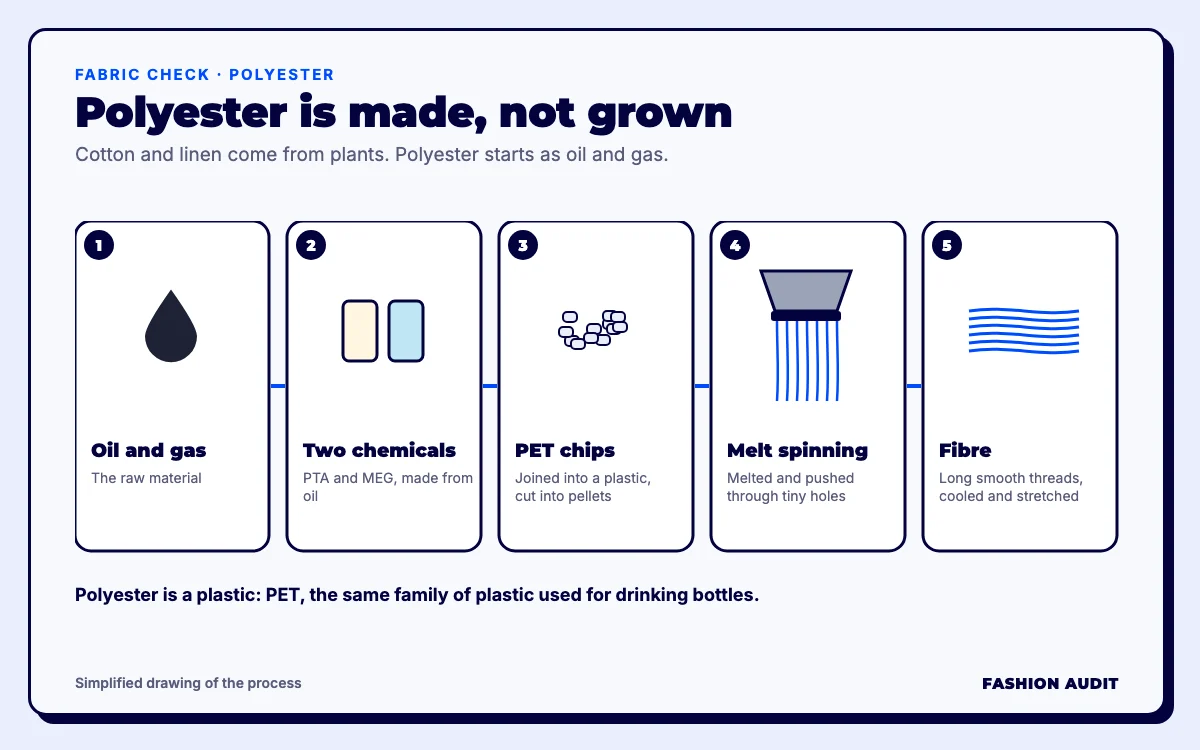
Cotton and linen come from plants. Polyester starts as oil and gas, which are turned into two chemicals (called PTA and MEG). These are joined into a plastic called PET, cut into small chips, melted and pushed through a plate with tiny holes. The threads that come out are cooled and stretched into fibre.
A young fibre that took over
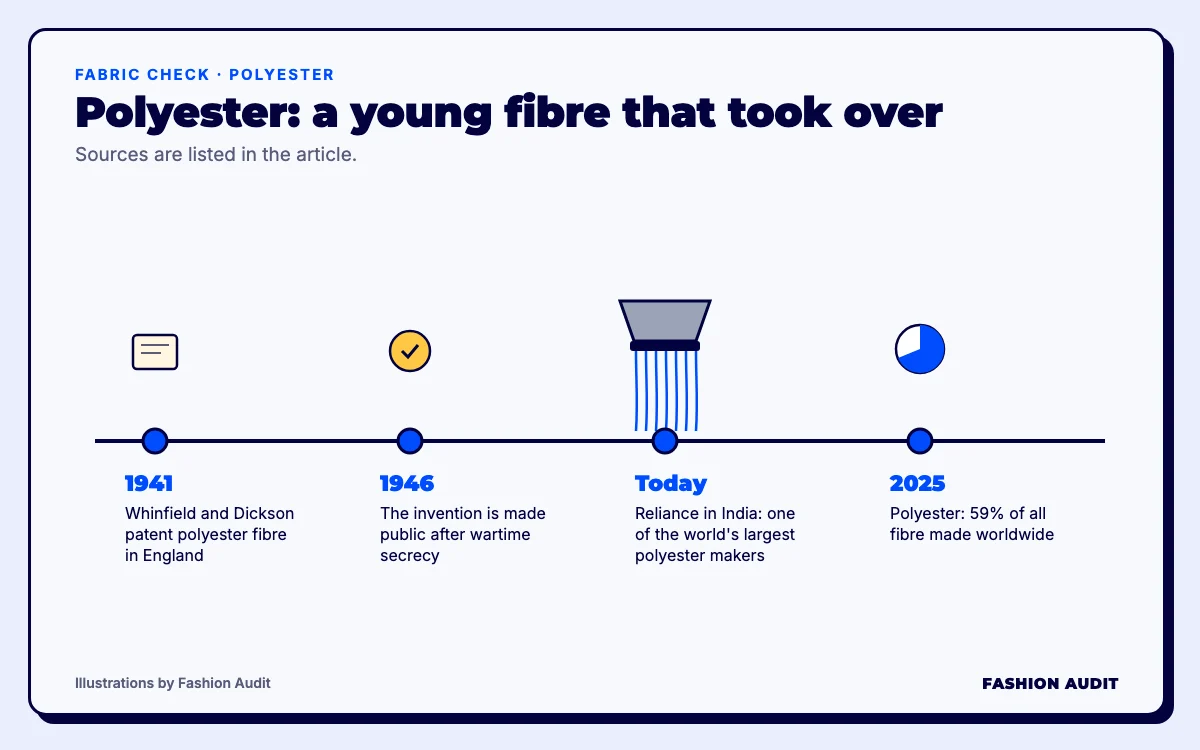
Polyester is barely 85 years old. British chemists John Rex Whinfield and James Tennant Dickson patented their polyester fibre in July 1941. Because of wartime secrecy, it was not made public until 1946. It was then sold as Terylene by ICI in Britain and as Dacron by DuPont in the US (Wikipedia).
Today it dominates. Polyester made up 59% of all fibre produced in the world in 2025, according to Textile Exchange (Materials Market Report 2026). India is a major maker: Reliance Industries says it is one of the largest producers of polyester fibre and yarn in the world, with a capacity of 2.5 million tonnes a year, sold under the Recron brand (Reliance Industries).
Recycled polyester: from bottle to T-shirt
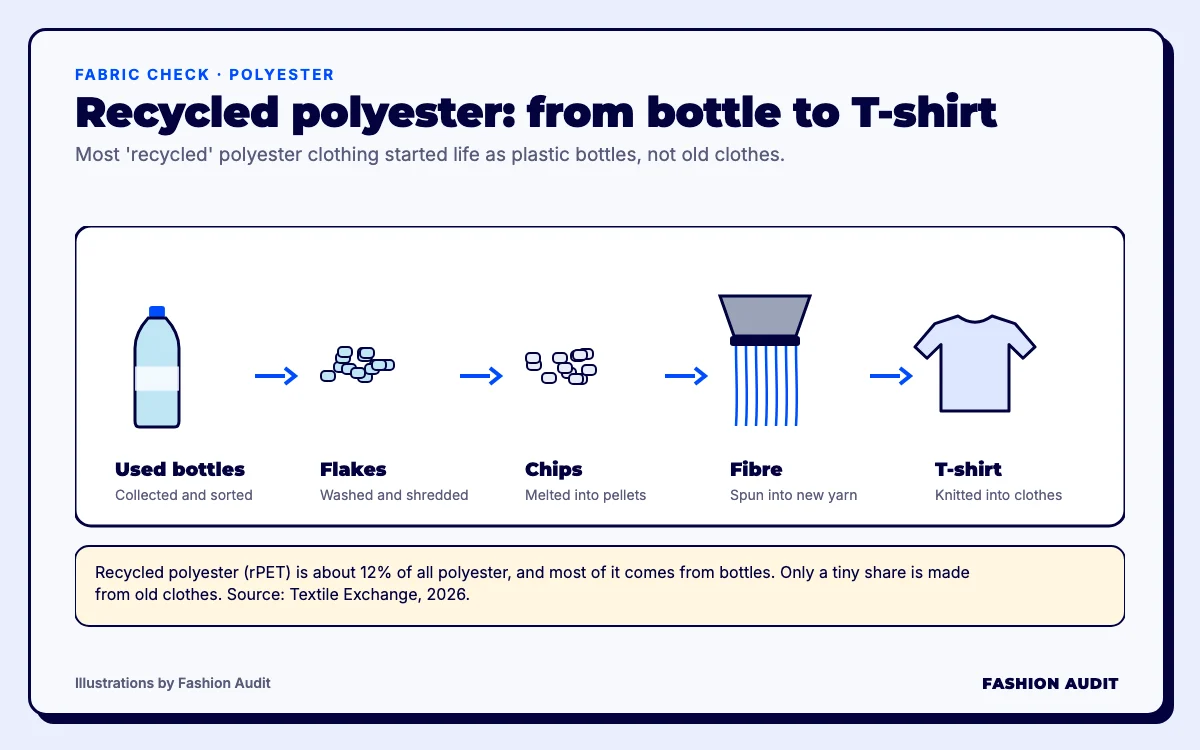
“Recycled polyester”, often written rPET, is made by shredding used PET, mostly bottles, then melting and spinning it again. Textile Exchange estimates recycled polyester was about 12% of all polyester in 2024, and only a small fraction came from old clothes rather than bottles (Materials Market Report 2025). It uses less new oil, but it is still polyester: it sheds microfibres and is hard to recycle again once it becomes clothing. Trust a certificate such as GRS (Global Recycled Standard) or RCS over the word “recycled” alone.
Two ways polyester becomes yarn
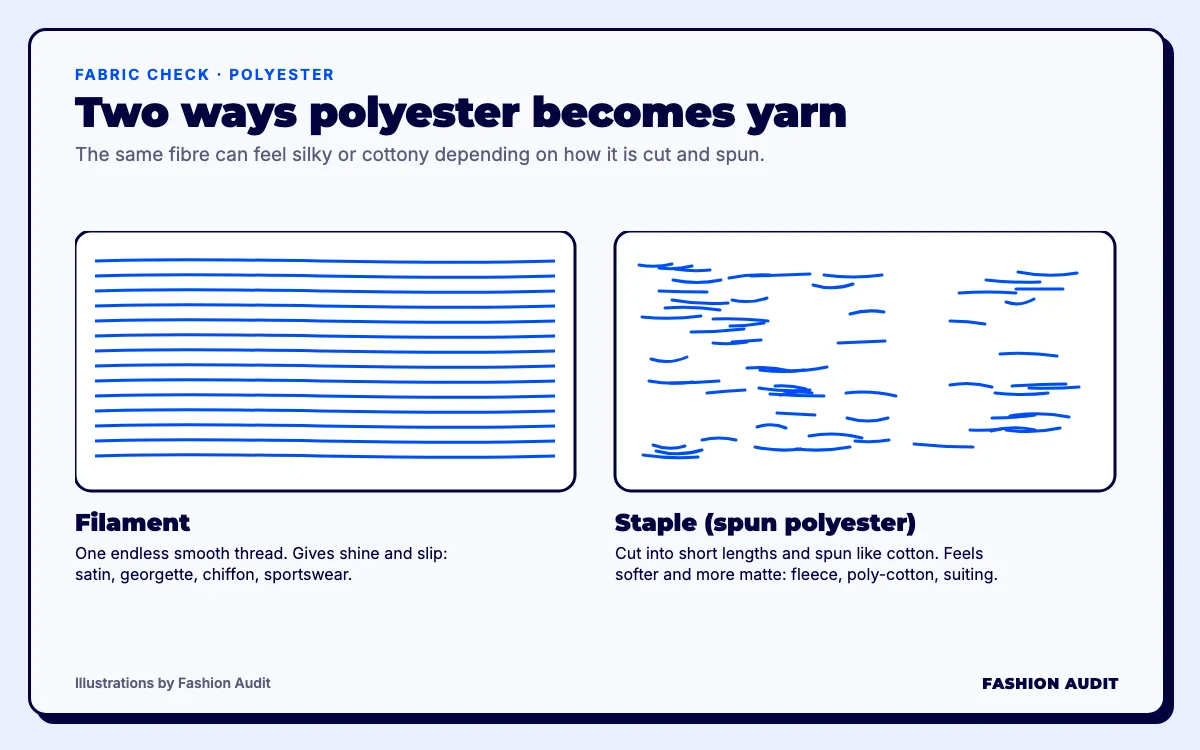
- Filament polyester: one long, unbroken thread. It gives shine and slip, so it is used for satin, georgette, chiffon, linings and smooth sportswear.
- Staple or spun polyester: the fibre is cut into short lengths and spun like cotton. It feels softer and more matte, and is used in fleece, poly-cotton and suiting.
Microfibre is polyester made with extra-fine threads. It feels soft and smooth, and is common in towels, cleaning cloths and some activewear.
Why gym wear is polyester
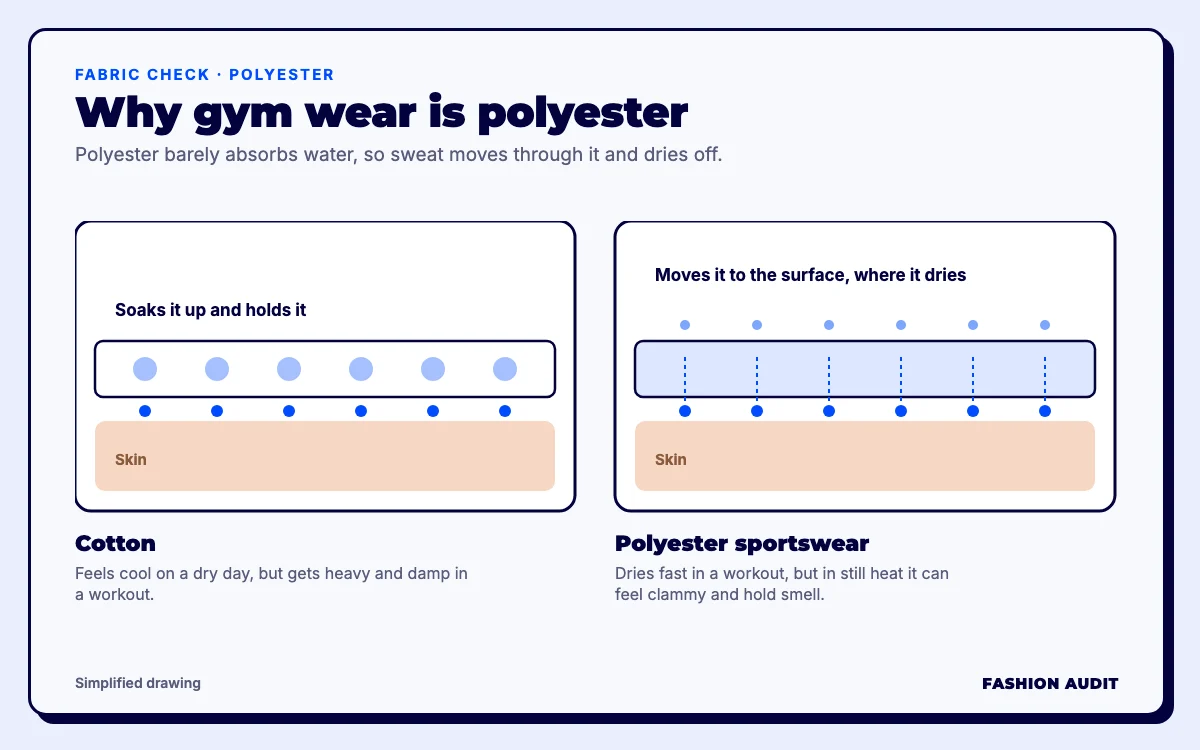
Polyester hardly soaks up water. In a knitted sports fabric, sweat moves along the fibres to the outside, where it dries. That is why a polyester gym tee stays lighter than a cotton one in a workout. The same trait works against you in still heat: the fabric does not absorb moisture next to your skin, so it can feel clammy, and many people find polyester holds body odour more than cotton after a day’s wear.
The polyester you will see in Indian shops
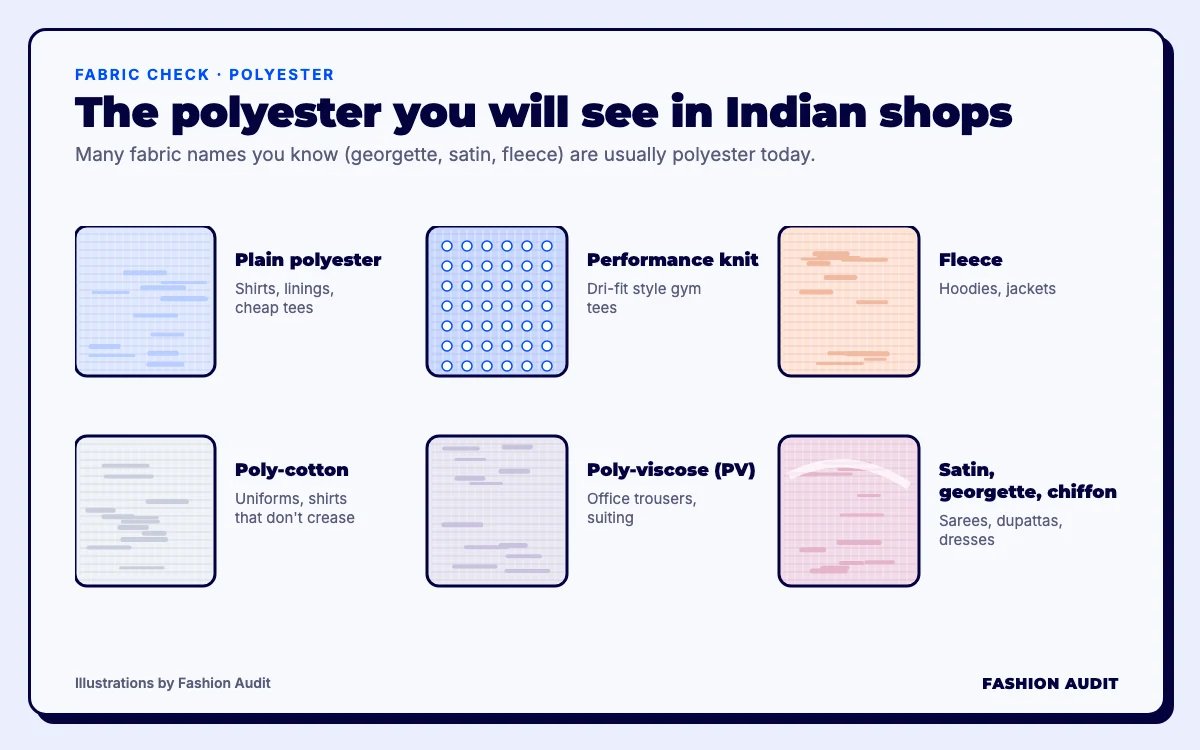
- Plain polyester: budget shirts, linings, printed tees.
- Performance knits (“dry fit”, “quick dry”): gym and running tees, often with small mesh holes for air.
- Fleece: brushed polyester for hoodies and jackets.
- Poly-cotton: school uniforms and shirts that crease less. See our cotton guide for how blends change the feel.
- PV (poly-viscose): the most common office-trouser and suiting fabric in India.
- Satin, georgette, chiffon, crepe: these are names for weaves and finishes, not fibres. They used to be silk; most affordable sarees, dupattas and dresses in these fabrics today are polyester.
- Puffer jackets and backpacks: almost always polyester or nylon outer shells, often with polyester filling.
Polyester’s pros and cons
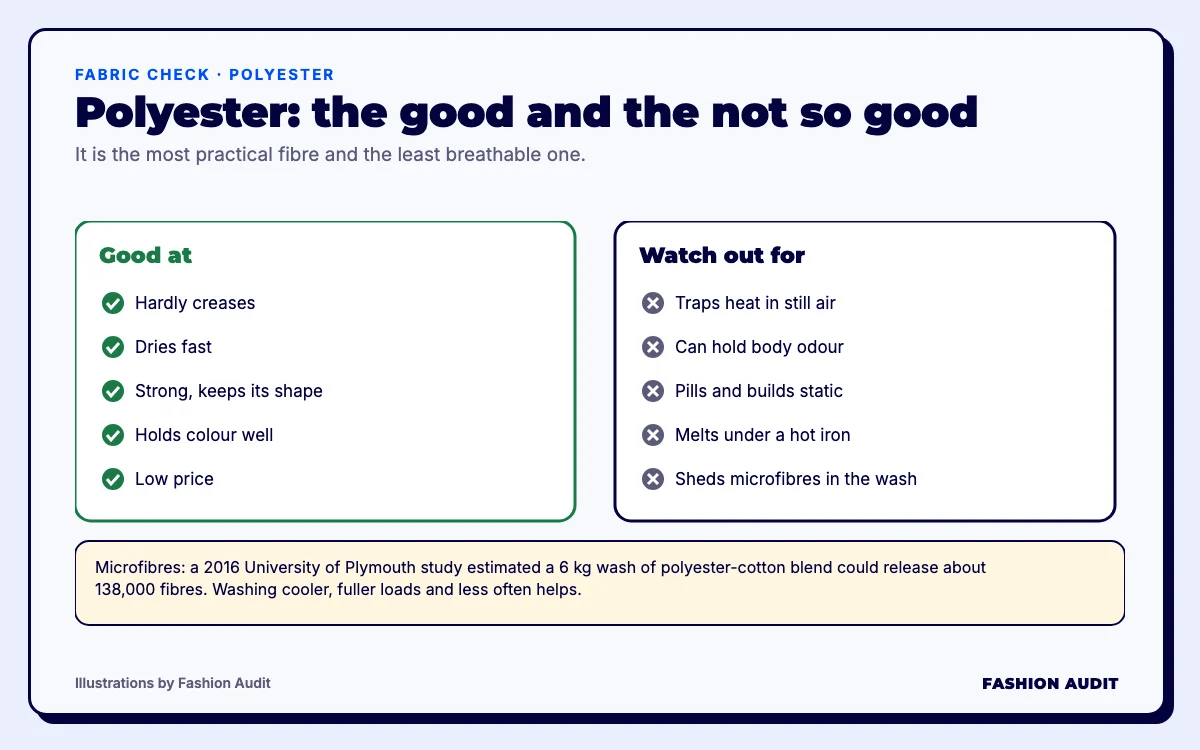
| What polyester does well | Where polyester falls short |
|---|---|
| Hardly creases; packs well for travel | Traps heat in still, humid air |
| Dries fast, ideal for monsoon and sport | Can hold body odour |
| Strong and keeps its shape after many washes | Pills and builds static, especially cheap spun polyester |
| Holds colour; prints stay bright | Melts or shines under a hot iron |
| Low price for the durability | Made from oil and sheds microfibres in the wash |
About microfibres: every wash releases tiny plastic fibres into wastewater. A 2016 University of Plymouth study estimated that a 6 kg wash of polyester-cotton blend fabric could release about 138,000 fibres, and an acrylic load over 700,000 (Napper and Thompson, 2016). Washing in fuller loads, at lower temperatures and a little less often helps.
What is right for Indian weather
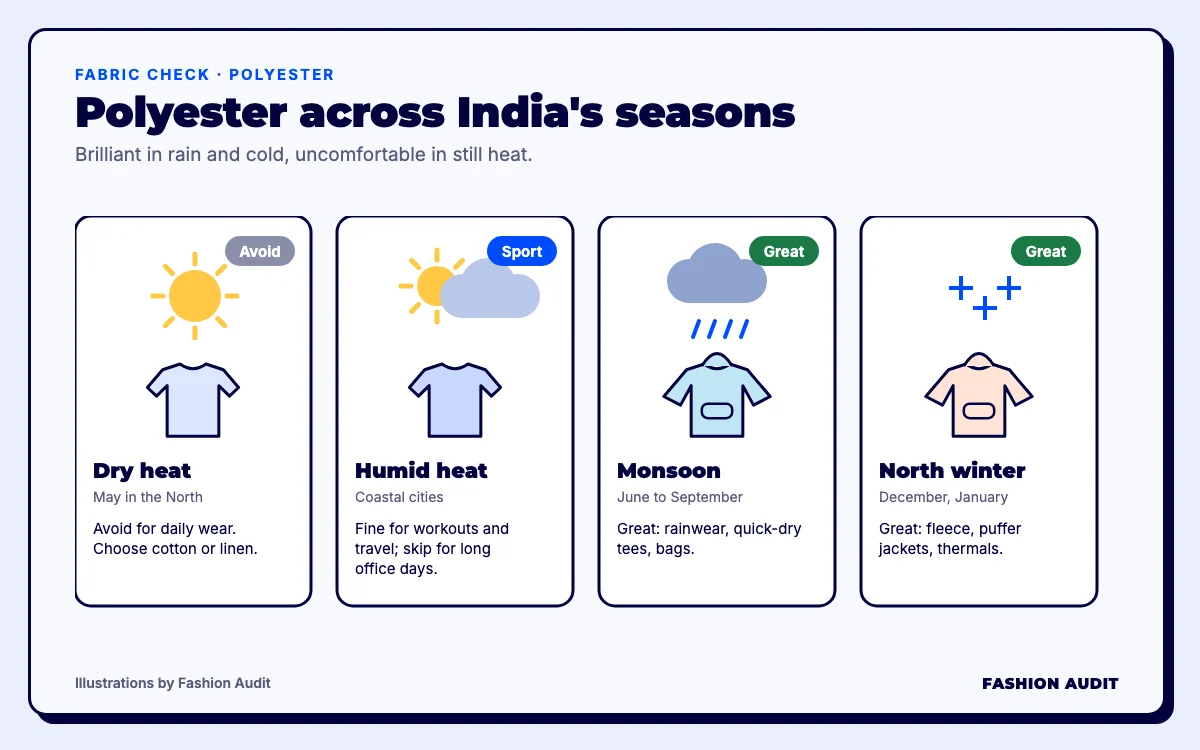
- Dry summer heat: avoid polyester for daily wear. Cotton and linen are far more comfortable. See our linen guide.
- Humid heat: fine for workouts, cricket and travel; uncomfortable for a long office day in a non-AC space.
- Monsoon: polyester’s best season. Rain jackets, quick-dry tees and bags that do not stay soggy.
- North Indian winter: fleece, puffer jackets and thermals do the job well.
How to read a polyester label
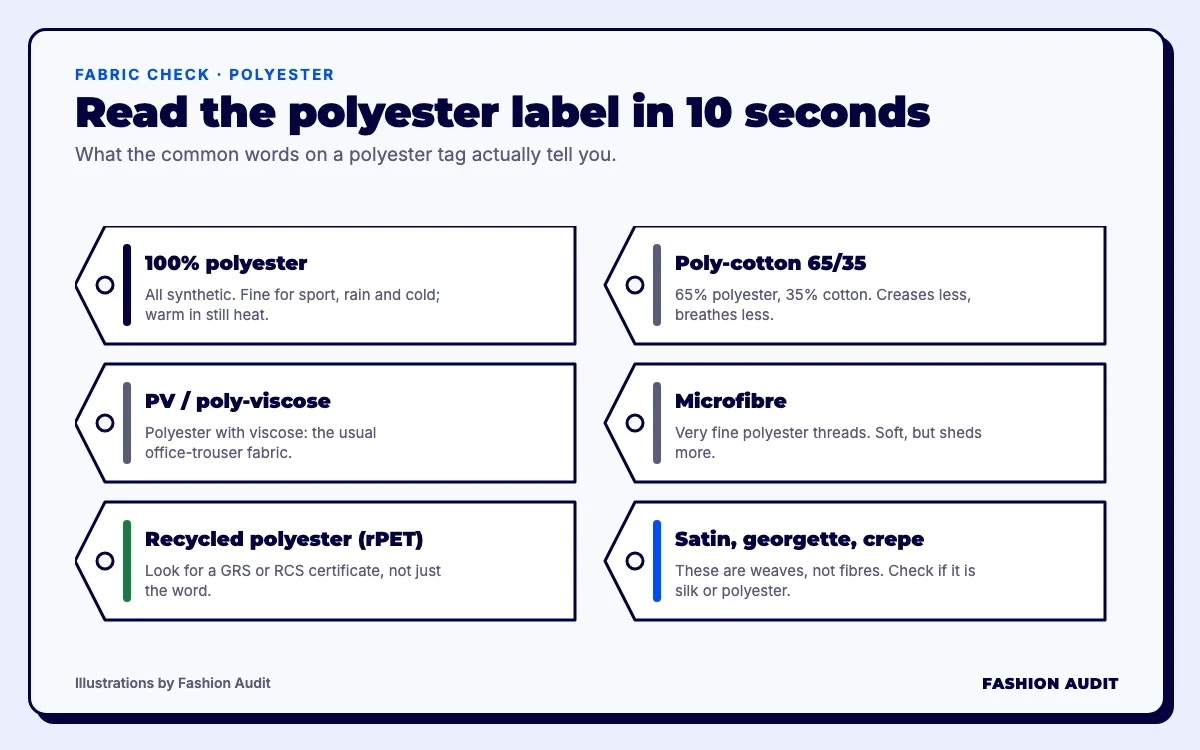
- Check the care label inside, not just the listing title. Titles often say “satin” or “georgette” without the fibre.
- “Poly-cotton 65/35” means 65% polyester. The more polyester, the less it breathes.
- “PV” or “poly-viscose” is the normal office-trouser blend; viscose adds softness and drape.
- “Dry fit”, “quick dry”, “moisture wicking” almost always mean polyester or nylon.
- “Recycled polyester” should carry a GRS or RCS certificate name.
- The hand check: polyester feels slightly slippery and springs back when scrunched. It also builds static when rubbed on a dry day.
Price check: what polyester costs in India
These are prices as listed in the Fashion Audit shop on 11 November 2026.
- N And J polo-neck polyester T-shirt: ₹289 (MRP ₹799).
- Boldfit polyester tank top: ₹339 (MRP ₹799).
- FUAARK dry-fit polyester T-shirt: ₹796 (MRP ₹1,599).
- Nike Jordan Sport Dri-FIT Jumpman T-shirt: ₹1,687 (MRP ₹1,795).
- Roadster polyester puffer jacket for women: ₹962 (MRP ₹3,699). See our Roadster audit.
- Nike polyester hoodie: ₹3,196 (MRP ₹3,995).
- Safari 26L polyester water-resistant backpack: ₹579 (MRP ₹2,599).
The same fibre spans ₹289 to over ₹3,000. Much of the gap is knit quality, finishing, fit and brand, not the polyester itself. A cheap polyester tee and a branded performance tee are both polyester; the better one usually has a finer, more open knit that breathes and resists pilling.
Caring for polyester
- Wash cool and avoid very hot water; it sets creases and can weaken stretch fibres.
- Iron on low, or not at all. A hot iron can leave shiny marks or melt the fabric.
- Turn sportswear inside out and wash soon after a workout so odour does not set in. A vinegar rinse helps with stubborn smells.
- Skip fabric softener on sportswear; it can coat the fibres and slow drying.
- Use a wash bag or fuller loads to reduce rubbing and microfibre shedding.
Where the marketing misleads
- “Breathable polyester” usually means an open knit or mesh, not a fibre that absorbs sweat like cotton.
- “Satin”, “georgette” or “silky” on a low-priced listing usually means polyester, not silk.
- “Eco” or “sustainable” polyester without a recycled-content certificate is a claim you cannot check.
- “Anti-odour” finishes can wear off over many washes.
What it means for you
- Buy polyester for sport, monsoon, travel and winter layers. It is the best tool for those jobs.
- For everyday summer wear, choose cotton or linen, or blends where polyester is the smaller share.
- For sarees and dupattas, check whether that georgette or satin is silk or polyester before paying a silk price.
- Wash polyester sportswear soon after use to keep odour away.
- If recycled content matters to you, look for a GRS or RCS certificate.
Common questions
Is polyester bad for Indian summer?
For long days in still heat, it is less comfortable than cotton or linen. For workouts, travel and monsoon, it works well because it dries fast.
Why does polyester smell after a workout?
It does not absorb sweat into the fibre, and odour-causing bacteria can cling to its surface. Washing soon after use and an occasional vinegar rinse help.
Is recycled polyester better?
It uses less new oil and mostly reuses bottles, but it still sheds microfibres and is hard to recycle again. Look for a certificate.
Is georgette always polyester?
No. Georgette is a weave. It can be silk, but most affordable georgette today is polyester. The care label tells you.
Can I iron polyester?
Yes, on a low setting, ideally with a cloth between the iron and the fabric. High heat can melt or shine it.
The bottom line
Polyester is not a cheap substitute for cotton; it is a different tool. Buy it for what it is best at: sport, rain, cold and travel. For everyday Indian summer clothing, it is the wrong pick, however low the price. When a listing says satin, georgette or “dry fit”, read the care label and pay for the fibre you are actually getting.
Sources
- Textile Exchange: Materials Market Report 2026
- Textile Exchange: Materials Market Report 2025
- Wikipedia: John Rex Whinfield
- Reliance Industries: Polyesters
- Napper and Thompson (2016), Marine Pollution Bulletin and University of Plymouth summary
Illustrations by Fashion Audit. Have a correction? Write to us through the contact page and we will update this guide with a dated note.