
Wool is a natural protein fibre that grows on animals, mostly sheep, and is spun into yarn for sweaters, shawls, suits and blankets. For a North Indian winter, nothing beats it for warmth. But many “woollen” sweaters sold in India contain no wool at all. This guide explains the types of wool, what microns and labels mean, the pashmina and shahtoosh question, and how to make woollens last.
Fabric Check is Fashion Audit’s series on the fabrics in your wardrobe. Prices checked 11 November 2026.
The short answer
For real winter warmth, buy wool or a wool-rich blend, and read the care label, because many budget “woollen” sweaters are 100% acrylic. For next-to-skin comfort, choose fine merino (about 18.5 microns or less). For shawls, pashmina is legal and beautiful; shahtoosh is illegal and should never be bought.
From sheep to sweater
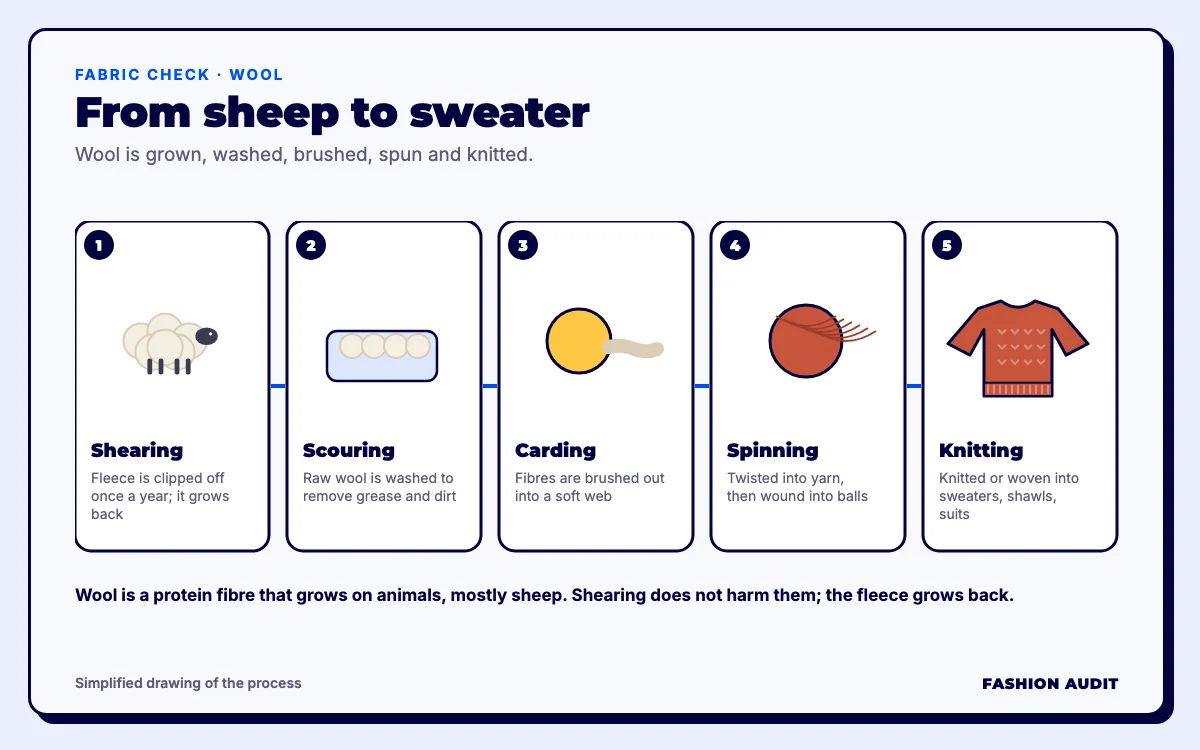
Sheep are sheared, usually once a year, and the fleece grows back. The raw wool is scoured (washed) to remove natural grease and dirt, then carded into a soft web, spun into yarn and knitted or woven. India produced an estimated 33.69 million kg of wool in 2023-24, with Rajasthan the largest producer (PIB, Basic Animal Husbandry Statistics 2024).
Why wool is warm, and why it shrinks
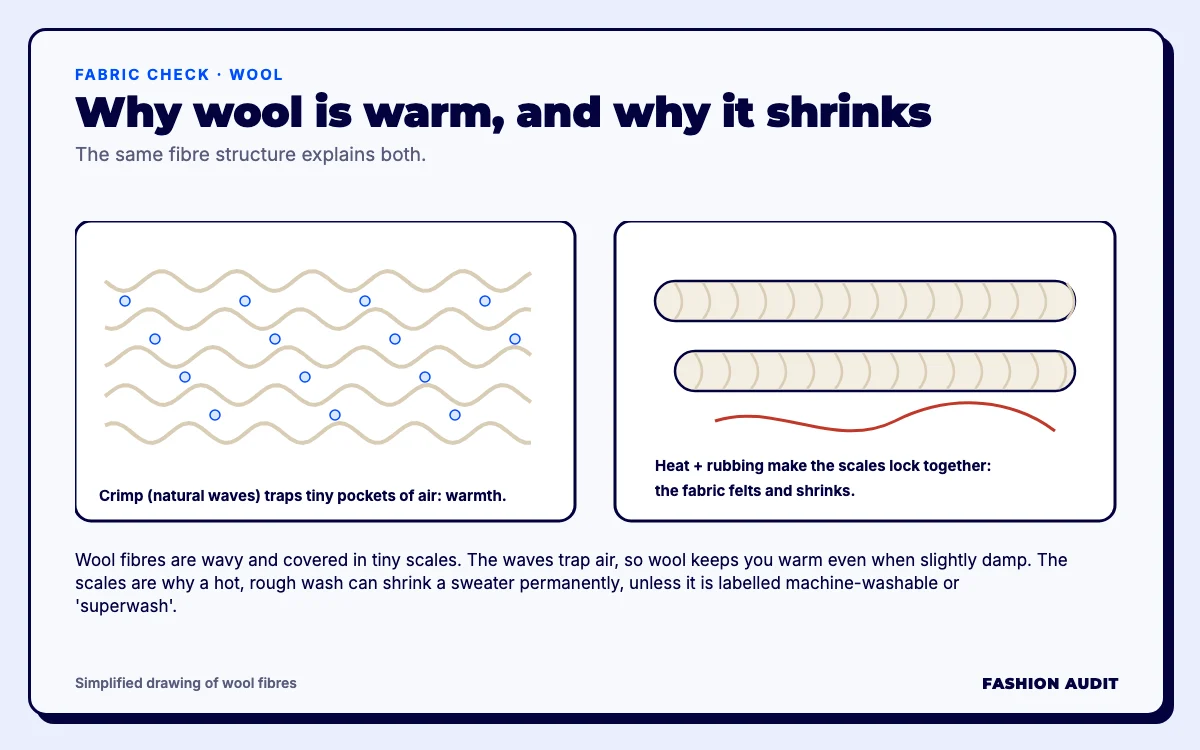
Wool fibres are naturally wavy, a trait called crimp. The waves trap tiny pockets of air, which is why wool stays warm even when slightly damp. Each fibre is also covered in tiny scales. With heat, water and rubbing, the scales lock together and the fabric felts: it shrinks and thickens permanently. That is why a woollen sweater can come out of a hot wash two sizes smaller, unless it is labelled machine-washable or “superwash”.
The wools you will see
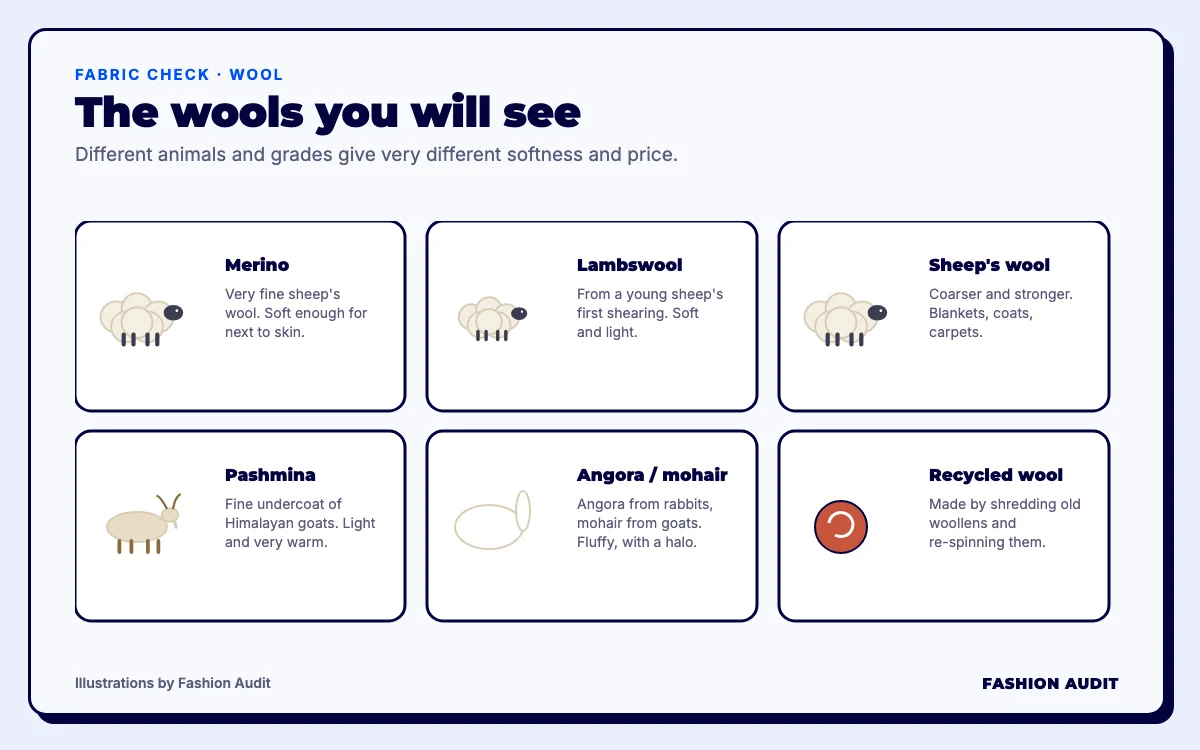
- Merino: very fine wool from merino sheep, soft enough to wear next to the skin.
- Lambswool: from a young sheep’s first shearing; soft and light.
- Regular sheep’s wool: coarser and tougher; coats, blankets and carpets.
- Pashmina (cashmere): the fine undercoat of Himalayan goats. Very light and very warm.
- Angora and mohair: angora comes from rabbits, mohair from Angora goats; both are fluffy with a “halo”.
- Recycled wool: made by shredding old woollen fabric and re-spinning the fibres, sometimes called shoddy (Wikipedia, Wool). Usually coarser but a good use of waste.
Microns: why some wool itches
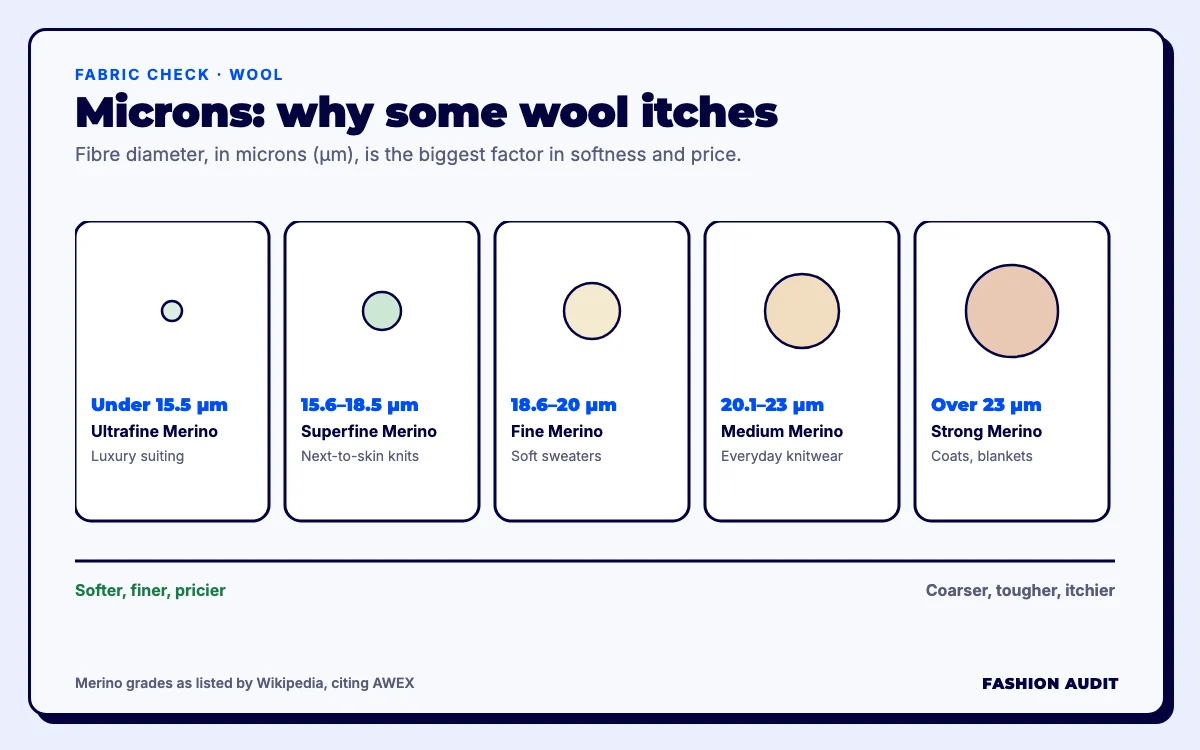
Fibre diameter, measured in microns (millionths of a metre), is the single biggest factor in wool quality and price (Wikipedia). Merino grades run roughly from ultrafine (under 15.5 microns) and superfine (15.6–18.5) to fine (18.6–20), medium (20.1–23) and strong (over 23). Coarser fibres poke the skin, which is the “itch” many people feel from wool. If wool bothers you, look for a stated micron of about 18.5 or lower, or wear a cotton layer underneath. Suit labels such as “Super 100s” also refer to fibre fineness.
Worsted vs woollen
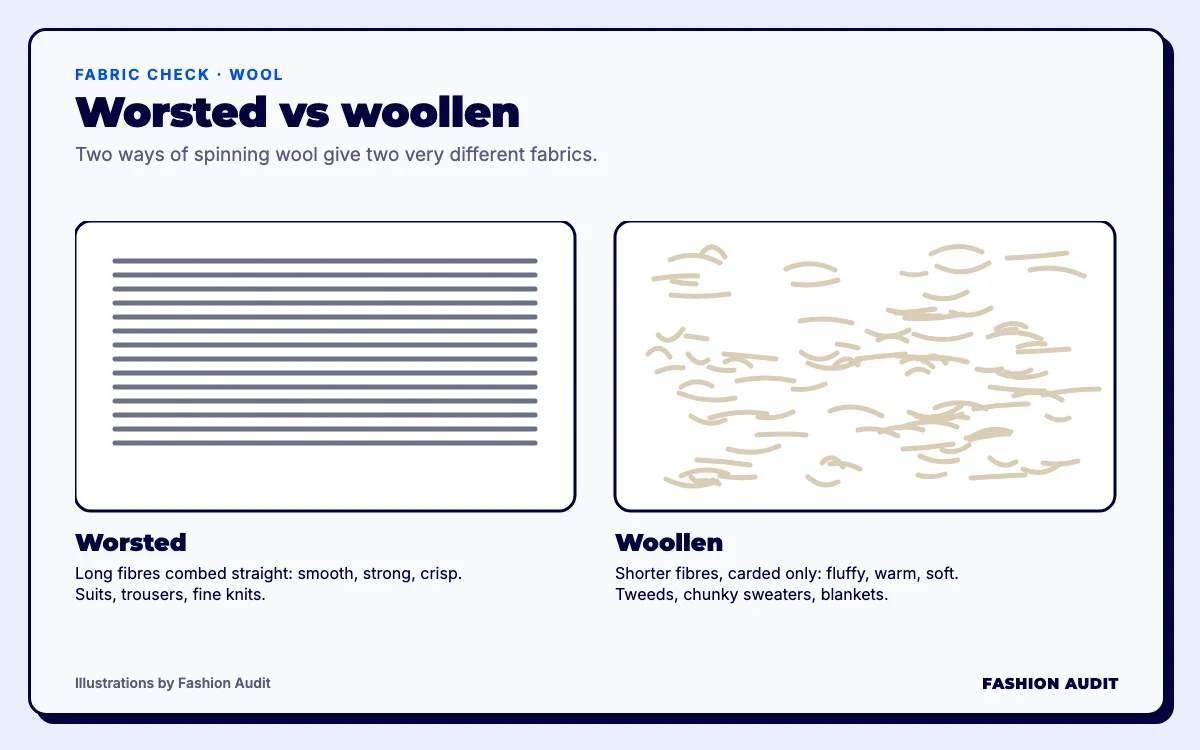
Worsted wool uses long fibres combed straight. It is smooth, strong and crisp: suits, trousers and fine knits. Woollen wool uses shorter fibres that are only carded, so it is fluffier, warmer and softer: tweeds, chunky sweaters and blankets.
Pashmina is legal. Shahtoosh is not.
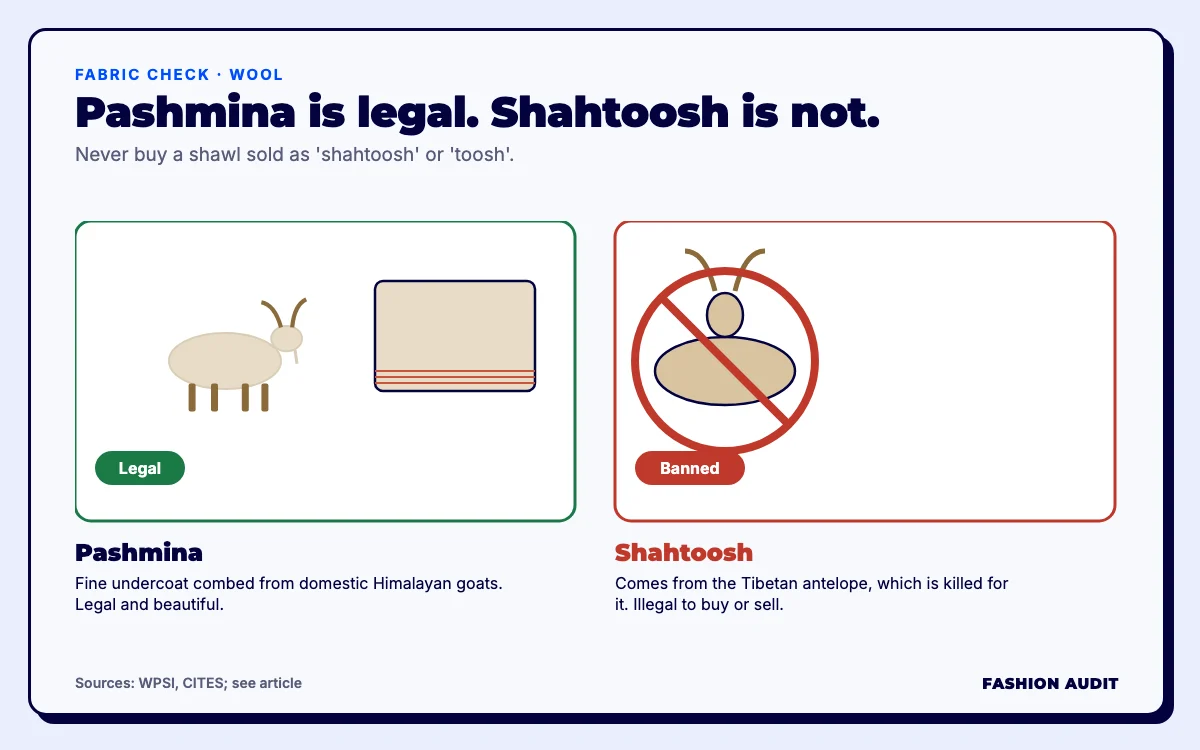
Pashmina comes from the fine undercoat of domesticated Himalayan goats and is legal. Shahtoosh comes from the Tibetan antelope (chiru), which has to be killed for its wool; the fibre cannot be sheared. International trade has been banned under CITES since 1979, and the chiru is protected under Schedule I of India’s Wildlife (Protection) Act, so buying or selling shahtoosh is illegal (Wildlife Protection Society of India). If a seller offers “shahtoosh” or “toosh”, walk away.
Pashmina itself varies widely in quality. Many “pashmina” shawls are blends with silk or other wools, which is fine when the label says so. Buy from sellers who state the fibre mix.
Wool vs acrylic
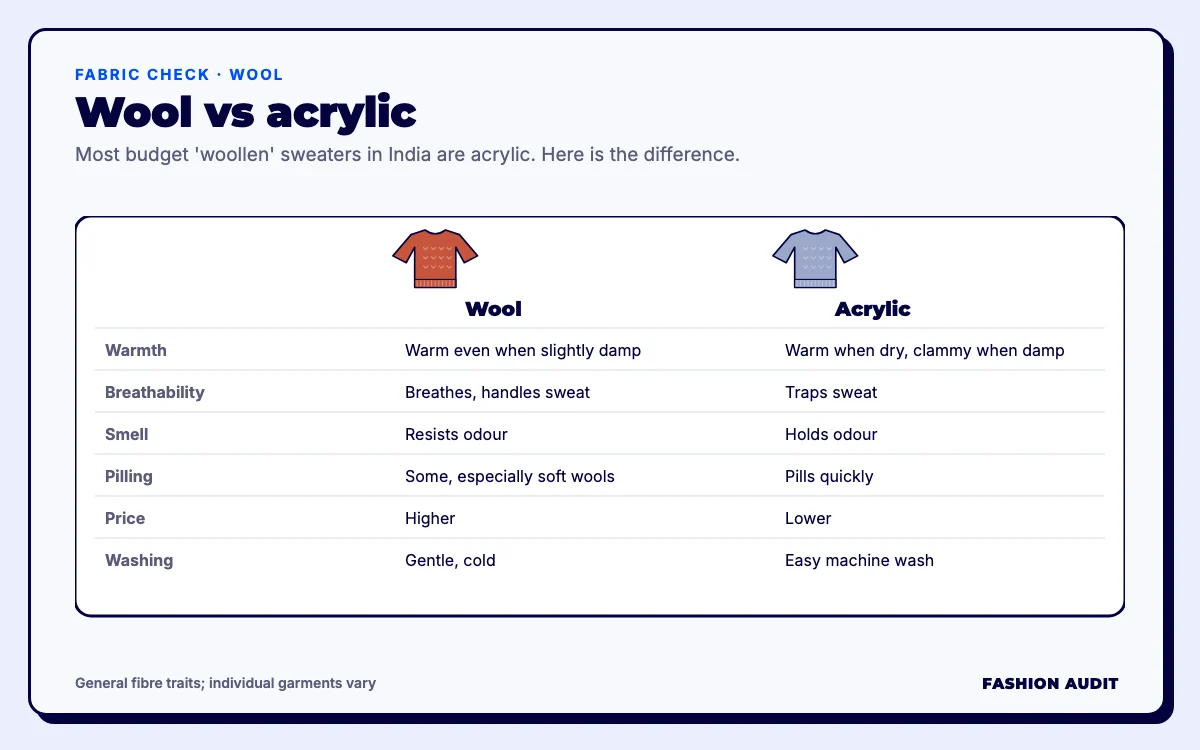
Acrylic is a synthetic fibre made to look and feel like wool. It is cheaper and easy to wash, but it does not handle sweat or damp as well, tends to pill quickly and can hold odour. When we checked the Fashion Audit shop, several sweaters and pullovers were acrylic, even though shoppers often call them “woollen”. That is fine for a light layer, but if you want real warmth for a Delhi or Chandigarh January, check for wool on the care label.
Wool’s pros and cons
| What wool does well | Where wool falls short |
|---|---|
| Very warm, even when slightly damp | Shrinks and felts in hot or rough washes |
| Breathes and handles sweat | Coarser wool can itch |
| Resists odour; needs fewer washes | Moths can damage stored woollens |
| Naturally springy, holds its shape | Costs more than acrylic |
| Natural and biodegradable | Soft wools can pill |
What is right for Indian weather
- North Indian winter: wool’s season. Wool sweaters, coats and shawls; pashmina for light warmth.
- Hill stations and travel: merino base layers are warm, light and do not smell after a day’s wear.
- Mild winters in the South and West: a light merino or a cotton-wool blend is often enough; heavy wool will be too warm.
- Monsoon and summer: store woollens clean and dry; damp invites moths and mould.
How to read a wool label
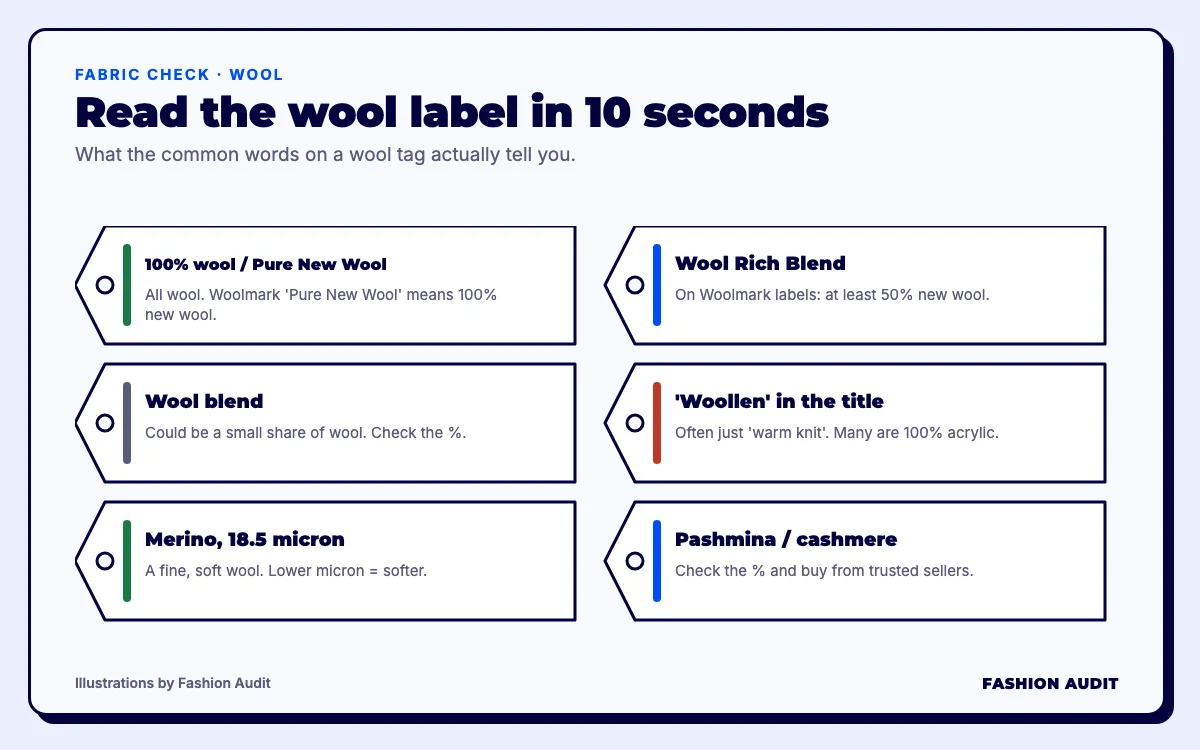
- “100% wool” or Woolmark “Pure New Wool” means all wool; Pure New Wool is 100% new wool.
- Woolmark “Wool Rich Blend” means at least 50% new wool (The Woolmark Company).
- “Wool blend” can mean a small share of wool. Check the percentage.
- “Woollen” in a listing title often just means a warm knit. Many are 100% acrylic.
- “Merino, 18.5 micron” tells you fineness: lower is softer.
- “Superwash” or “machine washable” means treated to resist felting.
Price check: what wool costs in India
These are prices as listed in the Fashion Audit shop and on brand sites on 11 November 2026. Check each care label for the fibre.
- Gajraj wool skull cap: ₹298 (MRP ₹499).
- Camey woollen beanie: ₹360 (MRP ₹699).
- Roadster round-neck acrylic pullover: ₹679 (MRP ₹1,699). Acrylic, not wool. See our Roadster audit.
- Dressberry woollen cardigan: ₹911 (MRP ₹2,399). Check the label for the wool share.
- Uniqlo Extra Fine Merino crew-neck sweater: ₹2,990 on uniqlo.com/in.
- Tommy Hilfiger printed woollen beanie: ₹2,998 (MRP ₹2,999). See our Tommy Hilfiger audit.
A real merino sweater costs several times more than an acrylic one. The price gap is mostly the fibre itself, which is why reading the label matters more for woollens than for almost any other clothing.
Caring for woollens
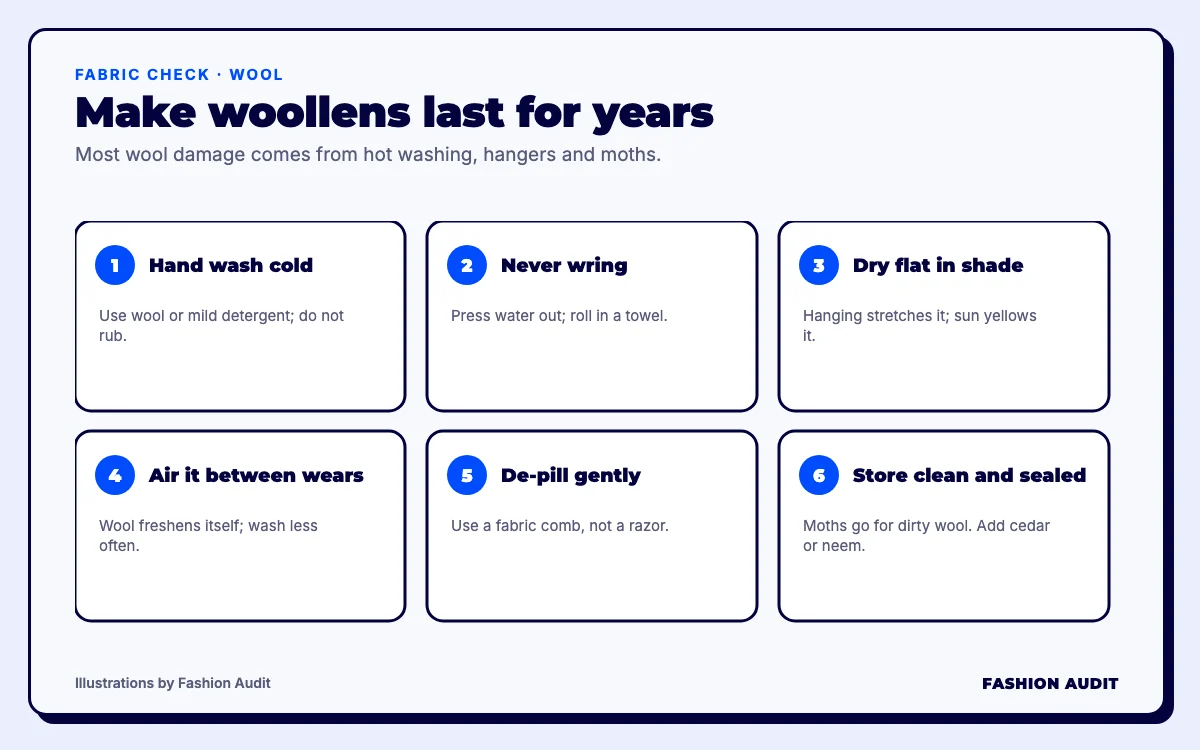
- Hand wash in cold water with a wool or mild detergent, unless the label says machine washable. Do not rub.
- Never wring. Press the water out and roll in a towel.
- Dry flat in shade. Hangers stretch knits; sun yellows wool.
- Air between wears. Wool resists odour, so it needs fewer washes.
- Remove pills with a fabric comb or de-piller, not a razor.
- Store clean, dry and sealed for the summer. Moths go for dirty wool; cedar blocks or dried neem leaves help.
Where the marketing misleads
- “Woollen”, “wool feel” or “warm knit” in a title is not a fibre claim. The care label is.
- “Cashmere touch” or “pashmina feel” usually means acrylic or viscose.
- “Pure pashmina” at a very low price deserves questions about the fibre mix.
- “Shahtoosh” anything is illegal. Do not buy it, whatever the story.
What it means for you
- For real winter warmth, buy wool or wool-rich blends, not just “woollen” titles.
- If wool itches, choose fine merino or layer cotton underneath.
- Use acrylic for light, low-cost layers, knowing it is not wool.
- Buy pashmina from sellers who state the fibre, and never shahtoosh.
- Wash cold, dry flat, store sealed, and woollens will last many winters.
Common questions
Why does my wool sweater itch?
Coarser fibres poke the skin. Fine merino (about 18.5 microns or less) itches far less; a cotton layer underneath also helps.
Why did my sweater shrink?
Wool’s scales lock together with heat, water and rubbing, so it felts. Wash cold, by hand, and dry flat.
Is acrylic as warm as wool?
It is warm when dry, but it handles sweat and damp less well and pills faster.
Is pashmina the same as cashmere?
Both come from the fine undercoat of goats; “pashmina” is the traditional Indian name, especially for Himalayan goat fibre.
Is shahtoosh legal in India?
No. It comes from the protected Tibetan antelope, and buying or selling it is illegal.
The bottom line
Wool is still the best winter fibre, but the word “woollen” on an Indian listing proves nothing. Read the care label, pay for real wool when you need real warmth, and choose fine merino if wool usually itches. Treat it gently, store it well, and never buy shahtoosh.
Sources
- PIB: Basic Animal Husbandry Statistics 2024
- Wikipedia: Wool
- The Woolmark Company
- Wildlife Protection Society of India: Shahtoosh
Illustrations by Fashion Audit. Have a correction? Write to us through the contact page and we will update this guide with a dated note.