
Rayon, also sold as viscose, is a fabric made from wood pulp: plant cellulose that is dissolved and spun back into a soft, silky fibre. It is behind most of the printed kurtas, kurta sets and palazzos sold in India under ₹1,000. Rayon is comfortable and drapes beautifully, but it is the fabric most likely to shrink after one careless wash. This guide explains what it is, the different types, and how to buy and care for it.
Fabric Check is Fashion Audit’s series on the fabrics in your wardrobe. Prices checked 11 November 2026.
The short answer
Rayon is a great summer fabric for kurtas, palazzos and flowy dresses. It breathes, absorbs sweat and feels silky at a low price. Its weak spot is water: it loses strength when wet and shrinks in hot or rough washes, so wash it cold and gently. If you want the same softness with better durability, choose modal or lyocell (Tencel™).
What rayon is, in one line
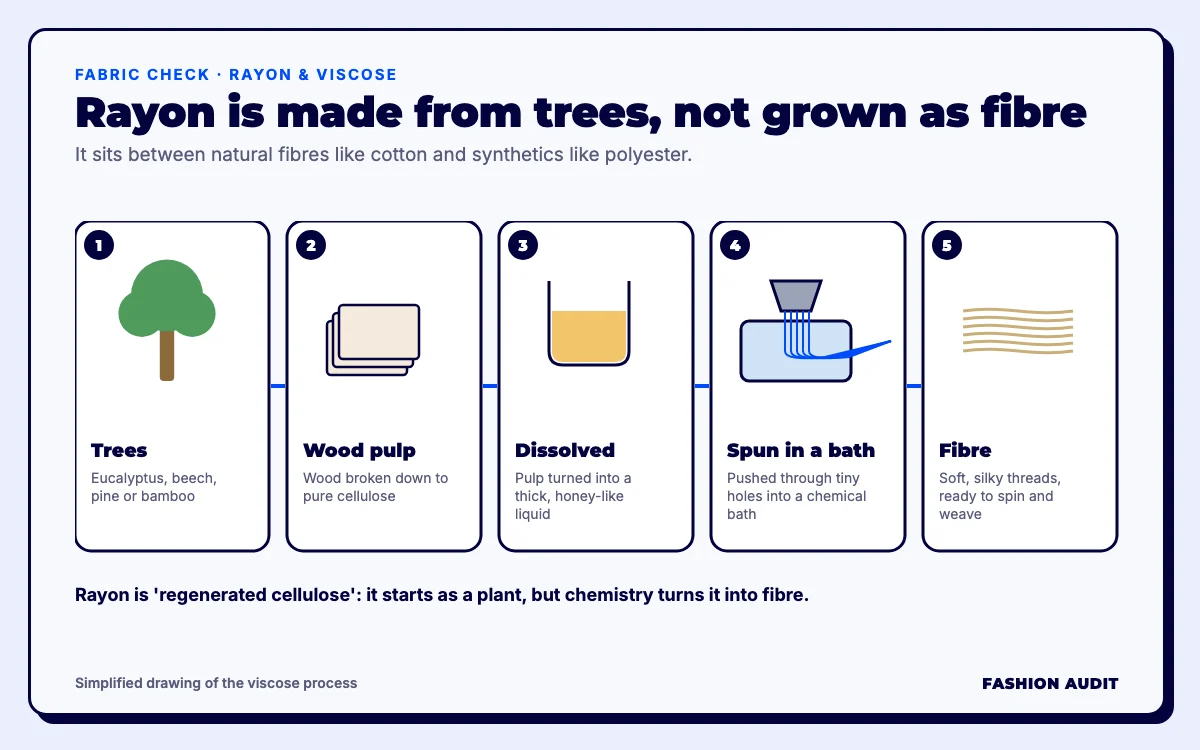
Rayon sits between natural fibres and synthetics. Wood from trees such as eucalyptus, beech, pine or bamboo is broken down into pure cellulose pulp. In the usual viscose process, the pulp is treated with chemicals that turn it into a thick, honey-like liquid. That liquid is pushed through tiny holes into a chemical bath, where it hardens into fibre. The fibre is then spun and woven or knitted like cotton.
“Viscose” and “rayon” are two names for the same fibre. In the US, the Federal Trade Commission treats them as the same thing (FTC). Indian labels use both, often together: “viscose rayon”.
The first “artificial silk”
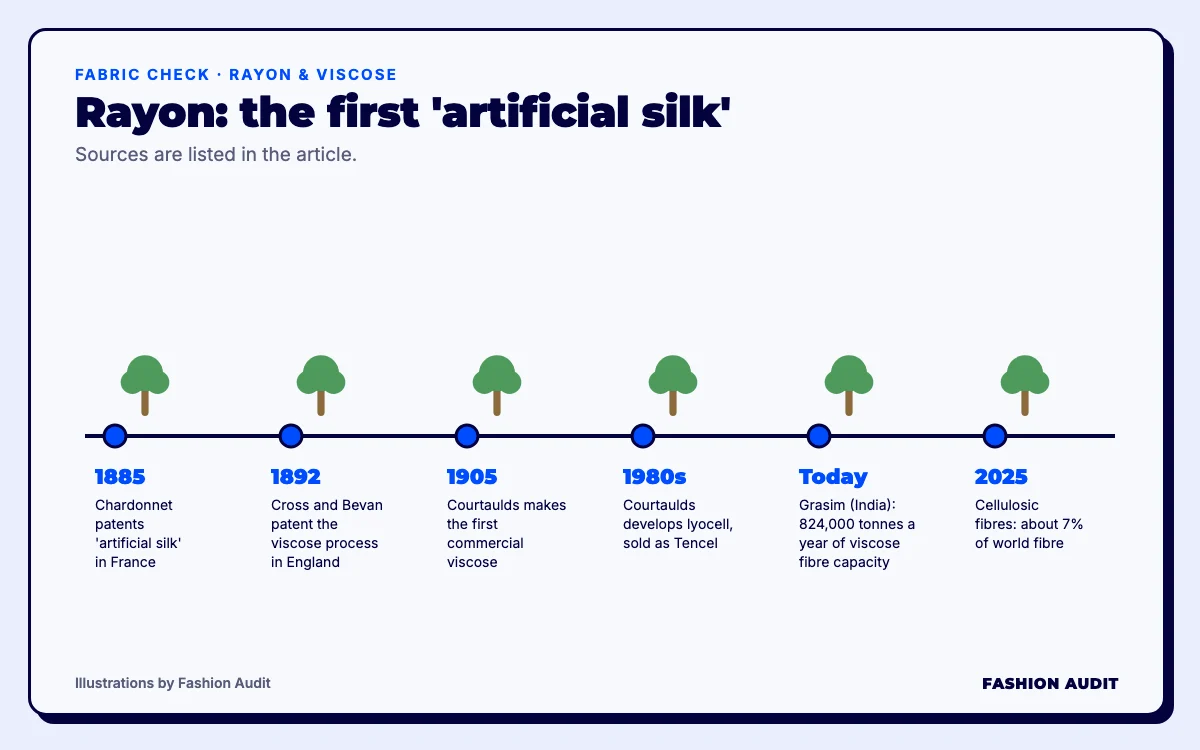
Rayon was the first man-made fibre, invented as a cheaper alternative to silk, and it is still called “artificial silk”. French scientist Hilaire de Chardonnet patented his early rayon in 1885. In England, Charles Cross and Edward Bevan patented the viscose method in 1892, and Courtaulds made the first commercial viscose rayon in 1905. In the 1980s Courtaulds developed lyocell, sold as Tencel (Wikipedia, Rayon).
India is a major player. Grasim, part of the Aditya Birla Group, says its viscose staple fibre capacity stands at 824,000 tonnes a year, and it sells fibre under the LIVA brand (Grasim). Worldwide, man-made cellulosic fibres such as viscose, modal and lyocell were about 7% of all fibre produced in 2025, with viscose alone about 5% (Textile Exchange Materials Market Report 2026).
One family, five names
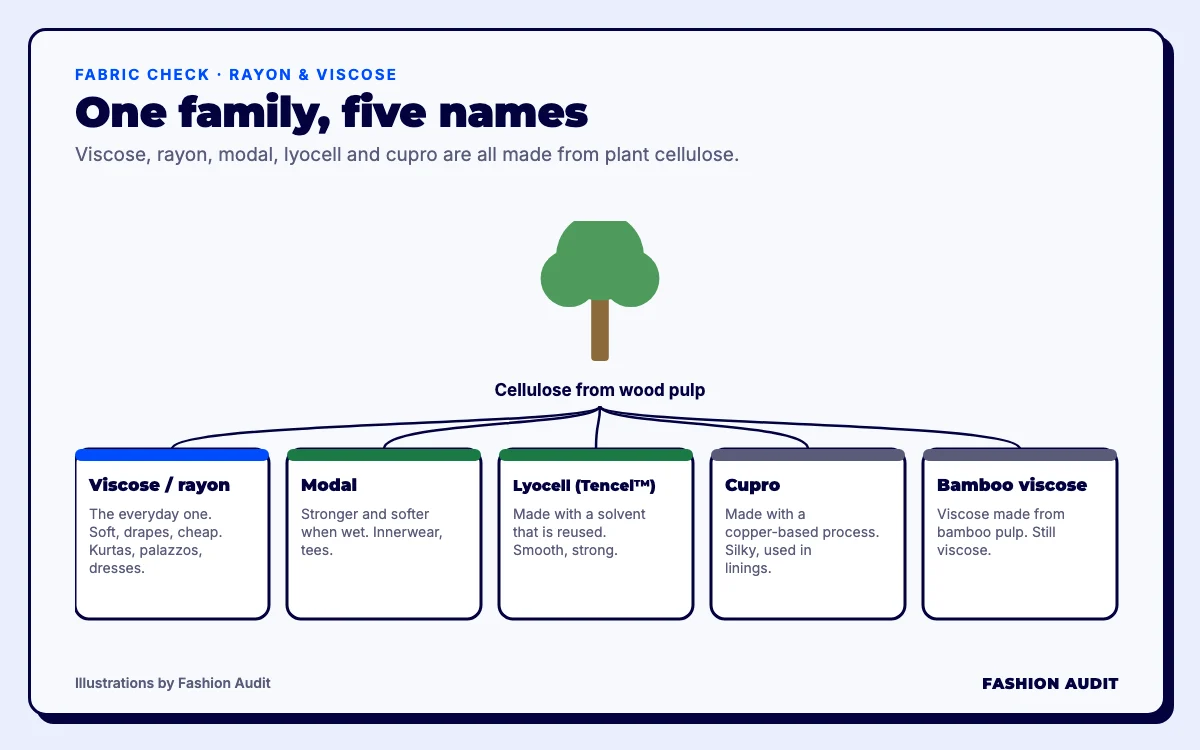
- Viscose or rayon: the everyday version. Soft, drapey and cheap. Most printed kurtas, palazzos and dresses.
- Modal: a stronger rayon that stays softer and holds up better when wet. Common in premium innerwear and lounge tees, often as “micromodal”.
- Lyocell: made by dissolving pulp in a solvent that is recovered and reused. Smooth and strong. Tencel™ is the Lenzing brand name for its lyocell and modal.
- Cupro: made with a copper-based process. Very silky and fine, often used in linings.
- “Bamboo” fabric: almost always viscose made from bamboo pulp. The US regulator says it should be labelled “rayon (or viscose) made from bamboo”, not just “bamboo” (FTC).
Viscose vs lyocell: different chemistry
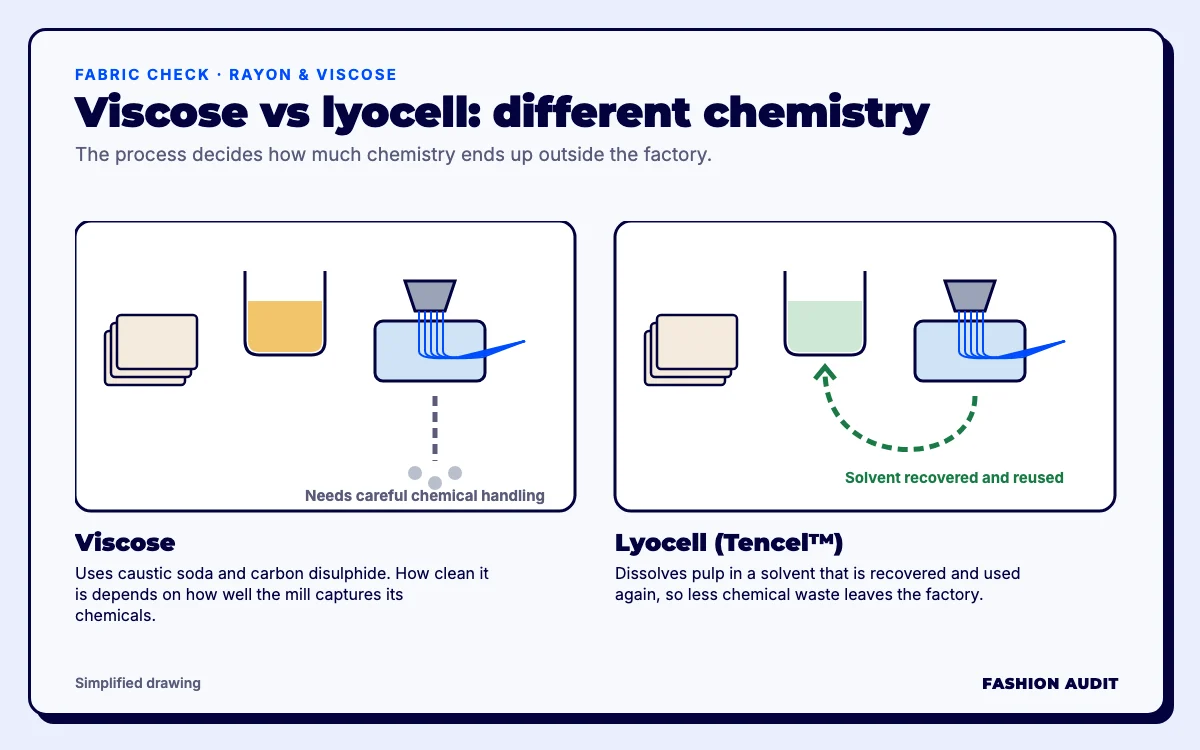
Standard viscose uses caustic soda and carbon disulphide. How clean a viscose mill is depends on how well it captures and treats those chemicals. Lyocell dissolves the pulp in a solvent that is recovered and used again, so much less chemical waste leaves the factory. That is why lyocell and certified viscose brands cost a little more. For shoppers, lyocell also feels smoother and lasts longer.
Handle with care when wet
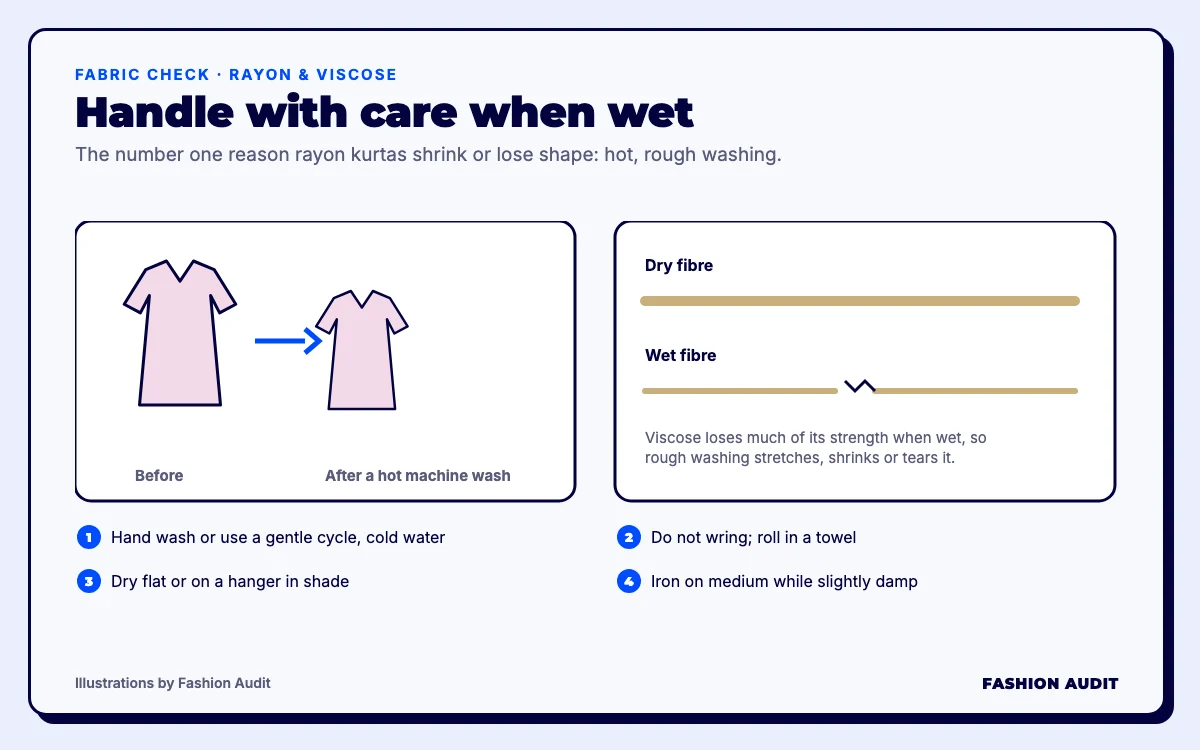
Viscose loses much of its strength when it is wet. Rough machine washing, wringing and hot water can stretch it, shrink it or tear it at the seams. Many shoppers have had a rayon kurta come out of the first wash a size smaller. The fix is simple: cold water, gentle cycle or hand wash, no wringing, and dry in shade. Modal and lyocell are much more forgiving.
The rayon you will see in Indian shops
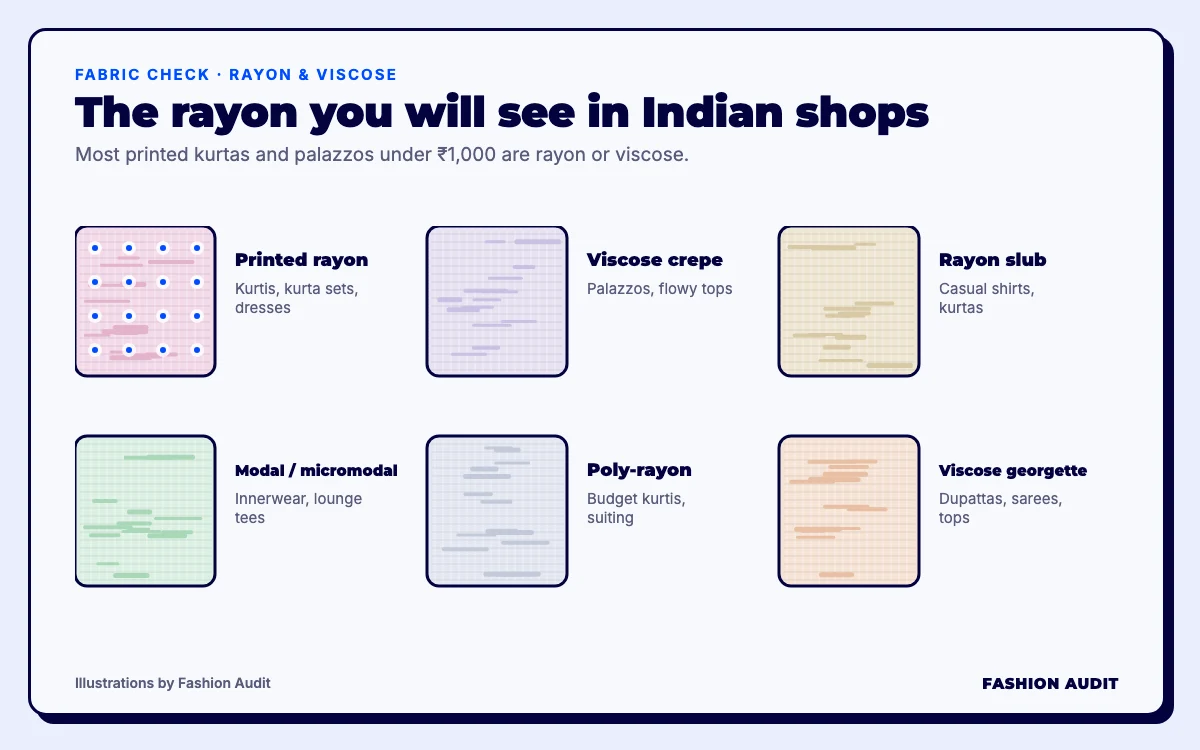
- Printed rayon: kurtis, kurta sets and dresses with bright prints.
- Viscose crepe: slightly crinkled and flowy; palazzos and tops.
- Rayon slub: a textured, linen-like look at a lower price; casual shirts and kurtas.
- Modal and micromodal: innerwear, vests and lounge tees.
- Poly-rayon: blended with polyester; creases less, breathes less. Budget kurtis and suiting.
- Viscose georgette: dupattas, sarees and tops with more breathability than polyester georgette.
See our polyester guide for how poly-rayon blends compare, and our cotton guide for the classic alternative.
Rayon’s pros and cons
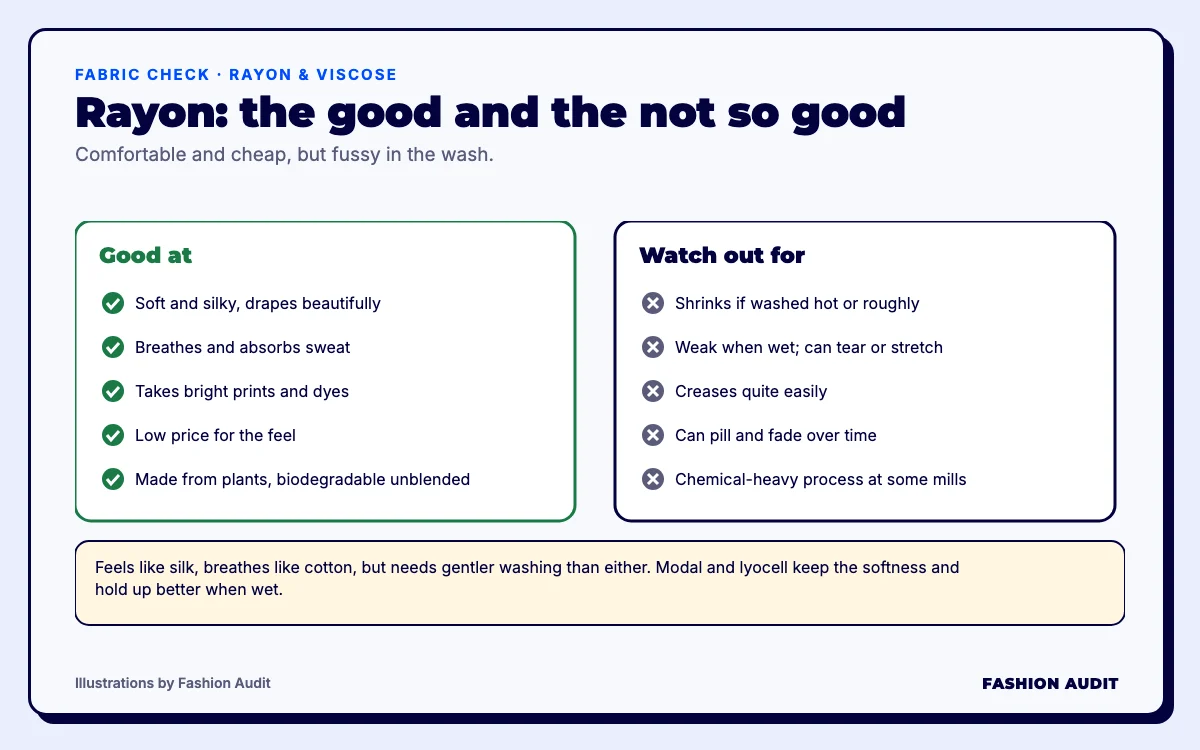
| What rayon does well | Where rayon falls short |
|---|---|
| Soft, silky and drapes beautifully | Shrinks if washed hot or roughly |
| Breathes and absorbs sweat, comfortable in heat | Weak when wet; can tear or stretch |
| Takes bright prints and deep colours | Creases quite easily |
| Low price for how it feels | Can pill and fade with many washes |
| Made from plants; biodegradable when not blended | Conventional viscose relies on harsh chemicals at the mill |
What is right for Indian weather
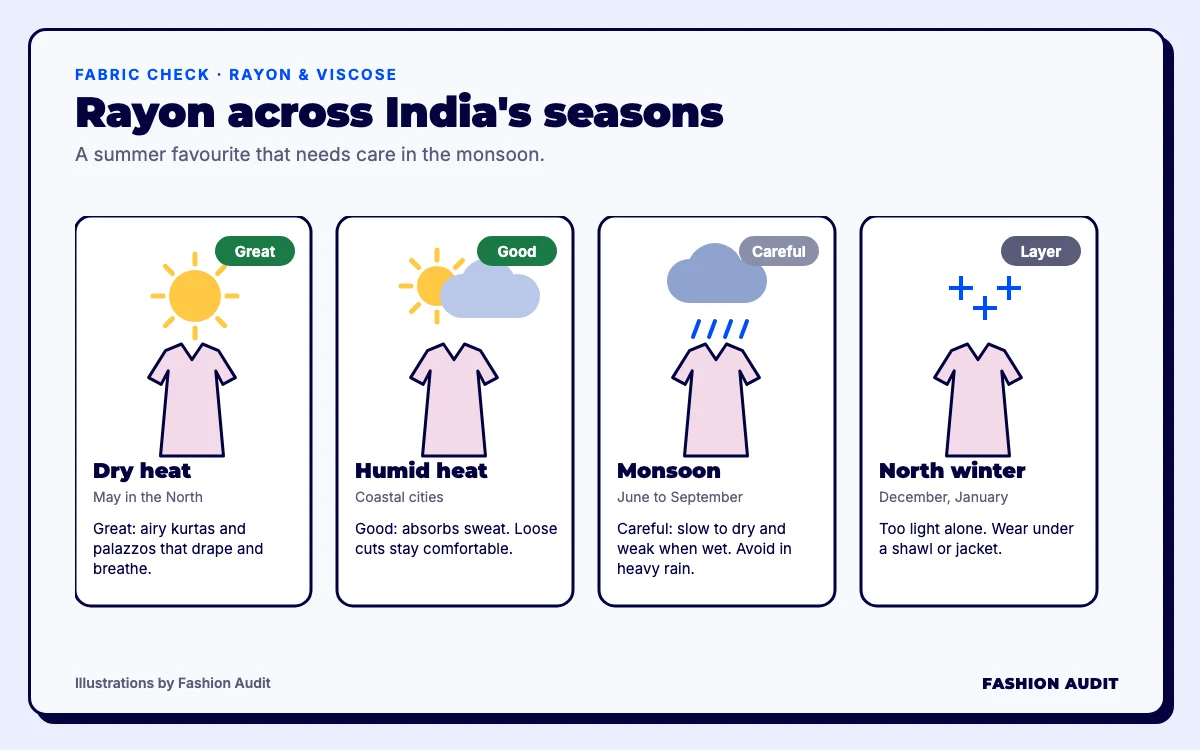
- Dry summer heat: one of the most comfortable choices. Airy kurtas and palazzos that drape away from the body.
- Humid heat: good, because it absorbs sweat. Loose cuts work best.
- Monsoon: be careful. It dries slowly, is weak when wet and can shrink if it gets soaked and is then dried in heat.
- North Indian winter: too light on its own. Wear it under a shawl or jacket.
How to read a rayon label
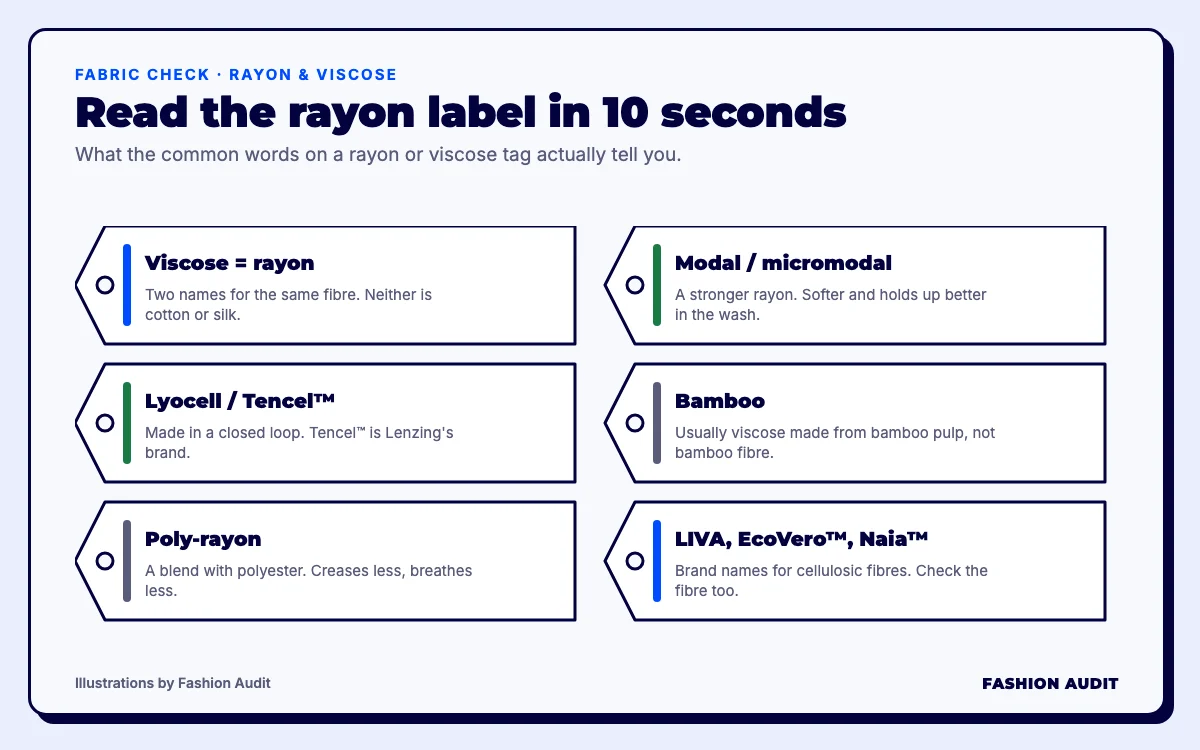
- “Viscose”, “rayon” or “viscose rayon” all mean the same fibre.
- “Modal” or “micromodal” is a stronger, softer rayon; worth a little more for innerwear.
- “Lyocell” or “Tencel™” is the closed-loop version.
- “Bamboo” on its own usually means viscose made from bamboo pulp.
- “Poly-rayon” is a polyester blend.
- Brand names such as LIVA, EcoVero™ or Naia™ are fibre brands from cellulose makers. They tell you who made the fibre; the care label still tells you the mix.
- The hand check: rayon feels cool, smooth and heavy-draping. Wet a corner: it softens and feels weak, which is normal.
Price check: what rayon costs in India
These are prices as listed in the Fashion Audit shop on 11 November 2026.
- Deepyog printed viscose rayon straight kurta: ₹277 (MRP ₹999).
- Bhochi flared viscose rayon palazzo: ₹499 (MRP ₹1,999).
- ANNI Designer rayon printed kurta set: ₹599 (MRP ₹2,599).
- Janasya viscose rayon kurta, pant and dupatta set: ₹1,351 (MRP ₹2,998).
- Indo Era viscose rayon printed kurta pant set: ₹1,749 (MRP ₹3,599). See our Indo Era audit.
- Jockey HG16 Tencel micro modal trunk: ₹498 (MRP ₹499).
- XYXX cotton modal round-neck vest: ₹449 (MRP ₹598).
Rayon kurtas range from under ₹300 to nearly ₹2,000. The difference is usually fabric weight, print quality, stitching and lining rather than the fibre itself. A heavier rayon with neat seams will survive washing better than a thin one.
Caring for rayon
- Wash cold, by hand or on a gentle cycle. Wash dark prints separately for the first few washes.
- Do not wring. Press the water out or roll the garment in a towel.
- Dry flat or on a hanger in shade. Strong sun fades prints; heat can shrink the fabric.
- Iron on medium, inside out, while slightly damp.
- If it shrank: soak in lukewarm water with a little hair conditioner, gently stretch it back into shape and dry flat. It may recover partly.
Where the marketing misleads
- “Bamboo fabric” sold as natural: it is usually viscose made from bamboo pulp, processed with chemicals like any viscose.
- “Silk feel” or “art silk”: usually rayon or polyester, not silk.
- “Cotton-feel” kurtas: check whether it is cotton or rayon; they wash very differently.
- “Eco” or “sustainable” viscose without naming a certified fibre brand or certificate is a claim you cannot check.
What it means for you
- Rayon is one of the best-value summer fabrics for kurtas, palazzos and dresses.
- Wash it cold and gently from day one; most rayon problems start in the washing machine.
- For innerwear and lounge tees, modal is worth the small extra cost.
- Choose lyocell or a named, certified viscose if the factory process matters to you.
- Read the care label: “bamboo” and “art silk” usually mean rayon.
Common questions
Is rayon natural or synthetic?
Neither, exactly. It is made from natural plant cellulose, but a chemical process turns it into fibre. It is often called “semi-synthetic” or “regenerated cellulose”.
Why did my rayon kurta shrink?
Rayon fibres swell and weaken when wet, and hot water or rough washing makes them tighten up. Wash cold and gently, and dry in shade.
Is viscose the same as rayon?
Yes. Viscose is the most common type of rayon, and labels use the names interchangeably.
Is modal better than rayon?
Modal is a stronger, softer type of rayon that holds its shape better in the wash. It usually costs a little more.
Is bamboo fabric really bamboo?
The plant is the source of the pulp, but most bamboo fabric is made by the viscose process, so it is viscose made from bamboo.
The bottom line
Rayon is the best-value fabric for Indian summer ethnic wear, as long as you treat it gently in the wash. Buy printed viscose kurtas and palazzos for comfort and price, step up to modal for innerwear, and choose lyocell when you want softness that lasts. Skip rayon for heavy monsoon days, and never put it in a hot wash.
Sources
- Wikipedia: Rayon
- Grasim: Cellulosic Staple Fibre
- Textile Exchange: Materials Market Report 2026
- US Federal Trade Commission: Bamboo Textiles
Illustrations by Fashion Audit. Have a correction? Write to us through the contact page and we will update this guide with a dated note.