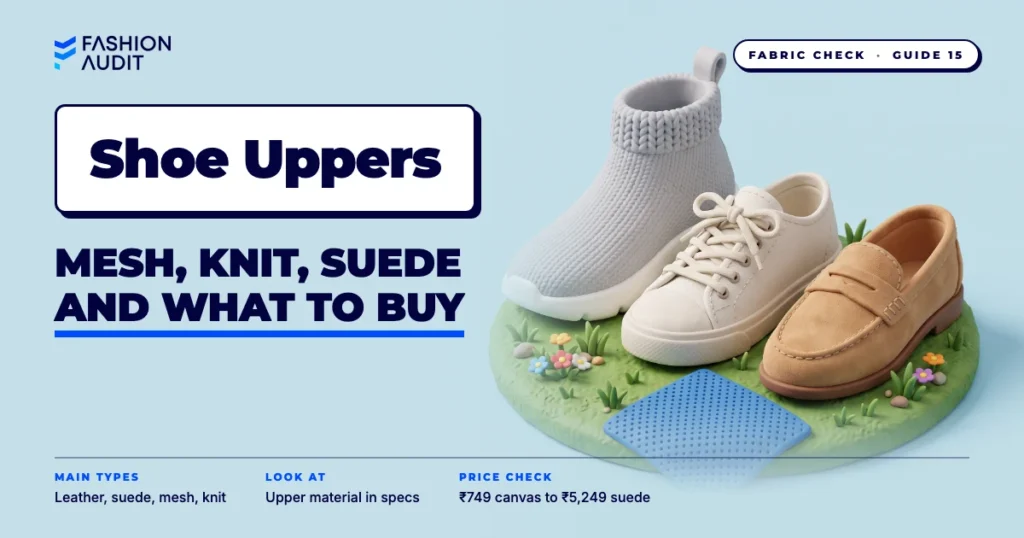
The upper is everything above the sole, and its material decides how a shoe breathes, how it copes with rain, how it ages and how you clean it. Indian shoe listings now name the upper in their specifications: leather, suede, nubuck, canvas, mesh, knitted textile or PU. This guide explains the parts of an upper, what each material is good at, the difference between suede and nubuck, how to read the words in a listing, and how to care for each.
Fabric Check is Fashion Audit’s series on the materials in your wardrobe. Prices checked 11 November 2026.
The short answer
For running, gym and summer, choose a mesh or knit upper: they breathe best. For the office, smooth leather lasts and polishes up. For winter and weddings, suede and nubuck look rich but hate water. For the monsoon, a PU or rubber upper is the practical pick. And always read the upper material in the specifications, because a “suede” or “canvas” shoe may be partly synthetic.
The parts of a shoe’s upper
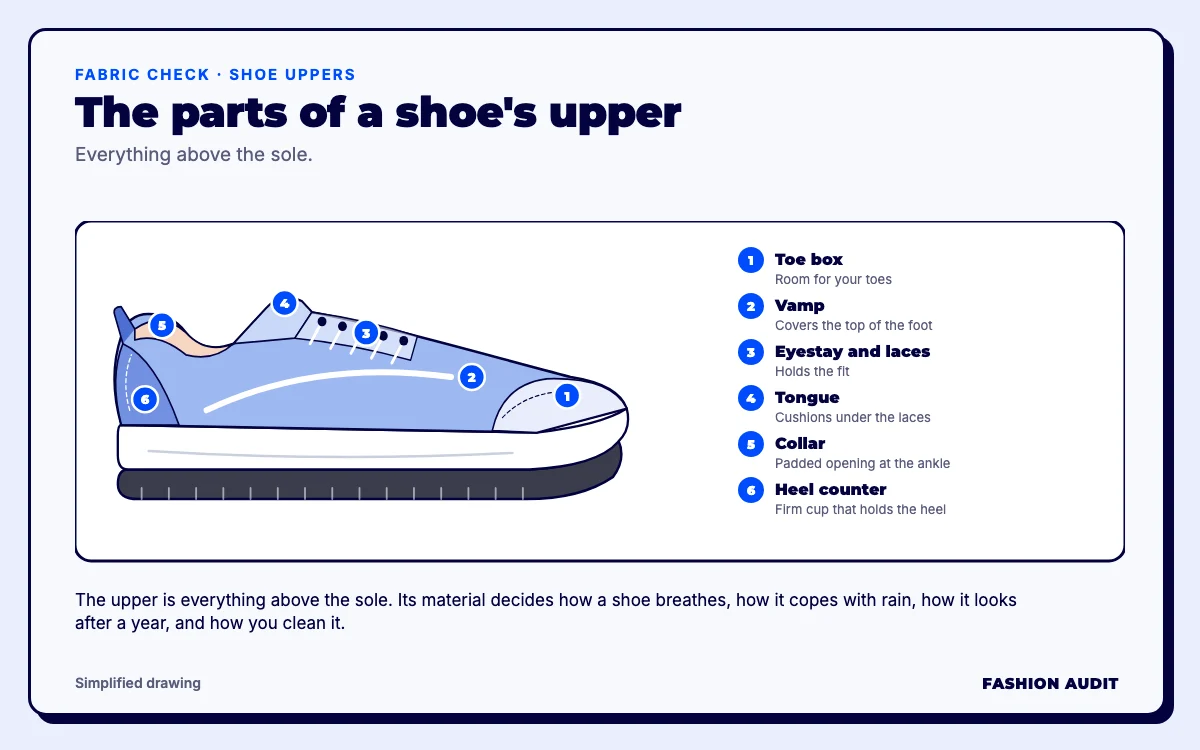
- Toe box: the front, which gives your toes room.
- Vamp: the part that covers the top of the foot.
- Eyestay and laces: where the laces run; they hold the fit.
- Tongue: the padded flap under the laces.
- Collar: the padded opening around the ankle.
- Heel counter: the firm cup that holds your heel in place.
For what goes underneath, see our shoe soles guide.
Seven upper materials compared
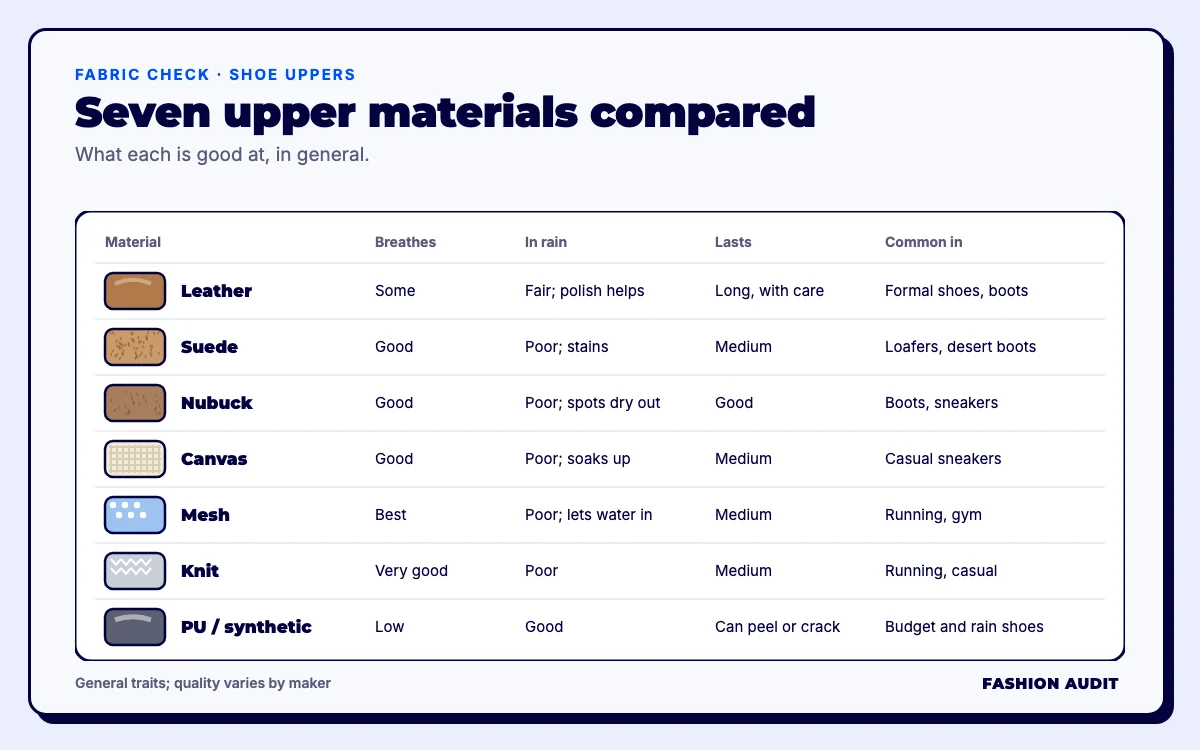
| Material | Best for | Watch for |
|---|---|---|
| Smooth leather | Formal shoes and boots that last | Needs polish; costs more |
| Suede | Soft loafers and desert boots | Stains and absorbs water |
| Nubuck | Boots and sneakers with a velvety look | Scratches easily |
| Canvas | Casual sneakers | Soaks up rain, slow to dry |
| Mesh | Running and gym | Lets in rain and dust |
| Knit | Light, sock-like runners and casuals | Soaks through in rain |
| PU / synthetic | Budget shoes and rainy days | Breathes poorly; can peel or crack |
These are general traits; quality varies a lot between makers. Our leather guide explains leather grades and PU in detail.
Smooth leather, nubuck or suede?
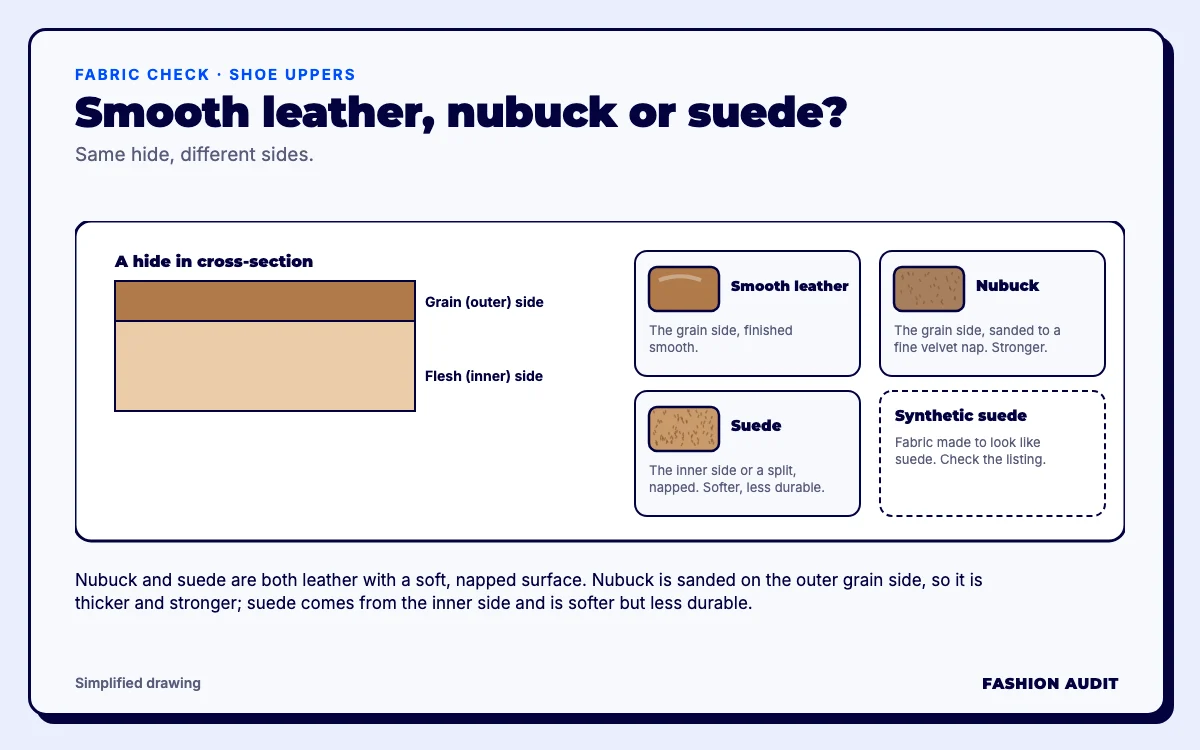
- Smooth leather is the grain (outer) side of the hide, finished smooth.
- Nubuck is top-grain leather sanded on the grain side to a fine, velvety nap. Because it comes from the outer side, it is thicker and stronger than suede and usually costs more. It scratches easily, and water drops darken it for a while before it dries back to its colour (Wikipedia: Nubuck).
- Suede is made from the underside of the skin, or a split from a thick hide, napped into a soft, fuzzy finish. It is softer and more pliable but less durable than full-grain leather, and it absorbs liquids and stains easily. The name comes from the French gants de Suède, “gloves from Sweden” (Wikipedia: Suede).
- Synthetic suede is a fabric made to look like suede. Listings sometimes call a shoe “suede” while the specifications say “synthetic suede”, so check.
Mesh: the breathable upper
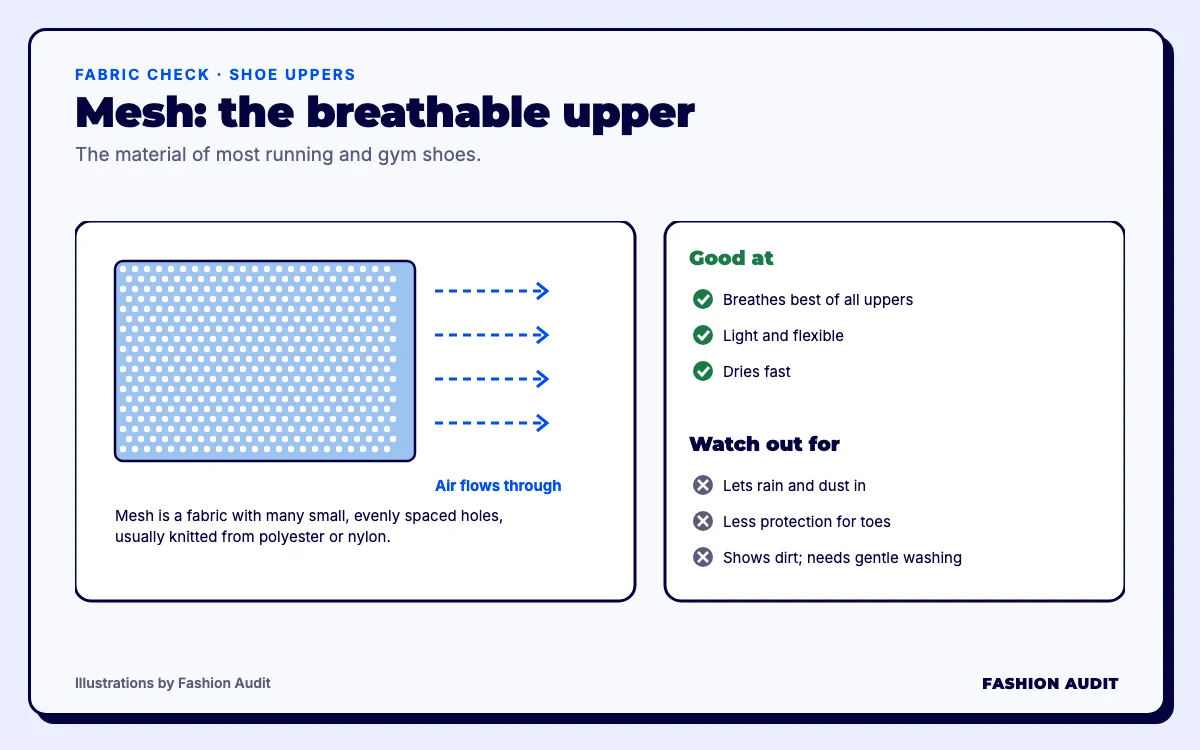
Mesh is a loosely woven or knitted fabric with many closely spaced holes, widely used in sportswear (Wikipedia: Mesh). In shoes it lets air flow freely, which makes it the coolest upper for Indian summers and the gym. The trade-off: it lets in rain and dust, gives toes less protection than leather, and shows dirt. Many listings say “engineered mesh”, a term makers use for mesh shaped and structured for a particular shoe.
Knit or canvas?
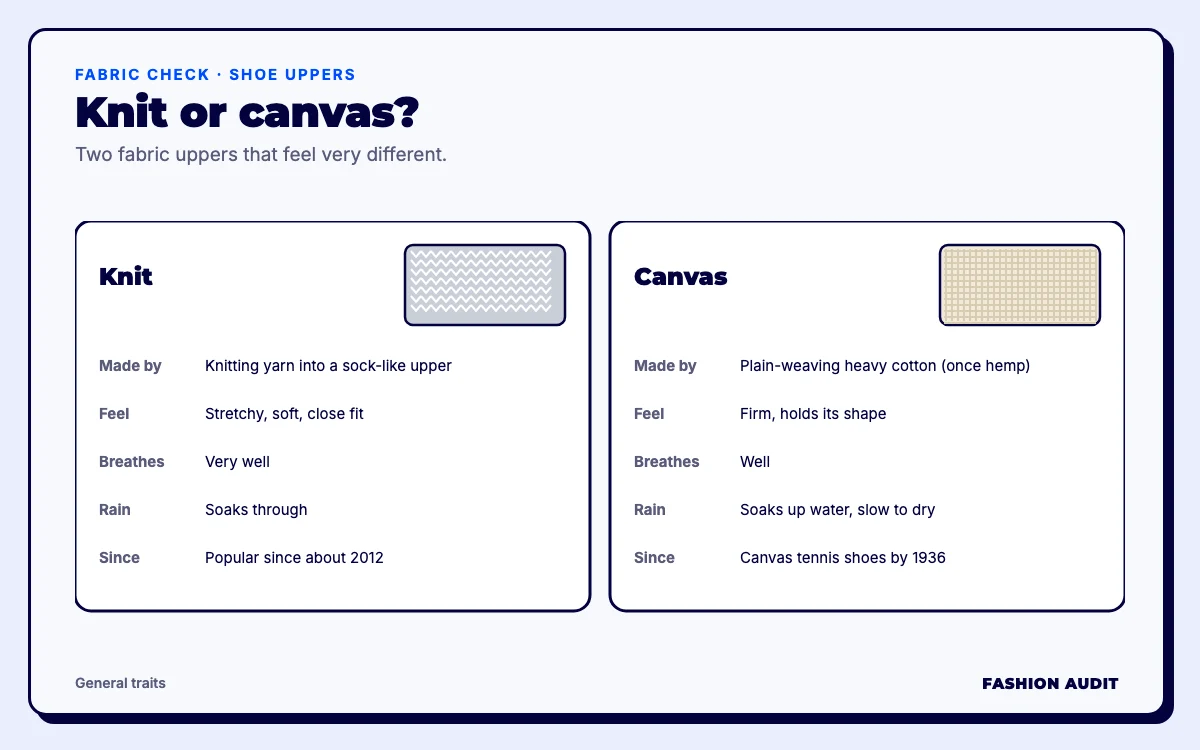
- Knit uppers are knitted from yarn into a soft, stretchy, sock-like shape. They breathe very well and fit closely. Nike introduced its knitted Flyknit upper in 2012, describing it as lighter and more breathable (Wikipedia: Nike timeline), and knitted uppers are now common. Listings often call them “textile knitted”.
- Canvas is a durable plain-woven fabric, historically made from hemp and now usually cotton. The word comes, through Latin, from the Greek for hemp. Duck canvas is more tightly woven (Wikipedia: Canvas). Canvas holds its shape and breathes well, but soaks up rain and dries slowly.
Read the upper material in a listing
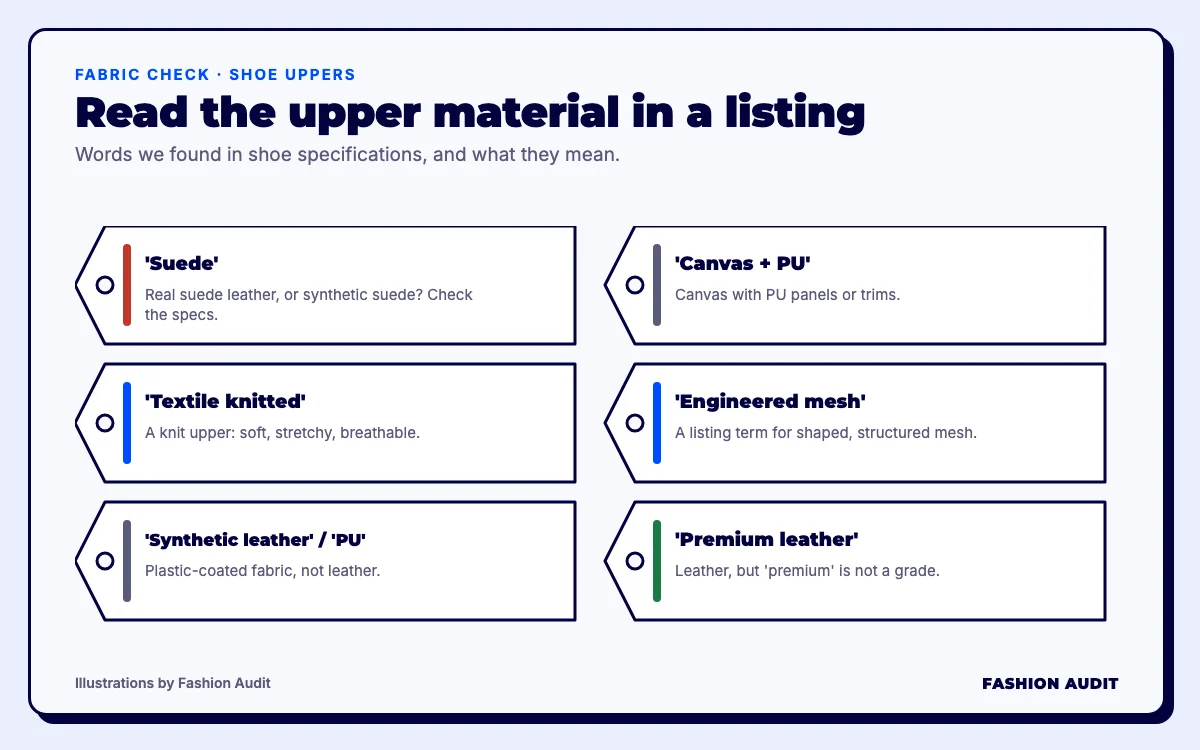
While checking prices for this guide, we read the specification tables of shoes in the Fashion Audit shop. Here is what the common words mean:
- “Suede”: could be real suede leather or synthetic suede. One “suede” sneaker we checked lists “PU + synthetic suede”.
- “Canvas + PU”: canvas with PU panels or trims.
- “Textile knitted”: a knit upper.
- “Engineered mesh”: structured mesh, usually on running shoes.
- “Synthetic leather” or “PU”: plastic-coated fabric, not leather.
- “Premium leather”: leather, but “premium” is not a grade.
Which upper for Indian weather?
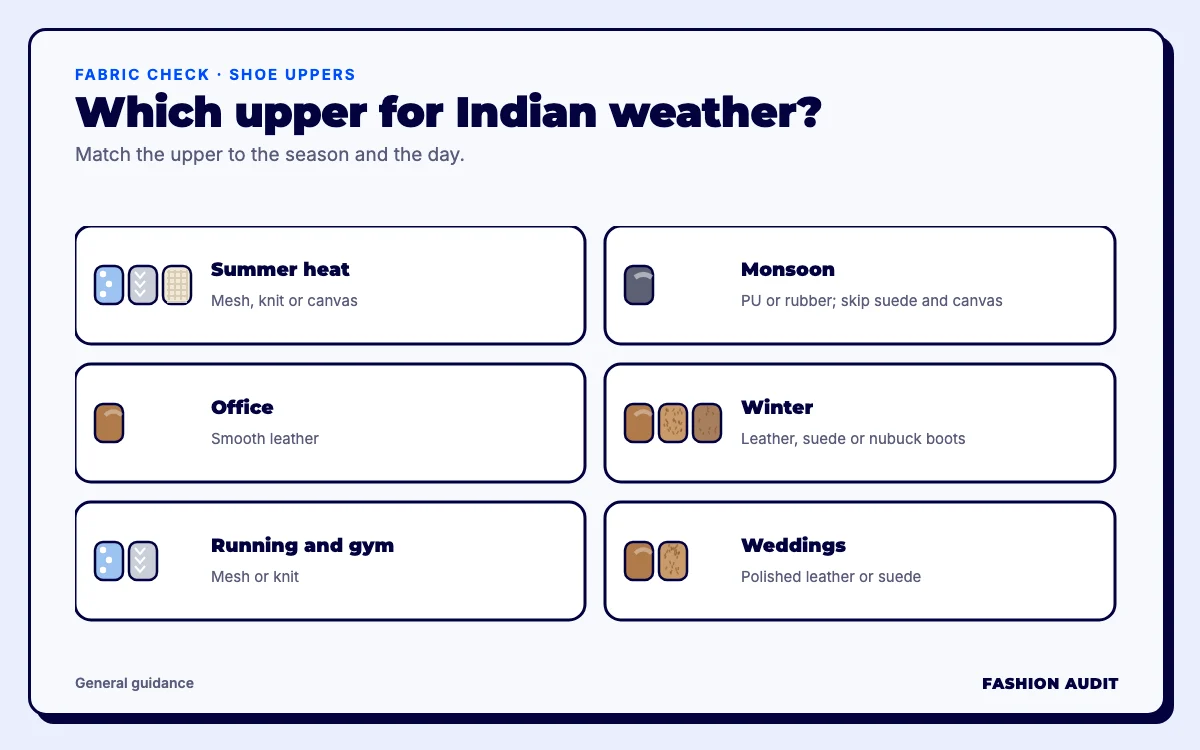
- Summer heat: mesh, knit or canvas.
- Monsoon: PU or rubber uppers; keep suede, nubuck and canvas for dry days.
- Office: smooth leather, which polishes up and lasts.
- North Indian winter: leather, suede or nubuck boots.
- Running and gym: mesh or knit.
- Weddings: polished leather or suede.
From canvas plimsolls to knitted runners
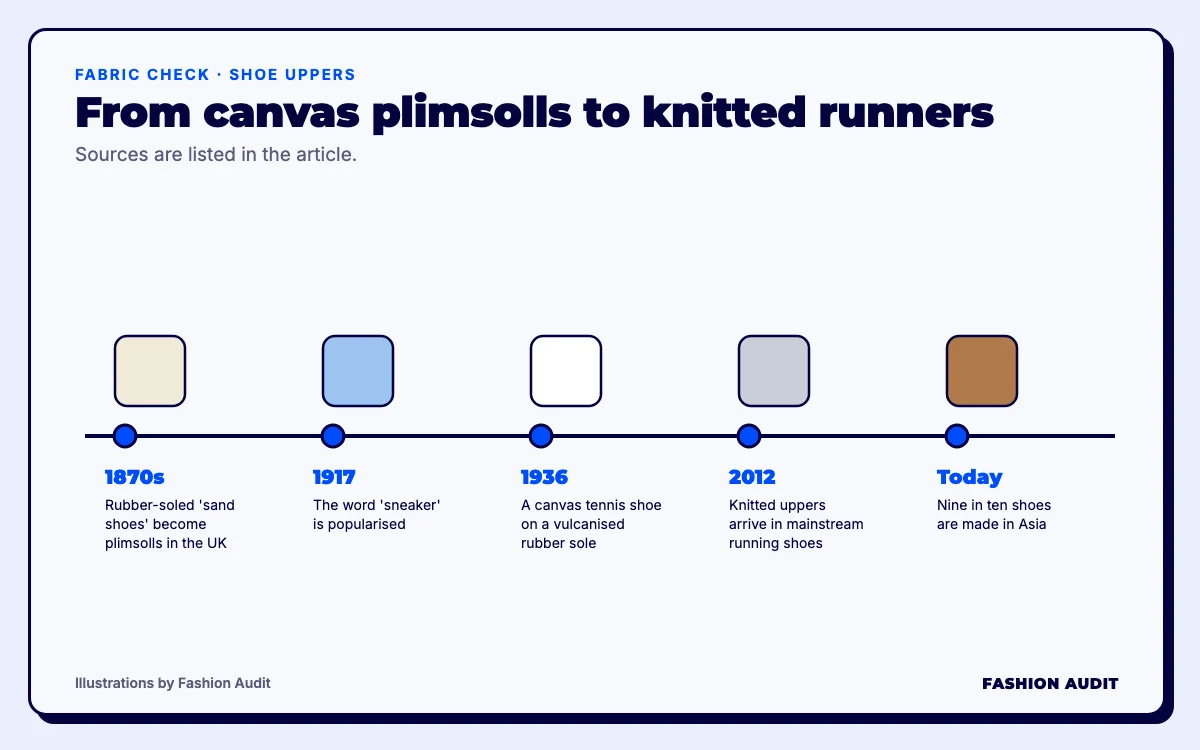
The rubber-soled “sand shoe” became known as the plimsoll in the UK around the 1870s. The word “sneaker” was popularised in 1917, because the rubber sole made the wearer quiet. In 1936 a French brand sold a canvas tennis shoe on a vulcanised natural rubber sole. Today, nine in ten shoes are made in Asia (Wikipedia: Sneakers), and India is the world’s second-largest footwear producer (Council for Leather Exports). Knitted uppers joined the mainstream in 2012.
How to clean each upper
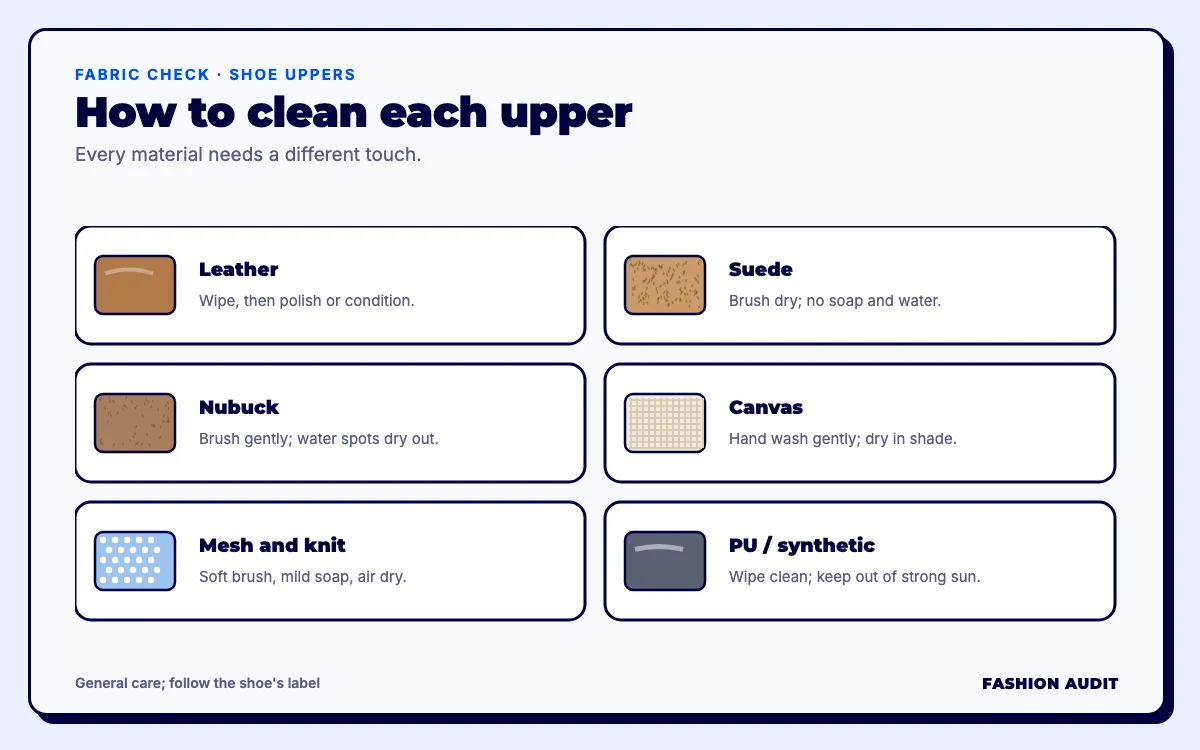
- Smooth leather: wipe with a damp cloth, then polish or condition.
- Suede: brush dry with a suede brush. Do not use soap and water or a washing machine; a suede rubber or cornstarch helps with marks, and a protector spray helps afterwards (Wikipedia: Suede).
- Nubuck: brush gently. Water spots usually dry back to the original colour.
- Canvas: hand wash gently with mild soap and dry in shade, stuffed with paper.
- Mesh and knit: a soft brush and mild soap, then air dry away from direct heat.
- PU / synthetic: wipe clean, and keep out of strong sun, which speeds up cracking.
Price check: what each upper costs in India
These are prices as listed in the Fashion Audit shop on 11 November 2026, with the upper material as given in each product’s specifications.
Mesh and knit:
- Solethreads ECOKNIT casual shoes: ₹1,249 (MRP ₹2,499). Knitted textile upper. See our Solethreads audit.
- Campus FABLE running shoes: ₹1,299 (MRP ₹3,499). Mesh upper. See our Campus audit.
- Puma FlexFocus Lite knit running shoes: ₹2,365 (MRP ₹5,499). Knitted textile upper. See our Puma audit.
- Asics GEL-CONTEND 9: ₹4,572 (MRP ₹5,999). Engineered mesh upper. See our Asics audit.
Canvas:
- Styli chambray canvas espadrilles: ₹749 (MRP ₹999). Canvas upper. See our Styli audit.
- The Souled Store Nomad canvas sneakers: ₹3,799 (MRP ₹5,699). Canvas + PU upper. See our The Souled Store audit.
Suede:
- Louis Stitch suede loafers: ₹1,399 (MRP ₹6,999). Suede upper. See our Louis Stitch audit.
- Yoho coloured suede fashion sneaker: ₹1,499 (MRP ₹3,399). PU + synthetic suede upper.
- CARLO ROMANO suede leather brogues: ₹1,959 (MRP ₹3,999). Suede leather upper.
- Clarks suede desert boot: ₹5,249 (MRP ₹14,999). Premium suede upper, crepe rubber sole. See our Clarks audit.
Leather and PU:
- Campus OG D3 sneakers: ₹825 (MRP ₹1,399). PU upper.
- Louis Philippe leather formal derbys: ₹2,949 (MRP ₹4,999). Premium leather upper. See our Louis Philippe audit.
Where the marketing misleads
- “Suede” in a product name may mean synthetic suede. Check the upper material in the specifications.
- “Leather” in a product name may refer to a synthetic upper. Our leather guide found examples.
- “Breathable” on a PU shoe may refer to perforations or a mesh lining. Check the upper material itself.
- “Water-resistant” suede may be treated, but suede still marks easily in heavy rain.
- “Premium” is a marketing word, not a grade.
What it means for you
- Match the upper to the season: mesh or knit for heat, PU for rain, leather or suede for winter.
- Read the upper material in the specifications, not just the product name.
- Choose nubuck over suede if you want the soft look with more strength.
- Clean each upper its own way: never wash suede with soap and water.
- For office shoes that last, smooth leather is still the safest choice.
Common questions
What is the difference between suede and nubuck?
Both are leather with a soft nap. Nubuck is the outer grain side, sanded, so it is thicker and stronger. Suede is the inner side or a split, so it is softer but less durable.
Are mesh shoes good for the monsoon?
Not really. Mesh lets water in. It dries fairly quickly, but your feet will get wet. PU or rubber uppers are better for heavy rain.
Can I wash canvas shoes in a washing machine?
Hand washing is gentler and keeps the glue and shape intact. Check the brand’s care instructions first.
How do I clean suede shoes?
Brush them dry with a suede brush, use a suede rubber or a little cornstarch on marks, and never use soap and water. A protector spray helps afterwards.
Are knit shoes durable?
They are comfortable and breathable, and good ones last well for running and daily wear. They give less support and protection than leather, so they are not ideal for rough use.
The bottom line
The upper decides how a shoe breathes, handles rain and ages. Pick mesh or knit for heat and sport, smooth leather for the office, suede or nubuck for dry winter days, and PU for the monsoon, and always check the upper material in the specifications.
Sources
- Wikipedia: Suede
- Wikipedia: Nubuck
- Wikipedia: Canvas
- Wikipedia: Mesh
- Wikipedia: Sneakers
- Wikipedia: Nike timeline
- Council for Leather Exports: Overview of the Indian Leather Industry 2026
Illustrations by Fashion Audit. Have a correction? Write to us through the contact page and we will update this guide with a dated note.